Amazing Benefits of Collagen for Healthy, Youthful Skin: The Marine Collagen Advantage
Discover marine collagen's amazing anti-aging benefits! Learn how Forever Living products reduce wrinkles, improve firmness & restore youthful skin.
by WellnessWithForever
11/27/202516 min read

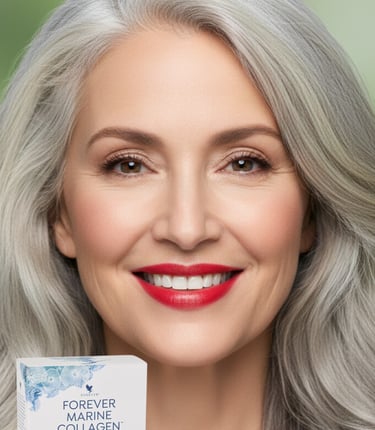
Amazing Benefits of Collagen for Healthy, Youthful Skin: The Marine Collagen Advantage
By WellnessWithForever 27 November 2025: This post might contain affiliate links.
Collagen is the most abundant protein in your body, providing structural support to skin, bones, joints, and connective tissues. As you age, your body's natural collagen production gradually declines, which contributes to visible changes in skin appearance and other age-related changes throughout the body.
Many people are interested in collagen supplementation for supporting skin health and overall wellness. While research on collagen supplements continues to evolve, understanding what's actually known versus what's marketed helps you make informed decisions about whether supplementation might benefit you.
Forever Living offers marine collagen products and nutritional supplements that support overall wellness. These provide convenient ways to incorporate collagen and supporting nutrients into your daily routine as part of a comprehensive approach to healthy aging.
Important Medical Note: This article discusses collagen supplementation for general wellness and skin appearance. Aging is a natural process involving complex biological factors beyond just collagen. Skin aging can also result from sun damage, genetics, lifestyle factors, and health conditions. While some research suggests collagen supplementation may support skin health, results vary significantly between individuals. Products cannot "reverse aging," prevent wrinkles, or cure age-related conditions. If you have concerns about skin changes, joint problems, or other health issues, consult a healthcare provider. The information here is for educational purposes only and does not replace medical advice.
Key Takeaways
Collagen production naturally declines with age, contributing to skin changes
Research suggests collagen supplementation may support skin hydration and elasticity
Marine collagen appears to have good bioavailability compared to other sources
Supporting nutrients (vitamin C, protein, minerals) are essential for collagen synthesis
Individual results from supplementation vary widely
Sun protection and lifestyle factors significantly impact skin aging
Realistic expectations and patience are essential (studies show results after 8-12+ weeks)
Understanding Collagen and Its Role in Skin
Collagen is a structural protein that comprises approximately 30% of your body's total protein. It provides support and structure to various tissues including skin, bones, tendons, and ligaments.
Your skin contains multiple types of collagen, with Type I being the most abundant. This collagen forms networks in the dermis (middle skin layer) that contribute to skin's firmness and structure.
What Collagen Does in Skin
Collagen fibers in your dermis create a supportive structure. This network contributes to skin's tensile strength and resilience—its ability to stretch and return to shape.
The protein also plays a role in skin hydration by interacting with other compounds like glycosaminoglycans that bind water. Well-hydrated skin typically appears plumper and smoother.
Collagen supports the connection between your epidermis (outer layer) and dermis. This structural support contributes to skin's overall appearance and integrity.
Natural Collagen Decline with Age
Your body produces collagen throughout life, but production peaks in your late teens to early twenties, then gradually declines. By your 30s and beyond, this decline becomes more noticeable in various ways.
This reduction happens for several reasons:
Cellular aging reduces fibroblast (collagen-producing cell) activity
Hormonal changes affect collagen synthesis (particularly estrogen decline in women)
Enzymes that break down collagen (matrix metalloproteinases) increase with age
Oxidative stress from environmental factors damages existing collagen
Important Context: While collagen decline is real, it's ONE factor in aging among many. Genetics, sun exposure (the biggest factor in visible skin aging), lifestyle, health status, and other proteins like elastin all play significant roles.
Visible Signs of Collagen Changes
As collagen production declines and existing collagen degrades, various changes may become visible:
Fine lines and wrinkles: Particularly around eyes and mouth where facial expressions repeatedly fold skin. With less structural support, these folds may become more permanent.
Changes in skin texture: Skin may become rougher or appear to have larger pores.
Loss of firmness: Skin may sag more noticeably, particularly along the jawline and neck.
Reduced "bounce back": When you press your skin, it may not spring back as quickly.
Questions to Ask Your Doctor:
Are my skin changes normal aging or could they indicate a health condition?
Could medications I'm taking affect collagen or skin health?
Are collagen supplements appropriate given my health status?
Should I be concerned about any specific skin changes I'm experiencing?
What lifestyle changes would most benefit my skin health?
Marine Collagen: Source and Absorption
Collagen supplements come from various sources including bovine (cow), porcine (pig), chicken, and marine (fish). Each source has different characteristics regarding collagen type, molecular structure, and bioavailability.
Marine collagen is extracted from fish skin and scales, typically from cold-water fish. It's primarily Type I collagen—the type most abundant in human skin.
Bioavailability Considerations
Marine collagen has some potential advantages regarding absorption:
Lower molecular weight: Marine collagen molecules are generally smaller than those from land animal sources, which may affect how readily they're absorbed through the intestinal wall.
Absorption studies: Some research suggests marine collagen may have higher bioavailability (the amount actually absorbed and utilized) compared to bovine collagen, though more research is needed.
Digestibility: Marine collagen appears to be well-tolerated digestively for most people (excluding those with fish allergies).
Important Note: While absorption is important, what ultimately matters is whether supplementation produces measurable benefits—which brings us to the research evidence.
Type I Collagen for Skin Structure
Your body produces 28 different types of collagen, but Type I comprises about 90% of your body's total collagen. Type I is the primary structural collagen in skin, bones, and tendons.
Marine collagen is predominantly Type I collagen. This theoretically makes it well-matched to skin's primary collagen type.
Hydrolyzed Collagen Peptides
Whole collagen molecules are too large for your body to absorb intact. Hydrolyzed collagen (also called collagen peptides) has been broken down into smaller peptide chains that can pass through the intestinal wall into the bloodstream.
These smaller peptides appear to have biological activity—some research suggests they may signal cells to increase collagen production, though mechanisms aren't fully understood yet.
Research on Collagen Supplementation and Skin
Scientific interest in collagen supplementation has grown significantly in recent years. Understanding what research actually shows—versus what's marketed—helps set realistic expectations.
Most studies on collagen and skin have been relatively small and short-term. While results are promising, larger, longer-term studies would strengthen the evidence.
What Studies Suggest About Skin Benefits
Skin hydration: Several studies have found that oral collagen supplementation may improve skin moisture content. One study showed increased skin hydration after 8 weeks of supplementation with 2.5-5g daily.
Skin elasticity: Some research suggests improvements in skin elasticity (the ability to stretch and return to shape) after 8-12 weeks of collagen supplementation.
Fine lines and wrinkles: Studies have reported reductions in wrinkle depth with collagen supplementation, though results vary. One study showed participants taking 2.5-5g collagen daily experienced measurable reductions in eye wrinkle depth after 8 weeks.
Skin density: Some research indicates that collagen supplementation might increase dermal collagen density over time.
Important Caveats:
Many studies are industry-funded (though that doesn't automatically invalidate results)
Study participants often don't represent all age groups, skin types, or health statuses
Individual results vary significantly
Studies typically measure specific parameters under controlled conditions—real-world results may differ
Study Dosages and Duration
Most studies showing skin benefits use:
Dosage: 2.5-5g of collagen peptides daily (some studies use up to 10g)
Duration: Minimum 8 weeks, with most noticeable results after 12+ weeks
Consistency: Daily supplementation without interruption
These parameters are important—lower doses, shorter duration, or inconsistent use may not produce noticeable results.
Supporting Your Body's Natural Collagen Production
While supplementing with collagen provides exogenous (external) protein, your body also produces collagen endogenously (internally) throughout life. Supporting this natural production requires specific nutrients.
Think of it as a two-pronged approach: providing collagen peptides while also ensuring your body has what it needs to synthesize its own collagen.
Vitamin C: Essential Cofactor
Vitamin C is absolutely essential for collagen synthesis. It's a required cofactor for enzymes (prolyl hydroxylase and lysyl hydroxylase) that stabilize collagen's structure.
Without adequate vitamin C, your body literally cannot form stable collagen, regardless of how much protein or collagen peptides you consume.
Forever Absorbent-C provides sustained-release vitamin C throughout the day. This consistent availability may better support continuous collagen synthesis compared to single-dose vitamin C that's rapidly excreted.
Historical Context: Scurvy—the disease caused by severe vitamin C deficiency—manifests primarily as collagen-related symptoms (weak blood vessels, poor wound healing, bleeding gums). This dramatically illustrates vitamin C's critical role in collagen formation.
Protein and Amino Acids
Collagen is built from amino acids, particularly glycine, proline, and hydroxyproline. Your body needs adequate overall protein intake to have raw materials for all protein synthesis, including collagen.
Forever Lite Ultra provides high-quality complete protein (17g per serving) with all essential amino acids. This ensures your body has building blocks for collagen and other proteins.
Adequate protein intake matters especially as you age, when protein needs may increase while appetite sometimes decreases.
Practical Tip: I track my protein intake loosely to ensure I'm getting adequate amounts (roughly 0.8-1g per kg body weight daily). On days when my protein intake is low—maybe I had a carb-heavy day—I have a Forever Lite Ultra shake. This consistency in protein support seems to help with overall health, not just skin.
Minerals as Cofactors
Several minerals act as cofactors in collagen metabolism:
Copper: Required for cross-linking collagen fibers, which provides strength and stability Zinc: Needed for enzymes involved in collagen synthesis Silicon: Supports collagen synthesis and cross-linking Manganese: Another cofactor in collagen formation
Forever Daily provides these minerals in balanced amounts. While each individual mineral plays a small role, collectively they create the optimal environment for collagen synthesis.
Real Example: I used to take collagen supplements without considering supporting nutrients. When I learned about vitamin C's essential role, I added that. Then I learned about minerals. Now I take a comprehensive approach—collagen peptides plus Forever Absorbent-C and Forever Daily. I can't prove which element matters most, but the comprehensive approach makes biological sense.
Antioxidants for Collagen Protection
Producing new collagen matters, but protecting existing collagen from degradation is equally important. Free radicals—generated by metabolism, sun exposure, pollution, and stress—damage collagen fibers.
Antioxidants neutralize free radicals, protecting collagen from oxidative damage.
Vitamin E: Protects lipids surrounding collagen fibers Selenium: Supports glutathione production (a master antioxidant) Polyphenols: Plant compounds with antioxidant and anti-inflammatory properties
Forever Pomesteen Power provides antioxidants from pomegranate, mangosteen, and other fruits. Forever Arctic Sea provides omega-3s that support healthy inflammatory responses.
Cultural Practice Example: Mediterranean and Okinawan diets—associated with healthy aging and good skin quality—are rich in colorful vegetables and fruits providing diverse antioxidants. Supplements can complement, but don't fully replace, a varied, antioxidant-rich diet.
Creating a Comprehensive Collagen Support Routine
If you choose to try collagen supplementation, a comprehensive approach addresses multiple aspects: providing collagen peptides, ensuring adequate supporting nutrients, and protecting existing collagen.
This isn't about taking every supplement available—it's about understanding which elements work together and creating a sustainable routine.
Collagen Supplementation Basics
Dosage: Based on research, 2.5-5g of collagen peptides daily is a reasonable target. Some people take up to 10g, though more isn't necessarily better.
Timing: Collagen can be taken anytime. Some people take it in the morning with coffee or in a smoothie. Others prefer evening. Consistency matters more than timing.
Form: Powder forms are generally most cost-effective and allow flexible dosing. They're flavorless and dissolve easily in hot or cold liquids.
Sample Routine:
Morning: Add collagen peptides to coffee, tea, or smoothie
With breakfast or morning routine: Take Forever Absorbent-C
With any meal: Take Forever Daily (comprehensive vitamin/mineral support)
With dinner: Take Forever Arctic Sea (omega-3s)
Supporting Nutrition and Hydration
Protein intake: Ensure adequate daily protein (0.8-1g per kg body weight) from whole foods and/or Forever Lite Ultra on days when food protein is insufficient.
Hydration: Drink adequate water throughout the day. Hydrated skin appears plumper and healthier regardless of collagen status.
Nutrient-dense diet: Focus on colorful vegetables and fruits (antioxidants), healthy fats (omega-3s, which support skin barrier function), and whole grains (B vitamins).
Forever Daily fills nutritional gaps, but food should be your primary nutrient source.
External Skin Support
While internal supplementation is important, external care significantly impacts skin health:
Sun protection: UV exposure is the PRIMARY cause of visible skin aging (photoaging), far exceeding the impact of natural collagen decline. Daily broad-spectrum sunscreen (SPF 30+) is non-negotiable.
Gentle skincare: Use mild cleansers, moisturizers appropriate for your skin type, and avoid harsh treatments that damage skin.
Forever Aloe Vera Gelly: Can be applied to skin for hydration and soothing properties
Forever Aloe Moisturizing Lotion or Forever Aloe Propolis Creme: Provide hydration based on your skin type and climate
Lifestyle Factors That Impact Collagen
Avoid smoking: Smoking dramatically accelerates collagen breakdown through multiple mechanisms. It also constricts blood vessels, reducing nutrient delivery to skin.
Moderate alcohol: Excessive alcohol depletes vitamin C and other nutrients needed for collagen synthesis. It also dehydrates skin. Moderate intake is key.
Manage stress: Chronic stress increases cortisol, which can break down collagen over time. Stress management supports overall health including skin.
Quality sleep: During deep sleep, growth hormone peaks, supporting tissue repair and protein synthesis including collagen. Aim for 7-9 hours nightly.
Regular movement: Exercise improves circulation, delivering nutrients to skin and removing waste products. It also helps manage stress.
Realistic Timeline and Expectations
Understanding what to realistically expect—and when—helps you stay consistent long enough to assess whether collagen supplementation benefits you personally.
The collagen supplement industry often shows dramatic before/after photos that may not represent typical results. Realistic expectations prevent disappointment.
General Timeline Based on Research
Weeks 1-4: You likely won't notice visible changes. Changes occur at the cellular level as collagen peptides are absorbed and distributed. Some people report improved nail strength during this period (nails require collagen for nail bed structure).
Weeks 4-8: Some people notice improved skin hydration—skin feels more supple. Very fine lines may appear slightly reduced, primarily from improved hydration rather than structural collagen changes.
Weeks 8-12: Skin texture improvements may become noticeable. Skin may feel slightly firmer. These changes reflect gradual increases in dermal collagen density, though changes are typically subtle.
Months 3-6: If you're going to notice benefits, they typically become apparent during this period. Improvements might include better skin elasticity, reduced appearance of fine lines, improved hydration, and enhanced overall skin quality.
6+ Months: Benefits plateau at your individual response level. Continued supplementation maintains these benefits.
Important Reality Check: Not everyone notices dramatic results. Some people experience subtle improvements. Others notice no clear difference. This variation is normal and reflects individual differences in absorption, metabolism, baseline collagen status, age, genetics, lifestyle, and overall health.
Factors Affecting Individual Results
Starting point: People with severely depleted collagen (older individuals, significant sun damage) may notice more dramatic improvements than younger people with minimal collagen loss.
Age: Older individuals have more collagen loss but may also have slower cellular responses. However, research shows benefits occur across age groups.
Sun damage: If most of your skin aging is from UV exposure (photoaging), collagen supplementation alone won't fully address this. Sun protection and repair-focused skincare matter more.
Overall nutrition: Collagen supplementation works best when overall nutrition is adequate. Deficiencies in vitamin C, protein, or minerals limit results.
Consistency: Sporadic supplementation won't produce results. Daily intake allows collagen levels to build and stabilize.
Genetics: Some people's bodies may be more responsive to supplementation than others due to genetic variations in collagen metabolism.
Tracking Your Progress
Photos: Take clear photos from multiple angles in consistent lighting when you start. Take monthly photos in identical conditions. Gradual changes are easier to see when comparing photos separated by time.
Journal: Note subjective observations about skin hydration, texture, firmness, and specific concerns you're monitoring. Document overall wellness too—joint comfort, nail/hair health, energy levels.
Realistic assessment: At 3-6 months, honestly assess whether you notice benefits. If you see no improvements after 6 months of consistent use, collagen supplementation may not benefit you personally, or your dosage/formulation might need adjustment.
Professional assessment: Consider professional skin analysis (some dermatologists offer this) for objective measurements of skin thickness, elasticity, and hydration.
Choosing Quality Collagen Products
Collagen supplement quality varies significantly. Understanding quality markers helps you choose products more likely to deliver benefits.
Source and Type
Source clarity: Quality products clearly state the collagen source (specific fish species) and origin (where fish were caught). Vague labeling may indicate lower quality.
Wild-caught vs. farmed: Wild-caught fish from clean waters (North Atlantic, North Pacific) is generally preferred.
Hydrolyzed: Confirm the product contains hydrolyzed collagen (collagen peptides), not whole collagen. Only hydrolyzed collagen is effectively absorbed.
Type I focus: For skin benefits specifically, Type I collagen (abundant in marine sources) is most relevant.
Purity and Testing
Third-party testing: Quality products undergo independent testing for heavy metals (particularly mercury in marine products) and contaminants. Look for certificates of analysis.
Minimal additives: Pure collagen needs few additional ingredients. Excessive fillers, flavors, colors, or sweeteners may indicate lower-quality collagen "stretched" with cheap ingredients.
GMP certification: Products manufactured in facilities following Good Manufacturing Practices ensure consistent quality and purity.
Forever Living's quality standards: The company's commitment to quality control and testing provides assurance of product purity and consistency.
Effective Dosing
Adequate dose: Products should provide at least 2.5g of collagen peptides per serving (research dosage range). Many effective products provide 5-10g per serving.
Cost per effective dose: Calculate cost per gram of collagen, not just cost per container. A larger, seemingly expensive container providing 60 servings of 5g each may be better value than a cheap product providing 30 servings of 1g each.
Form convenience: Powder forms are generally most cost-effective and allow flexible dosing. Capsules offer convenience but require more pills to reach effective doses.
Other Potential Benefits Beyond Skin
While skin health motivates many people to try collagen, research suggests potential benefits for other tissues containing collagen.
Joint health: Some studies indicate collagen supplementation may support joint comfort, particularly exercise-related joint discomfort. Type II collagen (from chicken sources) is often used in joint-focused supplements.
Bone health: Collagen provides the protein matrix that minerals attach to in bones. Some research suggests collagen supplementation may support bone density, particularly when combined with calcium and vitamin D.
Muscle mass: Collagen is a protein source. Some research suggests collagen combined with resistance exercise may support muscle mass in older adults, though other protein sources are generally preferred for muscle building.
Gut health: Preliminary research explores whether collagen might support digestive health, though more research is needed.
Conclusion
Collagen is an important structural protein that naturally declines with age, contributing to visible skin changes and other age-related changes throughout the body. While aging is inevitable and involves many factors beyond collagen, research suggests that oral collagen supplementation may support skin hydration, elasticity, and appearance in some individuals.
Marine collagen appears to offer good bioavailability and is primarily Type I collagen—the type most abundant in skin. When combined with supporting nutrients like vitamin C, adequate protein, minerals, and antioxidants, collagen supplementation may provide benefits for skin health and overall wellness.
Forever Living offers marine collagen products and comprehensive nutritional supplements that support collagen synthesis and overall health. Forever Absorbent-C, Forever Lite Ultra, Forever Daily, and Forever Arctic Sea work together to provide the nutrients your body needs for collagen production and protection.
If you choose to try collagen supplementation, approach it with realistic expectations. Results vary significantly between individuals. Commit to at least 3-6 months of consistent daily use before assessing benefits. Combine supplementation with sun protection, healthy lifestyle habits, and good nutrition for optimal results.
Remember: Supplements support general wellness but don't prevent aging, cure age-related conditions, or replace medical care. Concerning skin changes or health issues require professional evaluation. Aging is natural—support your health at every age rather than fighting an inevitable process.
FAQ
How much collagen should I take daily for potential skin benefits?
Based on research studies showing skin benefits, 2.5-5g of collagen peptides daily is a reasonable dosage range. Some people take up to 10g daily, though more isn't necessarily better. Start with at least 2.5g and consider increasing to 5g if well-tolerated. Consistency matters more than exact dosage—take your chosen amount every single day for at least 8-12 weeks before assessing results.
How long before I might notice results from collagen?
Research studies typically show measurable improvements after 8-12 weeks of consistent daily supplementation. Some people notice subtle changes in skin hydration around 4-6 weeks. More noticeable improvements in skin texture and elasticity typically appear after 3-6 months. However, individual results vary widely—some people notice benefits earlier, others later, and some may not notice clear changes at all.
Is marine collagen better than bovine collagen for skin?
For skin health specifically, marine collagen has some advantages: it's predominantly Type I collagen (the primary type in human skin), has lower molecular weight potentially improving absorption, and some research suggests higher bioavailability compared to bovine collagen. However, both sources can provide benefits. Choose marine if focusing primarily on skin, and ensure the product is hydrolyzed regardless of source.
Can I get enough collagen from bone broth instead of supplements?
While bone broth contains collagen, the amount per serving is typically much lower and less consistent than supplements. You'd likely need to drink substantial quantities daily to approach supplement dosages. The collagen in bone broth also isn't hydrolyzed into small peptides, potentially affecting absorption. Supplements provide concentrated, standardized doses of hydrolyzed collagen peptides proven effective in research studies.
Will collagen help with joint pain and bone health?
Some research suggests collagen supplementation may support joint comfort, particularly exercise-related discomfort. It may also support bone health by providing the protein matrix for bone structure. However, these benefits vary individually and aren't guaranteed. If you have significant joint pain or bone health concerns, consult your healthcare provider for proper evaluation and evidence-based treatments. Collagen is a supplement for general wellness, not a medical treatment.
Can vegetarians or vegans take collagen?
Marine collagen comes from fish, so it's not suitable for vegetarians or vegans. "Vegan collagen" products typically contain collagen precursors (amino acids, vitamin C) or collagen production supporters, not actual collagen protein. Vegans can support natural collagen production by ensuring adequate intake of vitamin C, complete protein sources (from beans, lentils, quinoa, soy), and minerals through plant foods and supplements, but cannot get preformed collagen peptides.
Should I take collagen with other supplements?
Collagen works synergistically with certain nutrients. Vitamin C is essential for collagen synthesis—Forever Absorbent-C complements collagen well. Adequate protein from Forever Lite Ultra provides amino acid building blocks. Forever Daily supplies minerals needed for collagen metabolism. Forever Arctic Sea's omega-3s support skin health and manage inflammation. This comprehensive approach may produce better results than collagen alone, though individual needs vary.
Are there side effects from marine collagen?
Marine collagen is generally well-tolerated with minimal side effects in most people. Some may experience mild digestive changes initially (typically resolving within a few days). People with fish or shellfish allergies should avoid marine collagen. Since collagen is protein, it contributes to daily protein intake—consider this if monitoring protein consumption for medical reasons. If you have health conditions or take medications, consult your healthcare provider before starting supplementation.
Can topical collagen creams replace oral supplements?
No. Collagen molecules are too large to penetrate skin and reach the dermis where collagen actually exists. Topical products might provide surface hydration but cannot rebuild dermal collagen structure. Research showing skin benefits has been done with oral supplementation, which delivers collagen peptides through your bloodstream to skin tissue. For potential anti-aging benefits, internal supplementation is necessary. Use topical products for surface care, not collagen replacement.
How do I know if a collagen supplement is good quality?
Look for: clearly stated marine source (specific fish species and origin), hydrolyzed collagen peptides (not whole collagen), third-party testing for heavy metals and purity, minimal additives or fillers, GMP manufacturing certification, and dosages matching research (2.5-5g+ per serving). Be skeptical of vague labeling like "marine collagen blend" without specifics. Forever Living products meet rigorous quality standards. Quality costs slightly more but is worth it for products you're taking daily long-term.
Sources and References
For evidence-based information about collagen, aging, and skin health, consult these authoritative sources:
National Institutes of Health (NIH) - Office of Dietary Supplements: https://ods.od.nih.gov - Evidence-based supplement information
American Academy of Dermatology: https://www.aad.org - Professional dermatological guidance on skin health and aging
Mayo Clinic - Healthy Lifestyle and Aging: https://www.mayoclinic.org/healthy-lifestyle - Medical information about aging
Journal of Cosmetic Dermatology: Research studies on collagen supplementation and skin
Nutrients (MDPI): Peer-reviewed research on collagen and nutrition
Harvard Health Publishing: Consumer-friendly explanations of supplement research
Skin Pharmacology and Physiology: Research on skin biology and aging
Note: When researching collagen, look for peer-reviewed studies in reputable journals. Be aware that many studies are industry-funded (not automatically invalid, but worth noting). Individual results vary significantly from study averages.
About the Author
Naddy is a wellness enthusiast and content creator behind Wellness With Forever. She focuses on simple, practical tips to support a healthy lifestyle through nutrition, movement, and mindful habits. Drawing on personal experience and ongoing research into health and wellness, she aims to break down complex topics into clear, easy-to-follow guidance.
Disclaimer: The information in this article is for educational purposes only and does not replace professional medical advice. These statements have not been evaluated by the Food and Drug Administration. Forever Living products are not intended to diagnose, treat, cure, or prevent any disease. Collagen supplements support general wellness but cannot "reverse aging," prevent wrinkles, or cure age-related conditions. Individual results from supplementation vary widely. Aging is a natural process involving many factors beyond collagen. Sun protection is more important than supplements for preventing visible skin aging. If you have concerns about skin changes, joint problems, or other health issues, consult a healthcare provider rather than relying solely on supplements. Always consult your doctor or qualified health professional before starting any new supplements, especially if you have medical conditions, take medications, are pregnant, or are nursing.
About Us
Follow
© 2025. WellnessWithForever
SUBSCRIBE