Athletic Performance Supplements: Evidence-Based Guide for Athletes
Athletic performance supplements reviewed: Which work? Creatine, protein, caffeine evidence analyzed. What athletes actually need vs marketing hype. Science-backed guide.
by BiteBrightly
2/15/202618 min read
Athletic Performance Supplements: Evidence-Based Guide for Athletes
By WellnessWithForever 15 February 2026: This post might contain affiliate links.
Athletic performance depends on numerous factors including training quality, recovery, nutrition, sleep, genetics, and mental preparation. While supplements cannot replace proper training or sound nutrition, certain products have research support for enhancing specific aspects of athletic performance when used appropriately.
The sports supplement industry is vast, with countless products making dramatic performance claims. Understanding what research actually shows—including which supplements have robust evidence, which show modest effects, and which lack scientific support—helps athletes make informed decisions about supplementation strategies.
Athletic performance encompasses various components: strength, power, endurance, speed, agility, recovery capacity, and body composition. Different supplements target different aspects, and individual responses vary significantly based on sport type, training status, genetics, diet quality, and baseline nutritional status.
Forever Living offers products that athletes may consider including Forever Lite Ultra (protein), Forever Arctic Sea (omega-3s), Forever Daily (comprehensive nutrition), Forever Aloe Vera Gel (hydration and recovery support), and Forever Bee Pollen (energy and vitality). Understanding sports nutrition research helps evaluate these and similar products appropriately within overall athletic nutrition strategies.
Important Note: This article discusses nutritional supplements for athletic performance in healthy individuals. These products are not medications and cannot diagnose, treat, cure, or prevent diseases or injuries. Athletes with medical conditions, those taking medications, or considering any supplement should consult healthcare providers and sports medicine professionals. Some supplements may contain banned substances for competitive athletes—always verify with appropriate governing bodies (WADA, NCAA, professional sports organizations). Supplements cannot compensate for inadequate training, poor nutrition, or insufficient recovery. This information is educational and does not replace professional sports nutrition or medical advice.
Key Takeaways
Training, nutrition, sleep, and recovery are foundational—supplements play supportive roles, not primary ones
Evidence quality varies dramatically between supplements—some have robust research support, others lack quality studies
Individual response to supplements varies based on training status, genetics, diet quality, and sport type
Protein timing and total daily intake affect muscle protein synthesis and recovery
Creatine monohydrate has strongest evidence for improving high-intensity, short-duration performance
Caffeine enhances endurance performance and may improve strength/power output in some individuals
Many heavily marketed supplements lack robust clinical evidence for performance enhancement
Dietary adequacy should be addressed before supplementation—food-first approach is evidence-based standard
Banned substance risk exists—competitive athletes must verify all supplements against prohibited lists
Understanding Athletic Performance Nutrition
The Foundation: Total Diet Quality
Before considering supplements, athletes must establish sound nutritional foundations. Research consistently shows whole food nutrition affects performance more substantially than supplementation in most cases.
Energy adequacy:
Inadequate caloric intake for training demands impairs performance, recovery, body composition goals, immune function, and hormonal health. Athletes in weight-class sports or aesthetic sports may restrict calories, but severe restriction compromises performance and health.
Macronutrient distribution:
Carbohydrates: Primary fuel for high-intensity exercise. Needs vary by sport (endurance athletes require more than strength athletes). Inadequate carbohydrate impairs high-intensity performance.
Protein: Essential for muscle protein synthesis, recovery, and adaptation. Requirements elevated in athletes (1.6-2.2 g/kg body weight for most). Distribution throughout day affects outcomes.
Fats: Support hormone production, provide energy for lower-intensity activity, essential fatty acids critical for health. Very low-fat diets can impair hormonal function.
Micronutrient adequacy:
Vitamins and minerals serve numerous roles in energy metabolism, oxygen transport (iron), bone health (calcium, vitamin D), antioxidant defense, and immune function. Deficiencies impair performance before causing clinical symptoms.
Hydration:
Even mild dehydration (2% body weight loss) impairs endurance performance, thermoregulation, and cognitive function. Hydration needs increase with training volume, intensity, duration, environmental conditions (heat, humidity, altitude).
When Supplements May Be Appropriate
Supplements serve specific purposes in athletic nutrition:
1. Correcting deficiencies:
Iron deficiency (common in female athletes, endurance athletes)
Vitamin D deficiency (particularly in indoor athletes, northern latitudes)
Inadequate calcium (particularly in athletes avoiding dairy)
2. Meeting elevated requirements:
Protein intake when dietary sources insufficient or inconvenient
Carbohydrates during prolonged training sessions or competitions
Electrolytes during heavy sweating
3. Enhancing specific adaptations:
Creatine for strength/power development
Caffeine for endurance performance or power output
Beta-alanine for high-intensity repeated efforts
4. Convenience and practicality:
Post-workout recovery nutrition when whole foods impractical
Competition nutrition (easily digestible, portable)
Travel situations limiting food access/quality
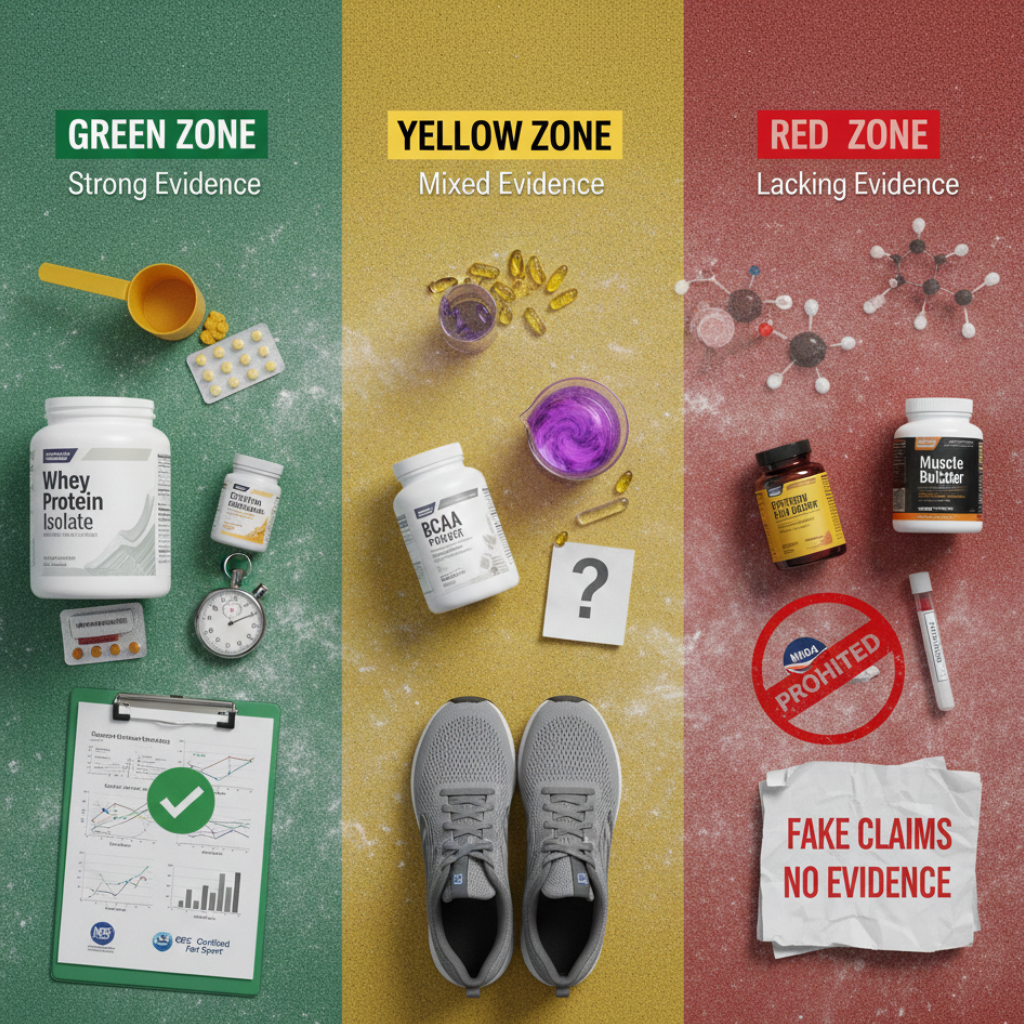
Supplements with Strong Evidence
Protein Supplements: Convenience and Timing
What it is:
Protein powders provide concentrated protein from various sources: whey (dairy), casein (dairy), soy, pea, rice, egg, or blends.
Evidence for athletic performance:
Total daily protein intake matters most:
Research establishes that athletes need 1.6-2.2 g protein per kg body weight daily for optimal muscle protein synthesis and recovery. Protein supplements help athletes meet these elevated requirements conveniently.
Protein timing has modest effects:
The "anabolic window" is less critical than once believed. Total daily intake affects outcomes more than precise timing. However, consuming protein relatively soon after training (within several hours) may provide small additional benefits for recovery and adaptation.
Protein distribution throughout day:
Distributing protein across meals (20-40g per meal depending on body size) stimulates muscle protein synthesis more effectively than consuming most protein in one meal. Protein supplements help achieve this distribution.
Protein quality matters:
Complete proteins containing all essential amino acids (particularly leucine) optimally stimulate muscle protein synthesis. Whey protein is rapidly digested with high leucine content. Casein digests slowly providing sustained amino acid availability. Plant proteins often need combining or larger doses to match animal protein effectiveness.
Research on specific outcomes:
Protein supplementation combined with resistance training enhances muscle mass and strength gains compared to training alone
Effects modest—proper training stimulus matters more
Benefits greatest in those with insufficient dietary protein
No additional benefit from consuming more than ~0.4 g/kg per meal
Realistic assessment:
Protein supplements provide convenient, high-quality protein helping athletes meet elevated requirements. They don't have unique muscle-building properties beyond their protein content—they're not magical, just convenient.
Forever Lite Ultra assessment:
Provides protein (check label for amount and source per serving), often includes vitamins and minerals, convenient for post-training or between meals. Appropriate for athletes struggling to meet protein needs through whole foods. Not necessary if dietary protein adequate, but convenient option.
Recommendations:
Use to meet total daily protein goals (1.6-2.2 g/kg)
Distribute protein across 4-5 meals daily
Consume 20-40g protein within a few hours post-training
Choose based on preference, tolerance, dietary restrictions
Whole food protein sources equally effective when convenient
Creatine Monohydrate: Most Researched Sport Supplement
What it is:
Creatine is naturally occurring compound found in meat and fish. Supplementation increases muscle creatine and phosphocreatine stores.
Mechanism:
Phosphocreatine provides rapid ATP (energy) regeneration during high-intensity, short-duration efforts (weightlifting, sprinting, jumping). Increased stores allow slightly more work before fatigue.
Evidence (extensive research, hundreds of studies):
Performance improvements:
Enhances high-intensity, short-duration performance (efforts lasting ~10-30 seconds)
Improves repeated sprint performance
Increases training volume capacity (more reps at given weight)
Modest strength and power increases (often 5-15% in responsive individuals)
Body composition:
Increases lean body mass (combination of actual muscle tissue and water retention in muscles)
Initial rapid weight gain (2-4 lbs) primarily from water retention
Longer-term gains from increased training capacity
Cognitive effects:
Some research suggests benefits for cognitive performance, particularly under sleep deprivation or mental fatigue
Evidence less robust than performance benefits
Important caveats:
Non-responders: ~20-30% of people are "creatine non-responders" who don't significantly increase muscle creatine stores with supplementation (often those with already high baseline levels from high meat/fish intake).
Sport-specific relevance: Most beneficial for sports involving repeated high-intensity efforts (weightlifting, sprinting, team sports with repeated sprints). Less relevant for pure endurance sports (marathon running) though may benefit training capacity.
Loading vs. maintenance: Traditional loading (20g daily for 5-7 days, then 3-5g daily) saturates stores quickly. Lower dose (3-5g daily) achieves same saturation in 3-4 weeks. Loading optional.
Safety:
Extensively studied. Safe for healthy individuals at recommended doses. No evidence of kidney damage in healthy people despite persistent myths. May cause gastrointestinal discomfort in some (try smaller divided doses). Weight gain from water retention may be undesirable in weight-class sports.
Realistic assessment:
Creatine monohydrate is among the most researched, effective, and safe sports supplements for strength/power athletes. Effects are real but modest. Not magical, but consistently shows benefits in appropriate populations and sports.
Recommendations:
Use creatine monohydrate (most researched, cheapest form)
3-5g daily, timing doesn't matter
Take consistently (daily even on rest days to maintain saturation)
Expect 2-4 lb initial weight gain from water
May take 3-4 weeks to see performance benefits if not loading
Combine with adequate training and nutrition
Caffeine: Performance Enhancer with Individual Variation
What it is:
Stimulant compound naturally occurring in coffee, tea, some foods. Works primarily as adenosine receptor antagonist, reducing perceived effort and fatigue.
Evidence for athletic performance:
Endurance performance:
Consistent evidence for improved endurance exercise performance
Typical improvements: 2-4% in time trial performance
Mechanisms: Reduced perceived exertion, enhanced fat oxidation (sparing glycogen), central nervous system stimulation
Strength and power:
Mixed evidence, individual variation high
May improve maximal strength, power output, muscular endurance in some individuals
Effects less consistent than for endurance
Effective doses:
3-6 mg/kg body weight (e.g., 200-400mg for 70kg person)
Taken 30-60 minutes before performance
Lower doses (100-200mg) may benefit those sensitive to caffeine
Very high doses (>9 mg/kg) don't provide additional benefits and increase side effects
Important considerations:
Individual variation: Genetics affect caffeine metabolism (CYP1A2 gene). "Slow metabolizers" may experience more side effects, less performance benefit. "Fast metabolizers" may see greater benefits.
Habituation: Regular caffeine users develop tolerance. Effects may diminish with chronic use. Some athletes strategically reduce intake before competition to enhance acute effects.
Timing matters: Taking too close to sleep impairs recovery. Half-life averages 5-6 hours but varies individually.
Side effects: Anxiety, jitters, gastrointestinal distress, sleep disruption, increased heart rate in some individuals.
Banned status: Caffeine is NOT banned by WADA (was previously on monitored list). Legal in competition at any level currently.
Realistic assessment:
Caffeine has good evidence for endurance performance enhancement and possible benefits for strength/power. Effects are modest (2-4% typically), individual response varies significantly, and side effects occur in some people. Not necessary for performance but may provide small legal edge.
Sources:
Coffee: 95mg per 8oz cup (variable)
Caffeine pills/powder: Precise dosing
Pre-workout supplements: Often contain caffeine (check labels)
Energy drinks: Variable content, often with added ingredients
Recommendations:
Test in training before using in competition
Start with lower doses to assess tolerance
Take 30-60 minutes before performance
Consider caffeine-free periods to reduce tolerance
Avoid late-day use that may impair sleep
Individual experimentation needed
Beta-Alanine: Buffer for High-Intensity Exercise
What it is:
Amino acid that increases muscle carnosine concentrations. Carnosine buffers hydrogen ions that accumulate during high-intensity exercise, delaying fatigue.
Evidence:
Performance benefits:
Improves performance in high-intensity exercise lasting 1-4 minutes
Modest improvements in repeated high-intensity efforts
May enhance training capacity over time
Meta-analysis findings:
Median improvement ~2.85% in exercise lasting 60-240 seconds
Less benefit for very short (<60 seconds) or prolonged (>4 minutes) efforts
Effective dosing:
4-6g daily for 2-4 weeks to increase muscle carnosine
Effects accumulate over time (similar to creatine)
Timing doesn't matter—total daily dose matters
Side effects:
Paresthesia (tingling sensation, particularly in face/hands) common, harmless, temporary. Occurs with doses >800mg at once. Dividing doses or using sustained-release formulations reduces this.
Realistic assessment:
Modest evidence for specific exercise durations (1-4 minutes high-intensity). May benefit sports like 400-800m running, rowing, swimming, or repeated high-intensity intervals. Less relevant for pure strength training or endurance sports. Effects modest but real in appropriate applications.
Recommendations:
4-6g daily divided into doses
Consistent supplementation for weeks (not acute pre-workout)
May combine with creatine (different mechanisms, possibly additive)
Most beneficial for sports with 1-4 minute high-intensity efforts
Supplements with Modest or Mixed Evidence
Branched-Chain Amino Acids (BCAAs): Overhyped
What they are:
Three essential amino acids: leucine, isoleucine, valine. Marketed heavily for muscle growth and recovery.
Evidence reality:
When total protein intake is adequate:
No additional benefit for muscle protein synthesis
No additional benefit for recovery
Complete proteins (whey, food) provide BCAAs plus other essential amino acids
Possible benefit when:
Training fasted (BCAAs may reduce muscle protein breakdown)
Total protein intake is insufficient (but increasing total protein would be better)
The issue:
BCAAs are components of complete proteins. If you're consuming adequate protein (1.6-2.2 g/kg daily), you're already getting ample BCAAs. Adding isolated BCAAs provides no additional benefit and is expensive relative to complete protein sources.
Realistic assessment:
Heavily marketed, weak evidence for benefits beyond adequate total protein intake. Money better spent on complete protein sources or other supplements with stronger evidence.
Omega-3 Fatty Acids: Anti-Inflammatory Benefits
Evidence for athletes:
Inflammation and recovery:
Omega-3s (EPA/DHA) have anti-inflammatory properties
May reduce exercise-induced muscle damage markers
May enhance recovery from intense training
Clinical significance debated:
Reduced inflammation markers doesn't necessarily mean improved performance
Effects on actual performance outcomes (times, distances, strength) are inconsistent
Benefits may be most apparent during very high training loads
Other health benefits:
Cardiovascular health (established)
Brain health (emerging evidence)
Joint health (may reduce inflammatory joint pain)
Forever Arctic Sea assessment:
Provides EPA/DHA omega-3s. While performance benefits remain unclear, general health benefits are established. Reasonable supplement for overall health, particularly for athletes not consuming fatty fish 2-3 times weekly. Performance-specific benefits modest or unclear.
Recommendations:
1-2g combined EPA/DHA daily
Consider for overall health rather than direct performance enhancement
May support recovery during very intense training periods
Whole food sources (fatty fish) equally effective
Nitrate/Beetroot Juice: Endurance Potential
Mechanism:
Dietary nitrate converts to nitric oxide, which may enhance blood flow, reduce oxygen cost of exercise, and improve mitochondrial efficiency.
Evidence:
Endurance performance:
Some studies show improved time trial performance (1-3%)
May reduce oxygen cost of submaximal exercise
Effects inconsistent across studies and individuals
Effective doses:
5-9 mmol nitrate (approximately 500ml beetroot juice)
2-3 hours before performance
Caveats:
High individual variability (some respond, others don't)
Elite athletes may show smaller benefits than recreational athletes
Effectiveness may decrease with higher fitness levels
Some studies show no benefit
Realistic assessment:
Promising but inconsistent evidence. May provide small benefits for some endurance athletes. Individual testing in training necessary to assess personal response. Not essential, effects modest when present.
Sodium Bicarbonate: Alkaline Buffer
Mechanism:
Buffers acid accumulation during high-intensity exercise, potentially delaying fatigue.
Evidence:
May improve high-intensity exercise lasting 1-7 minutes
Effective dose: 0.3 g/kg body weight 60-90 minutes before exercise
Significant gastrointestinal side effects common (cramping, diarrhea)
Individual tolerance varies widely
Realistic assessment:
Some evidence for specific exercise durations, but gastrointestinal side effects often limit practical use. May benefit some athletes willing to experiment carefully. Not first-line recommendation due to tolerability issues.
Supplements Lacking Robust Evidence
Testosterone Boosters: Marketing Hype
Common ingredients:
Tribulus terrestris, fenugreek, D-aspartic acid, various "natural testosterone boosters."
Evidence reality:
Research consistently shows these supplements do NOT significantly increase testosterone in healthy men with normal baseline levels. Small increases in some studies remain within normal physiological ranges and don't translate to performance benefits.
Important distinction:
These differ from anabolic steroids (which DO increase testosterone but are illegal, dangerous, and banned). Legal "testosterone boosters" are ineffective for performance enhancement.
Realistic assessment:
Heavily marketed, minimal evidence. Money better spent on proven supplements or quality food.
Pre-Workout Supplements: Variable Formulations
What they contain:
Typically combinations of caffeine, beta-alanine, citrulline, BCAAs, various other ingredients in proprietary blends.
Evidence:
Primary active ingredient is usually caffeine (which has evidence)
Beta-alanine may have benefits if dosed adequately (4-6g daily)
Other ingredients often in doses too low to be effective
Proprietary blends prevent knowing actual ingredient amounts
Issues:
Expensive compared to individual ingredients
May contain ineffective ingredients at low doses
Quality and consistency variable
Some contain banned substances (risk for competitive athletes)
Realistic assessment:
Caffeine provides most of the perceived benefit. Buying caffeine separately is cheaper and allows dose control. If using pre-workouts, choose products with transparent labeling showing ingredient amounts.
Fat Burners: Minimal Evidence
Common ingredients:
Caffeine, green tea extract, various thermogenic compounds.
Evidence reality:
Caffeine may slightly increase metabolism and fat oxidation (minimal effect)
Green tea extract shows very modest fat loss in some studies (effect size small)
Most "fat burning" ingredients lack robust evidence
Weight loss primarily comes from caloric deficit, not supplements
Realistic assessment:
No supplement significantly "burns fat" without caloric restriction and exercise. Energy balance (calories in vs. out) determines body composition outcomes far more than supplements. Money better spent on quality food supporting training.
Micronutrient Considerations for Athletes
When Multivitamins May Be Appropriate
Forever Daily assessment:
Comprehensive multivitamins provide micronutrient insurance for athletes with:
Inconsistent dietary intake
Restricted diets (weight-class athletes, plant-based athletes)
High training volumes increasing requirements
Travel situations limiting food quality/variety
Important caveats:
Cannot compensate for poor overall diet quality
Food-first approach preferred
Excessive supplementation of some nutrients can be harmful
Testing for deficiencies (vitamin D, iron) more targeted than blanket supplementation
Specific nutrient considerations for athletes:
Iron:
Essential for oxygen transport
Deficiency common in female athletes, endurance athletes, plant-based athletes
Impairs performance before causing clinical anemia
Testing recommended before supplementing (excess iron harmful)
Vitamin D:
Important for bone health, immune function, muscle function
Deficiency common in indoor athletes, northern latitudes, darker skin pigmentation
Testing recommended
Supplementation (1000-2000 IU daily) appropriate for deficiency
Calcium:
Essential for bone health
Particularly important for female athletes, those avoiding dairy
Adequate intake critical, excessive supplementation not beneficial
B vitamins:
Involved in energy metabolism
Needs may increase slightly with training
Deficiency rare with varied diet
Supplementation beyond adequacy doesn't enhance performance
Hydration and Electrolyte Considerations
Forever Aloe Vera Gel: Hydration Support
Role in athletic nutrition:
Contributes to daily fluid intake. Hydration is critical for performance—even 2% dehydration impairs endurance performance and thermoregulation.
Evidence for aloe specifically:
Limited research on aloe vera for athletic performance enhancement. Traditional use for digestive health. If athletes find it palatable and it increases fluid consumption, it serves hydration purpose.
Realistic assessment:
Not performance-enhancing supplement per se, but adequate hydration is essential. Any palatable beverage that promotes adequate fluid intake serves this purpose.
Electrolyte Needs
When supplementation may be necessary:
Prolonged exercise (>90 minutes)
Hot/humid conditions causing heavy sweating
"Salty sweaters" (white residue on skin/clothing after training)
Multiple training sessions daily
Primary electrolytes:
Sodium: Most important for replacement during prolonged sweating
Potassium, magnesium, calcium: Also lost in sweat but in smaller amounts
Sources:
Sports drinks for during exercise
Electrolyte tablets/powders
Whole foods post-exercise (fruits, vegetables, dairy, salted foods)
Hyponatremia risk:
Drinking excessive plain water during very prolonged exercise (ultraendurance) without sodium replacement can cause dangerous low blood sodium. Proper electrolyte replacement prevents this.
Creating Evidence-Based Supplementation Strategy
Priority Hierarchy for Athletes
Tier 1—Foundation (Address First):
Total caloric adequacy for training demands
Macronutrient distribution appropriate for sport
Hydration before, during, after training
Sleep 7-9 hours nightly for recovery
Whole food diet quality emphasizing nutrient-dense foods
Tier 2—Correct Deficiencies:
Test for common deficiencies: Vitamin D, iron (especially female athletes)
Supplement confirmed deficiencies specifically
Consider multivitamin if diet inconsistent or restricted
Tier 3—Meet Elevated Requirements:
Protein supplementation if dietary intake insufficient to reach 1.6-2.2 g/kg daily
Carbohydrates during prolonged training/competition if needed
Electrolytes during prolonged sweating
Tier 4—Evidence-Based Performance Supplements:
Creatine monohydrate for strength/power athletes (3-5g daily)
Caffeine for endurance or power (3-6 mg/kg 30-60 min pre-exercise) if tolerated
Beta-alanine for sports with 1-4 minute high-intensity efforts (4-6g daily)
Tier 5—Experimental/Individual Response:
Beetroot juice/nitrate (test individual response)
Omega-3s for general health, possible recovery benefits
Other supplements based on individual experimentation in training
What to Avoid
Don't waste money on:
Testosterone boosters (ineffective)
Fat burners (minimal effect, energy balance matters)
BCAAs when total protein adequate
Expensive proprietary blends with undisclosed doses
Supplements with exaggerated claims not supported by research
Don't risk:
Supplements with banned substances (verify against WADA list if competing)
Products with proprietary blends hiding ingredient amounts
Unregulated products with contamination risks
Excessive dosing of any supplement
Supplement Quality and Safety
Third-Party Testing
Why it matters:
Supplements aren't FDA-regulated like medications. Quality, purity, and accuracy of label claims vary widely.
Certification programs:
NSF Certified for Sport: Tests for banned substances, verifies label accuracy
Informed-Sport: Similar testing, commonly used in athletics
USP Verified: Verifies quality and purity
Recommendation:
Competitive athletes should ONLY use third-party tested products to minimize banned substance risk. Even contamination (not listed ingredients) can cause positive drug tests.
Banned Substances
WADA Prohibited List:
World Anti-Doping Agency maintains list of banned substances updated annually. Includes:
Anabolic steroids
Stimulants above certain thresholds
Hormone modulators
Beta-2 agonists
Diuretics and masking agents
Many others
Collegiate athletics:
NCAA has own banned substance list partially overlapping with WADA.
Professional sports:
Each organization may have specific rules.
Athlete responsibility:
Ignorance is not excuse. Athletes are responsible for everything entering their bodies. Verify all supplements against applicable prohibited lists.
Contamination Risk
The problem:
Studies have found supplements contaminated with banned substances not listed on labels. Contamination can occur during manufacturing if facilities produce both regular supplements and products containing banned substances.
Risk mitigation:
Use only third-party certified products
Buy from reputable companies
Avoid products making exaggerated claims
Be extra cautious with weight loss and muscle building supplements (higher contamination risk)
Supplement Timing Strategies
Around Training
Pre-training (if using):
Caffeine: 30-60 minutes before
Creatine: Timing doesn't matter (daily consistency matters)
Carbohydrates: If training fasted or insufficient recent meals
During training:
Carbohydrates: For sessions >90 minutes (30-60g per hour)
Electrolytes: For prolonged sweating
Hydration: Based on sweat rate and conditions
Post-training:
Protein: 20-40g within a few hours (not as time-sensitive as once believed)
Carbohydrates: For glycogen replenishment, particularly if training again within 24 hours
Hydration: Replace 150% of fluid losses
Daily Consistency
Supplements requiring daily intake:
Creatine: Daily to maintain muscle saturation
Beta-alanine: Daily to increase muscle carnosine
Multivitamins: Daily for consistent micronutrient support
Omega-3s: Daily for accumulating effects
Timing generally doesn't matter for these—consistency matters.
Special Population Considerations
Plant-Based Athletes
Potential concerns:
Protein quality and amount (plant proteins often incomplete)
Vitamin B12 (only in animal products)
Iron (plant iron less bioavailable)
Zinc (absorption inhibited by phytates in plants)
Omega-3s (ALA conversion to EPA/DHA limited)
Creatine (primarily in meat/fish)
Supplementation strategies:
Protein: May need plant-based protein powder to reach targets
B12: Mandatory supplementation
Iron: Consider testing and supplementing if deficient
Omega-3s: Algae-based EPA/DHA supplements
Creatine: Consider supplementation (plant-based athletes may have lower baseline stores)
Female Athletes
Specific considerations:
Iron deficiency more common (menstrual losses)
Calcium needs important for bone health (particularly if irregular menstruation)
RED-S (Relative Energy Deficiency in Sport) risk if energy intake inadequate
Vitamin D important for bone health
Recommendations:
Regular iron testing
Ensure adequate calcium and vitamin D
Monitor menstrual function (irregularity may indicate energy deficiency)
Prioritize adequate energy intake
Adolescent Athletes
Important caution:
Adolescents should focus on whole food nutrition rather than extensive supplementation. Most supplements lack research in adolescent populations.
Generally appropriate:
Multivitamin if diet inadequate
Vitamin D if deficient
Protein from whole foods primarily (powder convenient occasionally)
Generally avoid:
Performance-enhancing supplements (creatine, caffeine, pre-workouts) until late adolescence at earliest
Weight loss supplements
Muscle building supplements
Recommendation:
Work with pediatric sports dietitian for individualized guidance.
Frequently Asked Questions
Do I need supplements to build muscle or improve performance?
No. Proper training, adequate nutrition (particularly protein), sufficient recovery, and quality sleep are foundational. Supplements like protein powder and creatine can enhance results modestly but cannot compensate for inadequate training or nutrition. Many successful athletes use minimal supplementation. Prioritize fundamentals first.
How much protein do I really need?
Research supports 1.6-2.2 g per kg body weight daily for athletes engaged in regular intense training. For 70kg (154lb) athlete, this is 112-154g daily. This can be achieved through food alone—supplements provide convenience, not necessity. Distribute protein across 4-5 meals (20-40g per meal depending on body size) for optimal muscle protein synthesis.
Is creatine safe for long-term use?
Yes. Creatine monohydrate is extensively researched with excellent safety profile in healthy individuals at recommended doses (3-5g daily). No evidence of kidney damage in healthy people despite persistent myths. Safe for long-term use. Not recommended for those with pre-existing kidney disease. Stay well hydrated.
Will caffeine improve my performance?
Possibly, with individual variation. Evidence strongest for endurance performance (2-4% typical improvement). Strength/power evidence mixed. Effective dose 3-6 mg/kg body weight. Test in training before competition. Some people experience side effects (jitters, GI distress, sleep disruption). Genetics affect response. Not necessary but may provide small legal advantage for some athletes.
Can I take creatine and caffeine together?
Yes. Early research suggested caffeine might blunt creatine's effects, but this hasn't been consistently replicated. Many athletes use both successfully. Take creatine daily for consistency. Use caffeine strategically before training/competition if desired.
Do BCAAs help with recovery?
When total protein intake is adequate (1.6-2.2 g/kg daily), BCAAs provide no additional recovery benefit. Complete proteins (whey, food sources) provide BCAAs plus other essential amino acids and are more effective. BCAAs may have minimal benefit when training fasted or if protein intake is insufficient, but increasing total protein is better strategy. Save your money.
How do I know if supplements contain banned substances?
Use only third-party certified products (NSF Certified for Sport, Informed-Sport). Verify all supplements against WADA Prohibited List (for Olympic/international athletes), NCAA banned list (collegiate athletes), or applicable professional organization lists. Even "natural" supplements can contain banned substances. Contamination risk exists. When in doubt, don't use it. Athlete is responsible for everything in their body.
Should I use pre-workout supplements?
Pre-workouts primarily contain caffeine (which has evidence) plus various other ingredients often at doses too low to be effective. Cheaper and more controlled to buy caffeine separately. If using pre-workouts, choose products with transparent labeling showing all ingredient amounts, third-party tested, and no proprietary blends. Test in training before competition. Not necessary for most athletes.
Can supplements help me lose fat while maintaining muscle?
No supplement significantly "burns fat." Fat loss requires caloric deficit. Adequate protein (1.6-2.2 g/kg) helps preserve muscle during weight loss. Resistance training signals body to maintain muscle. Supplements can't overcome energy balance. Some athletes use caffeine for slight metabolic boost (minimal effect). Save money and focus on nutrition and training.
Are expensive supplements better than cheap ones?
Not necessarily. Price doesn't guarantee quality or effectiveness. Creatine monohydrate is cheap and among most effective supplements. Many expensive supplements contain ineffective ingredients or proprietary blends. Look for third-party testing, transparent labeling, and ingredients with research support. Generic versions of proven supplements (creatine, caffeine, protein powder) work as well as brand names.
Conclusion
Athletic performance depends primarily on training quality, recovery, overall nutrition, sleep, and genetics. Supplements play supportive roles but cannot replace these fundamentals. No supplement compensates for poor training or inadequate nutrition.
Among supplements, evidence quality varies dramatically. Strong research supports: adequate protein intake (1.6-2.2 g/kg daily) often requiring supplementation for convenience, creatine monohydrate for strength/power athletes (3-5g daily), caffeine for endurance and possibly power performance (3-6 mg/kg), and beta-alanine for specific high-intensity efforts lasting 1-4 minutes (4-6g daily).
Modest or mixed evidence exists for: omega-3 fatty acids (general health benefits established, performance benefits unclear), beetroot juice/nitrate (inconsistent effects, individual variation high), and various others requiring individual experimentation.
Many heavily marketed supplements lack robust evidence: testosterone boosters (ineffective in healthy individuals), BCAAs when protein adequate (unnecessary), fat burners (minimal effects), and most proprietary performance blends.
Forever Living products—Forever Lite Ultra (protein), Forever Arctic Sea (omega-3s), Forever Daily (multivitamin), Forever Aloe Vera Gel (hydration), Forever Bee Pollen—may serve roles in athletic nutrition primarily through meeting basic nutritional needs rather than providing performance-enhancing effects beyond adequate nutrition.
Competitive athletes must verify all supplements against applicable banned substance lists. Third-party certification (NSF Certified for Sport, Informed-Sport) reduces but doesn't eliminate risk. Athletes are responsible for everything entering their bodies.
Priority hierarchy for athletes: (1) Optimize training, recovery, sleep, (2) Establish sound whole food nutrition meeting energy and macronutrient needs, (3) Correct any nutritional deficiencies through testing and targeted supplementation, (4) Use protein supplementation if needed to meet elevated requirements, (5) Consider evidence-based performance supplements appropriate for sport type, (6) Avoid supplements lacking evidence or containing banned substances.
Individual responses to supplements vary based on genetics, training status, diet quality, and sport type. Testing supplements in training before competition use is essential. What works for one athlete may not work for another.
Most athletes benefit more from optimizing fundamentals (training, nutrition, recovery, sleep) than from extensive supplementation. Focus resources on quality food, good coaching, and adequate recovery. Supplements enhance already solid foundations—they don't create them.
Sources and References
For evidence-based information about sports nutrition and supplements:
International Society of Sports Nutrition (ISSN): https://www.sportsnutritionsociety.org - Position stands on supplements
PubMed/MEDLINE: https://pubmed.ncbi.nlm.nih.gov - Sports nutrition and supplement research
Journal of the International Society of Sports Nutrition: https://jissn.biomedcentral.com - Sports supplement research
Sports Medicine: https://www.springer.com/journal/40279 - Athletic performance research
World Anti-Doping Agency (WADA): https://www.wada-ama.org - Prohibited substance list
Australian Institute of Sport (AIS) Sports Supplement Framework: Evidence-based supplement classifications
About the Author
Naddy is a wellness enthusiast and content creator behind Wellness With Forever. She focuses on simple, practical tips to support a healthy lifestyle through nutrition, movement, and mindful habits. Drawing on personal experience and ongoing research into health and wellness, she aims to break down complex topics into clear, easy-to-follow guidance.
Disclaimer
The information in this article is for educational purposes only and does not replace professional medical or sports nutrition advice. These statements have not been evaluated by the Food and Drug Administration. Forever Living products are not intended to diagnose, treat, cure, or prevent any disease or injury. Athletes should consult sports medicine professionals, registered sports dietitians, and healthcare providers before starting supplements. Competitive athletes must verify all supplements against applicable banned substance lists (WADA, NCAA, professional organizations). Individual responses vary significantly. The author and publisher assume no responsibility for adverse effects from the use or misuse of information contained herein. Always consult qualified professionals, especially if you have medical conditions or take medications.
About Us
Follow
© 2025. WellnessWithForever
SUBSCRIBE