Electrolytes and Hydration: Evidence-Based Guide to Supplementation
Electrolytes for hydration: When do you actually need them? Evidence-based guide to supplementation timing, dosing, sports drinks vs water. Science-backed recommendations.
by WellnessWithForever
2/17/202613 min read
Electrolytes and Hydration: Evidence-Based Guide to Supplementation
By WellnessWithForever 17 February 2026: This post might contain affiliate links.
Electrolytes are minerals carrying electrical charges that dissolve in body fluids, playing essential roles in hydration, nerve function, muscle contraction, and pH balance. While electrolyte supplementation is heavily marketed for various purposes, understanding what research actually shows about when supplementation is beneficial versus unnecessary helps make informed decisions.
The relationship between electrolytes and hydration is genuine and important, but claims about universal electrolyte deficiency or the necessity of supplementation for everyone oversimplify complex physiology. Individual electrolyte needs vary dramatically based on activity level, climate, diet, health status, and sweat rate.
Forever Living offers Forever Active Boost containing electrolytes positioned for hydration support. Understanding what research shows about electrolyte function, when supplementation provides benefits, and when plain water suffices helps evaluate this and similar products appropriately.
Important Note: This article discusses electrolyte supplementation for hydration in healthy individuals. These products are not medications and cannot diagnose, treat, cure, or prevent diseases. Some medical conditions affect electrolyte balance requiring medical management. Certain individuals (kidney disease, heart failure, taking specific medications) should consult healthcare providers before electrolyte supplementation. This information is educational and does not replace professional medical advice.
Key Takeaways
Electrolytes (sodium, potassium, magnesium, calcium, chloride) are essential for fluid balance, nerve signals, and muscle function
Most people obtain adequate electrolytes from normal diet without supplementation
Electrolyte supplementation becomes important during prolonged exercise, heavy sweating, or specific medical situations
Plain water is sufficient for hydration in normal daily activities and exercise <60 minutes
Excessive electrolyte intake or imbalance can be harmful
Individual sweat rates and electrolyte losses vary dramatically
Balanced diet provides electrolytes for sedentary to moderately active individuals
Understanding Electrolytes: What They Are and What They Do
The Major Electrolytes
Sodium (Na+):
Most abundant extracellular electrolyte
Primary role in fluid balance and blood pressure regulation
Essential for nerve impulse transmission
Helps water absorption in intestines
Normal blood concentration: 135-145 mEq/L
Potassium (K+):
Most abundant intracellular electrolyte
Critical for heart rhythm regulation
Essential for muscle contraction
Supports nerve function
Normal blood concentration: 3.5-5.0 mEq/L
Chloride (Cl-):
Most abundant negative ion in extracellular fluid
Works with sodium to maintain fluid balance
Component of stomach acid (hydrochloric acid)
Normal blood concentration: 96-106 mEq/L
Magnesium (Mg2+):
Cofactor for 300+ enzymatic reactions
Supports muscle and nerve function
Involved in energy production
Helps regulate other electrolytes
Normal blood concentration: 1.7-2.2 mEq/L
Calcium (Ca2+):
Essential for bone health
Critical for muscle contraction
Supports nerve transmission
Involved in blood clotting
Normal blood concentration: 8.5-10.5 mg/dL
Phosphate (PO4³-):
Important for bone health
Energy metabolism (ATP)
pH balance
Normal blood concentration: 2.5-4.5 mg/dL
How Electrolytes Support Hydration
Fluid balance mechanism:
Electrolytes create osmotic gradients that regulate water distribution between cells and extracellular spaces. Sodium primarily controls extracellular fluid volume. Potassium primarily controls intracellular fluid volume. The sodium-potassium pump actively maintains these gradients.
Water absorption:
In the small intestine, sodium-glucose cotransport helps absorb water. Sodium creates an osmotic gradient pulling water from intestinal lumen into bloodstream. This is why oral rehydration solutions contain sodium and glucose.
Without adequate sodium: Water may pass through digestive system without optimal absorption. Cells cannot adequately regulate water uptake. Fluid balance becomes disrupted.
The key point:
Electrolytes don't just accompany hydration—they enable it at the cellular level. However, for most people in normal situations, dietary electrolytes are adequate.
When Do You Actually Need Electrolyte Supplementation?
Situations Where Supplementation Becomes Important
Prolonged exercise (>60-90 minutes):
Why it matters:
Sweat contains sodium (20-80 mEq/L, individual variation high)
Also loses potassium, magnesium, calcium, chloride
Extended exercise without replacement can deplete electrolytes
Drinking plain water alone during very prolonged activity can dilute blood sodium
Evidence: Research supports electrolyte replacement during prolonged endurance exercise. Meta-analyses show improved performance and reduced cramping risk with appropriate electrolyte intake during extended activity.
Practical application:
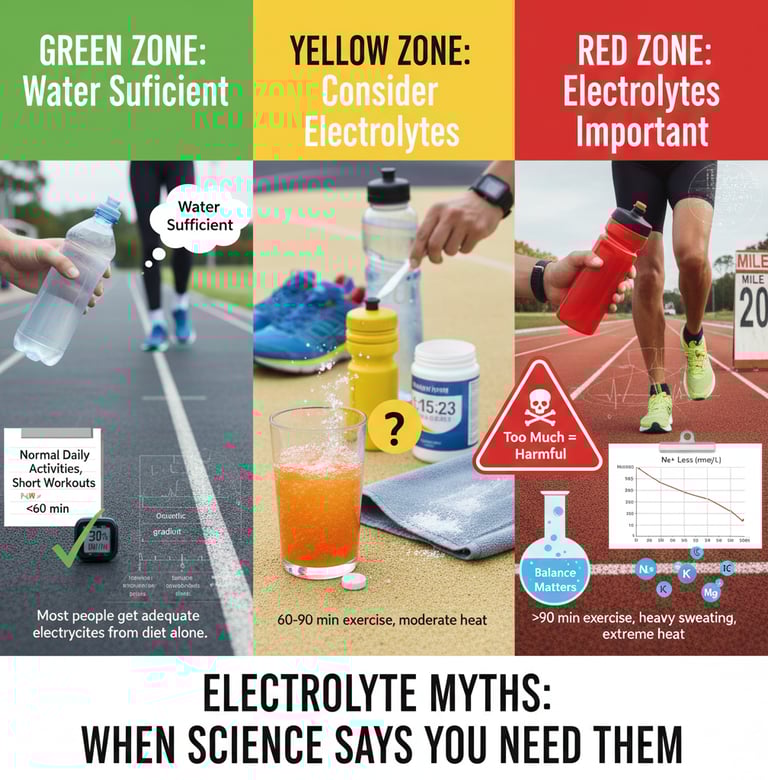
Exercise <60 minutes: Plain water adequate
Exercise 60-90 minutes: Water usually sufficient unless very hot/humid
Exercise >90 minutes: Electrolyte replacement beneficial
Intense exercise in heat: Consider electrolytes even for shorter duration
Heavy sweating:
Situations:
Intense heat exposure with vigorous activity
Outdoor labor in hot conditions
Athletes training in hot/humid environments
Saunas or hot yoga (extreme sweating)
Why it matters: Sweat losses can exceed 2-3 liters per hour in extreme conditions. This represents substantial electrolyte losses, particularly sodium.
Individual variation: Some people are "salty sweaters" (white residue on skin/clothing after sweating) losing more sodium than others. Sweat rates vary enormously between individuals (0.5-3+ liters/hour during exercise).
Illness with fluid losses:
Vomiting/diarrhea:
Rapid fluid and electrolyte losses
Dehydration develops quickly
Electrolyte replacement important
Oral rehydration solutions (ORS) specifically formulated for this
Fever:
Increases fluid needs
Sweating from fever loses electrolytes
Replace fluids with electrolytes during prolonged fever
Medical conditions:
Kidney disease:
Affects electrolyte balance
May require specific electrolyte restrictions or supplementation
Medical supervision essential
Heart failure:
Medications (diuretics) affect electrolyte balance
Sodium restriction often prescribed
Medical management required
Adrenal insufficiency:
Affects sodium and potassium regulation
Requires medical treatment
Certain medications:
Diuretics: Increase electrolyte losses
Laxatives: Can cause losses with chronic use
Some antibiotics: Affect electrolyte balance
When Plain Water Is Sufficient
Normal daily activities: Sedentary to moderate activity with normal diet provides adequate electrolytes. No supplementation needed.
Short-duration exercise: Activities <60 minutes at moderate intensity in normal temperatures don't typically deplete electrolytes requiring replacement.
Balanced diet: People eating varied diet with adequate calories rarely have electrolyte deficiencies requiring supplementation outside of specific exercise or medical situations.
Casual recreation: Walking, light hiking, recreational activities generally don't require electrolyte supplementation.
Dietary Sources of Electrolytes
Sodium
Adequate intake (AI): 1,500 mg daily Upper limit: 2,300 mg daily (less for some populations)
Sources:
Table salt: 2,300 mg per teaspoon
Processed foods: Often very high
Bread, cheese, cold cuts, pizza, soup: Common sources
Soy sauce: 1,000+ mg per tablespoon
Reality: Most people exceed sodium recommendations from diet alone. Sodium deficiency is rare in those eating normal diet.
Exception: Athletes with very high sweat losses may need additional sodium beyond typical dietary intake.
Potassium
Adequate intake: 2,600 mg (women), 3,400 mg (men) daily
Sources:
Bananas: 422 mg per medium banana
Potatoes: 926 mg per medium potato
Spinach: 839 mg per cup cooked
Beans: 600-900 mg per cup
Yogurt: 380 mg per cup
Avocado: 708 mg per avocado
Reality: Many people consume less than recommended amounts. Emphasis on fruits and vegetables helps meet needs.
Magnesium
RDA: 310-320 mg (women), 400-420 mg (men)
Sources:
Almonds: 80 mg per ounce
Spinach: 157 mg per cup cooked
Cashews: 74 mg per ounce
Black beans: 120 mg per cup
Avocado: 58 mg per avocado
Dark chocolate: 64 mg per ounce
Reality: Many people consume less than RDA. Common deficiency compared to other electrolytes.
Calcium
RDA: 1,000-1,200 mg daily (varies by age/sex)
Sources:
Dairy: 300+ mg per cup milk/yogurt
Fortified plant milks: Similar to dairy
Sardines: 325 mg per 3 oz
Leafy greens: 100-250 mg per cup
Fortified foods: Variable amounts
Chloride
Adequate intake: 2,300 mg daily
Sources:
Table salt: Contains chloride
Generally consumed adequately with sodium
Meeting Electrolyte Needs Through Food
Balanced diet approach:
Consuming variety of whole foods typically provides adequate electrolytes:
Fruits and vegetables: Potassium, magnesium
Dairy or fortified alternatives: Calcium
Whole grains, nuts, seeds: Magnesium
Normal salt use: Sodium, chloride
Athletes and active individuals:
Generally meet increased needs through:
Higher caloric intake (more food = more electrolytes)
Salting food to taste
Consuming electrolyte-rich recovery foods
Supplementation during prolonged activity when appropriate
Electrolyte Supplementation Products
Types of Electrolyte Supplements
Sports drinks:
Contain sodium, potassium, often other electrolytes
Include carbohydrates for energy
Examples: Gatorade, Powerade, various commercial brands
Electrolyte tablets/powders:
Dissolve in water
Often lower or no carbohydrates
Variable electrolyte content between brands
Oral rehydration solutions (ORS):
Specifically formulated for illness-related dehydration
WHO formula: specific sodium/glucose ratio
Examples: Pedialyte, WHO ORS
Salt tablets:
Concentrated sodium chloride
Used by some endurance athletes
Risk of excessive intake if misused
Coconut water:
Natural source of potassium
Lower sodium than sports drinks
Some electrolytes, natural sugars
Forever Active Boost Assessment
Contains:
Electrolytes: Sodium, potassium, magnesium
B vitamins
Vitamin C
Carbohydrates
Natural caffeine from guarana
Appropriate uses:
Good applications:
During prolonged exercise (>60-90 minutes)
Before, during, or after intense training
Hot weather with heavy sweating
Recovery from intense physical activity
Travel situations (flying causes dehydration)
Less necessary for:
Normal daily hydration
Short-duration exercise (<60 minutes)
Sedentary activities
Already consuming balanced diet with adequate electrolytes
Comparison considerations:
Check electrolyte content per serving:
Sodium content: How much per serving?
Potassium: Adequate amounts?
Other electrolytes: Magnesium, calcium present?
Sugar content: High or low?
Cost per serving: Compare to alternatives
Realistic expectations:
Provides electrolytes appropriate for situations with substantial losses. Won't dramatically transform hydration beyond replacing what's lost. Not necessary for everyone in all situations.
Individual Variation in Electrolyte Needs
Factors Affecting Requirements
Sweat rate:
Varies 0.5-3+ liters/hour during exercise
Genetic factors
Heat acclimatization status
Fitness level
Exercise intensity
Sweat composition:
Sodium concentration varies 20-80+ mEq/L between individuals
"Salty sweaters" lose more sodium
Visible white residue on skin/clothing indicates high sodium loss
Can test sweat sodium through labs
Diet:
Low-sodium diets may increase sodium conservation but reduce availability for losses
High-sodium diets provide more buffer
Potassium intake varies widely based on produce consumption
Climate acclimatization:
Heat-acclimatized individuals conserve sodium better
Sweat becomes more dilute with acclimatization
Reduces but doesn't eliminate electrolyte losses
Training status:
Trained athletes often have higher sweat rates
But better sodium conservation mechanisms
May still have substantial absolute losses due to volume
Determining Personal Needs
Sweat testing:
Weigh before and after exercise
Each pound lost = ~16 ounces fluid
Can estimate hourly sweat rate
Sweat patches can test sodium concentration
Signs you may need more electrolytes:
Muscle cramps during or after exercise (not always electrolytes, but possible)
Feeling worse despite drinking plain water
White residue on skin/clothing after sweating
Headache despite adequate water intake
Nausea during prolonged exercise
Experimentation:
Try electrolyte supplementation during training
Compare performance and recovery with and without
Individual response varies
What works for others may not work for you
Electrolyte Imbalances: Too Much or Too Little
Hyponatremia (Low Sodium)
Exercise-associated hyponatremia:
Occurs when drinking excessive plain water during very prolonged exercise
Dilutes blood sodium to dangerous levels
More common in slower endurance athletes (longer time, more opportunity for excessive drinking)
Symptoms:
Nausea, vomiting
Headache
Confusion
Seizures (severe)
Can be fatal if severe
Prevention:
Don't drink excessively beyond thirst during exercise
Include electrolytes during prolonged activities
Don't force excessive fluid intake
Other causes:
Certain medications
Medical conditions affecting sodium regulation
Excessive plain water intake in non-exercise contexts
Hypernatremia (High Sodium)
Causes:
Inadequate water intake relative to sodium
Excessive sodium supplementation without adequate fluid
Certain medical conditions
Symptoms:
Extreme thirst
Confusion
Muscle twitching
Seizures (severe)
Potassium Imbalances
Hypokalemia (low potassium):
Causes: Vomiting, diarrhea, some medications
Symptoms: Weakness, fatigue, muscle cramps, irregular heartbeat
Can be serious, requires medical attention
Hyperkalemia (high potassium):
Causes: Kidney disease, certain medications, excessive supplementation
Symptoms: Weakness, irregular heartbeat
Can be life-threatening, requires immediate medical attention
Important note: Potassium supplements should be used cautiously. Excessive potassium can be dangerous, particularly for those with kidney issues.
Magnesium Imbalances
Hypomagnesemia (low magnesium):
Relatively common
Symptoms: Muscle cramps, weakness, irregular heartbeat, personality changes
Often goes undiagnosed (blood levels don't always reflect tissue stores)
Hypermagnesemia (high magnesium):
Rare from diet/supplements (kidneys excrete excess)
Can occur with kidney disease or excessive supplementation
Symptoms: Nausea, weakness, irregular heartbeat
The Balance Principle
Key concept:
Electrolytes work in balance with each other. Excessive intake of one can affect others. Sodium and potassium balance is particularly important. Magnesium affects calcium balance. Isolated supplementation of single electrolytes (except in deficiency) can disrupt balance.
Practical approach:
Comprehensive electrolyte replacement (multiple electrolytes together) is generally safer than isolated supplementation. For most people, balanced diet provides this naturally.
Evidence-Based Electrolyte Recommendations
For Sedentary to Moderately Active Individuals
Recommendation: Balanced diet meeting caloric and nutritional needs provides adequate electrolytes. No supplementation necessary.
Focus on:
Adequate fruits and vegetables (potassium, magnesium)
Calcium sources (dairy or fortified alternatives)
Whole grains, nuts, seeds (magnesium)
Salt food to taste (sodium)
Plain water for hydration
For Athletes and Highly Active Individuals
Daily (non-exercise): Higher caloric intake generally provides proportionally more electrolytes. May need to consciously include sodium if low-salt diet (athletes typically need more sodium than general population).
During exercise:
<60 minutes:
Plain water adequate for most
Salt food normally in daily diet
60-90 minutes:
Water usually sufficient
Consider electrolytes in very hot/humid conditions
>90 minutes or intense heat:
Electrolyte replacement beneficial
Aim for ~500-700 mg sodium per hour prolonged exercise
Smaller amounts potassium, magnesium
Carbohydrates also beneficial for energy
Post-exercise:
Replace fluids with electrolytes if heavy/prolonged sweat losses
Normal meals typically provide adequate electrolyte restoration
Chocolate milk is effective recovery beverage (carbs, protein, electrolytes, fluid)
For Special Populations
Older adults:
May need to ensure adequate potassium and magnesium from diet
Some medications affect electrolyte balance
Medical guidance appropriate
Pregnant/breastfeeding:
Increased needs for all nutrients including electrolytes
Focus on nutrient-dense diet
Supplementation under healthcare provider guidance
Those with medical conditions:
Kidney disease, heart failure, adrenal disorders affect electrolyte balance
Medical management essential
Don't self-supplement without medical approval
Taking certain medications:
Diuretics, ACE inhibitors, others affect electrolyte balance
Work with healthcare provider on monitoring and management
Practical Electrolyte Strategies
Creating Your Electrolyte Plan
Step 1: Assess your baseline needs
Sedentary/light activity:
Normal balanced diet adequate
No supplementation needed
Moderately active (recreational exercise <60 min most days):
Normal diet adequate
Plain water during activity
Very active (intense training, prolonged exercise):
May need strategic electrolyte supplementation during longest/hardest sessions
Normal diet + salting food usually adequate for daily needs
Step 2: Identify situations requiring supplementation
Consider electrolyte products when:
Exercise duration >90 minutes
Intense exercise in hot/humid conditions
Very heavy sweating (regardless of duration)
Endurance events (running, cycling, triathlon, etc.)
Recovery from prolonged/intense activity
Step 3: Choose appropriate products
Forever Active Boost or similar products appropriate for exercise/heat exposure situations. Compare sodium content per serving (aim for 500-700 mg/hour during prolonged exercise). Check other electrolytes (potassium, magnesium beneficial). Consider carbohydrate content (useful during exercise for energy). Taste matters (you'll drink more if it tastes good to you).
Step 4: Test in training
Never try new products during competition. Test during training to assess tolerance, taste, effectiveness. Adjust amounts and timing based on response. Individual needs vary—what works for others may not work for you.
Timing Strategies
Before exercise:
17-20 oz fluid with electrolytes 2-3 hours before prolonged activity
Ensures starting well-hydrated with adequate electrolyte stores
During exercise:
7-10 oz every 10-20 minutes during prolonged activity
Include electrolytes for activities >60-90 minutes
Don't wait until thirsty during intense exercise
After exercise:
16-24 oz per pound lost through sweat
Include electrolytes if heavy/prolonged losses
Normal meals typically restore electrolytes within hours
Common Electrolyte Myths
Myth: "Everyone needs electrolyte drinks daily"
Reality: Most people get adequate electrolytes from normal balanced diet. Supplementation necessary only for specific situations (prolonged exercise, heavy sweating, illness).
Myth: "Sports drinks are always better than water"
Reality: For exercise <60 minutes, plain water is adequate and avoids unnecessary sugar/calories. Sports drinks beneficial for prolonged or intense activity.
Myth: "More electrolytes is always better"
Reality: Excessive intake can cause imbalances and health problems. Balance is key, not maximum intake.
Myth: "You must replace all electrolytes lost immediately"
Reality: Normal meals restore electrolytes over hours post-exercise. Immediate replacement critical only for same-day multiple sessions or very prolonged events.
Myth: "Muscle cramps always mean electrolyte deficiency"
Reality: Cramping has multiple causes. Electrolyte imbalance is one possibility, but fatigue, dehydration, muscle overuse, and other factors also cause cramping.
Myth: "Natural is always better (coconut water, etc.)"
Reality: Effectiveness depends on electrolyte content, not source. Coconut water has potassium but lower sodium than sports drinks. Choose based on needs, not "natural" marketing.
Myth: "Electrolytes cure hangovers"
Reality: Alcohol causes dehydration and electrolyte losses, so replacing fluids and electrolytes helps. However, many hangover symptoms are from alcohol's toxic effects, which electrolytes don't address.
Conclusion
Electrolytes play essential roles in hydration, fluid balance, nerve transmission, and muscle function. The relationship between electrolytes and optimal hydration is genuine and important, but the need for supplementation is situation-specific, not universal.
Most people eating balanced diets obtain adequate electrolytes without supplementation. Normal activities and short-duration exercise are well-supported by plain water and dietary electrolytes. Supplementation becomes beneficial during prolonged exercise (>60-90 minutes), heavy sweating in hot conditions, illness with fluid losses, or specific medical situations.
Forever Active Boost and similar electrolyte products serve appropriate roles when used strategically for situations with substantial electrolyte losses. They are not necessary for general daily hydration in most people. Benefits come from replacing what's lost, not from consuming electrolytes beyond physiological needs.
Individual variation in electrolyte needs is substantial, influenced by sweat rate, sweat composition, climate, training status, and diet. What one person requires may differ dramatically from another. Self-experimentation during training helps determine personal needs.
Balance is crucial—both inadequate and excessive electrolyte intake can cause problems. Comprehensive replacement (multiple electrolytes together) is generally safer than isolated supplementation. For most people, balanced diet naturally provides this.
Practical electrolyte optimization involves: eating balanced diet rich in fruits, vegetables, whole grains, and adequate protein; using plain water for normal daily hydration and short exercise; strategically using electrolyte products during prolonged or intense activity with heavy sweating; listening to individual body signals and adjusting based on personal response; and seeking medical guidance for electrolyte management if you have medical conditions or take medications affecting balance.
The goal isn't maximum electrolyte intake but appropriate intake for individual circumstances. Most people benefit more from focusing on balanced nutrition and adequate hydration than from extensive electrolyte supplementation.
Frequently Asked Questions
Do I need electrolytes every time I exercise?
No. For exercise <60 minutes at moderate intensity, plain water is adequate. Electrolyte supplementation becomes beneficial for prolonged exercise (>90 minutes), intense activity in heat, or if you're a heavy sweater. Most casual exercisers don't need electrolyte drinks for typical workouts.
How do I know if I'm getting enough electrolytes?
If eating balanced diet with adequate calories, fruits, vegetables, and variety, you're likely getting sufficient electrolytes for normal daily needs. Signs of possible inadequacy during exercise: muscle cramps, unusual fatigue, headaches despite drinking water, nausea during prolonged activity. However, these symptoms have multiple causes.
Can I get too many electrolytes from supplements?
Yes. Excessive sodium can raise blood pressure and cause fluid retention. High potassium is dangerous, particularly for those with kidney issues. Excessive magnesium causes diarrhea and can be problematic with kidney disease. Use electrolyte supplements as directed, don't exceed recommended amounts.
Are expensive electrolyte products better than basic sports drinks?
Not necessarily. Effectiveness depends on electrolyte content (particularly sodium), not price or marketing. Compare labels for actual electrolyte amounts per serving. Basic sports drinks often provide adequate electrolytes for less cost than premium products.
Should I take electrolytes if I'm eating low-sodium diet?
For general health, follow your dietary sodium recommendations. If exercising intensely or for prolonged periods, you may need to replace sodium lost through sweat even on low-sodium diet. Discuss with healthcare provider how to balance dietary restrictions with exercise needs.
Can electrolyte drinks help with hydration better than water?
During prolonged exercise or heavy sweating, yes—electrolytes help water absorption and retention. For normal daily hydration, no significant advantage over plain water. The body regulates fluid balance effectively from plain water when electrolyte intake from diet is adequate.
How much sodium do I need during long runs/rides?
General guideline: 500-700 mg sodium per hour during prolonged exercise. Individual needs vary based on sweat rate and sweat sodium concentration. Heavy sweaters or salty sweaters may need more. Lighter sweaters may need less. Experiment during training to find personal needs.
Are natural electrolyte sources better than manufactured supplements?
Effectiveness depends on electrolyte content and your specific needs, not source. Coconut water provides potassium but less sodium than typical sweat losses. Sports drinks provide more sodium and balanced electrolytes for exercise. Choose based on electrolyte profile needed, not "natural" marketing claims.
Will electrolytes help me avoid muscle cramps?
Possibly, if cramping is electrolyte-related. However, muscle cramps have multiple causes including fatigue, dehydration (water), overuse, and poor conditioning. Electrolytes may help if deficiency is the cause, but aren't guaranteed cramp prevention. Proper training, gradual progression, and adequate overall hydration also important.
Can I make my own electrolyte drink?
Yes. Simple recipe: 1 liter water, 1/4 teaspoon salt (500mg sodium), juice from 1-2 lemons/limes (flavor and small amount carbs), optional: 2-4 tablespoons honey or sugar (carbohydrates for energy). This provides sodium and carbs. Less expensive than commercial products though less convenient.
Sources and References
For evidence-based information about electrolytes and hydration:
American College of Sports Medicine: https://www.acsm.org - Position stands on exercise and fluid replacement
National Academies of Sciences: https://www.nationalacademies.org - Dietary reference intakes for electrolytes
Sports Medicine: https://www.springer.com/journal/40279 - Research on electrolyte balance in athletes
Journal of the International Society of Sports Nutrition: https://jissn.biomedcentral.com - Sports nutrition and hydration research
PubMed/MEDLINE: https://pubmed.ncbi.nlm.nih.gov - Scientific literature on electrolyte physiology
About the Author
Naddy is a wellness enthusiast and content creator behind Wellness With Forever. She focuses on simple, practical tips to support a healthy lifestyle through nutrition, movement, and mindful habits. Drawing on personal experience and ongoing research into health and wellness, she aims to break down complex topics into clear, easy-to-follow guidance.
Disclaimer
This information is for educational purposes only and does not replace professional medical advice. Forever Living products are not medications and cannot diagnose, treat, cure, or prevent diseases. Some medical conditions and medications affect electrolyte balance requiring professional management. Excessive electrolyte intake can be harmful. Individuals with kidney disease, heart failure, or taking medications affecting electrolyte balance should consult healthcare providers before supplementation. Individual electrolyte needs vary significantly based on multiple factors. Always consult qualified healthcare professionals, especially if you have medical conditions.
About Us
Follow
© 2025. WellnessWithForever
SUBSCRIBE