Essential Daily Vitamins: Your Complete Guide to Optimal Health and Wellness
Discover which essential daily vitamins you need for optimal health! Learn how Forever Living products provide superior vitamin support with aloe vera.
by WellnessWithForever
12/3/202515 min read
Essential Daily Vitamins: Your Complete Guide to Optimal Health and Wellness
By WellnessWithForever 3 December 2025: This post might contain affiliate links.
Vitamins are essential nutrients that your body needs in small amounts for normal function, growth, and maintenance. While the ideal way to obtain vitamins is through a varied, nutrient-dense diet, many people find it challenging to meet all nutritional requirements through food alone. Understanding what vitamins do, how to obtain them, and when supplementation might be appropriate helps you make informed decisions about your nutritional health.
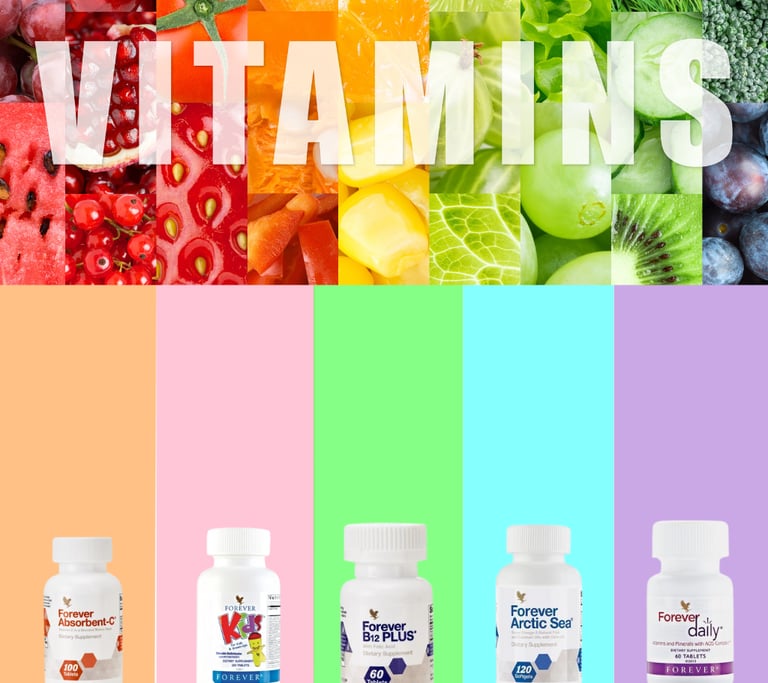
Forever Living offers nutritional supplements including Forever Daily, a comprehensive multivitamin, and targeted products like Forever B12 Plus and Forever Absorbent-C. These provide convenient ways to support your nutritional intake as part of an overall healthy lifestyle.
Important Medical Note: This article discusses vitamins for general wellness and nutritional support. Vitamin deficiencies can cause serious health problems requiring medical diagnosis and treatment. Symptoms like persistent fatigue, frequent infections, neurological issues, or other concerning changes require professional evaluation. While vitamins support general health, they cannot diagnose, treat, cure, or prevent diseases. Excessive vitamin intake can cause toxicity, particularly with fat-soluble vitamins. Always consult your doctor or qualified health professional before starting any new supplements, making changes to your diet, or altering your wellness routine, especially if you are pregnant, nursing, have medical conditions, or take medications.
Key Takeaways
Vitamins are essential nutrients your body needs in small amounts for various functions
Each vitamin has specific roles in metabolism, immunity, and cellular health
Deficiencies can develop gradually and cause various health problems
A varied, nutrient-dense diet is the best source of vitamins
Supplementation may benefit certain people based on diet, lifestyle, and individual needs
Quality, form, and bioavailability significantly affect vitamin supplement effectiveness
Individual vitamin needs vary based on age, health status, diet, and other factors
Realistic expectations are important—vitamins support health but aren't cure-alls
What Are Vitamins?
Vitamins are organic compounds that your body needs in small amounts to function properly. Unlike macronutrients (protein, carbohydrates, fats) that you need in large quantities, vitamins are required in much smaller amounts—typically milligrams or micrograms daily.
Essential Nutrients
Vitamins are considered "essential" because your body cannot produce them in sufficient quantities (or at all) to meet its needs. You must obtain them through diet or, in some cases, supplementation.
There are 13 recognized vitamins, divided into two categories based on how your body processes them:
Fat-soluble vitamins (A, D, E, K):
Absorbed and transported with dietary fats
Can be stored in your liver and fatty tissues
Don't need to be consumed as frequently
Excess intake can accumulate and cause toxicity
Water-soluble vitamins (C and B-complex):
Dissolve in water and are readily absorbed
Excess amounts are typically excreted in urine
Need more frequent replenishment
Toxicity is less common but can occur with very high doses
What Vitamins Do
Vitamins serve as coenzymes or cofactors—helper molecules that enable enzymes to catalyze chemical reactions throughout your body. They're involved in:
Energy production from food
Immune function and disease resistance
Blood clotting and wound healing
Bone formation and maintenance
Cell growth and division
Nervous system function
Hormone production
DNA synthesis and repair
Antioxidant protection against cellular damage
Without adequate vitamins, these processes slow down or function improperly, eventually causing deficiency symptoms and health problems.
Can You Get All Vitamins from Food?
The question of whether you can obtain all necessary vitamins from diet alone is complex and individual.
The Ideal Scenario
A varied diet rich in fruits, vegetables, whole grains, lean proteins, dairy (or alternatives), nuts, and seeds can provide adequate vitamins for many people. Traditional dietary recommendations assume that eating a balanced diet meets nutritional needs without supplementation.
Best food sources for major vitamins:
Vitamin A: Liver, sweet potatoes, carrots, spinach, dairy
B vitamins: Whole grains, meat, eggs, legumes, leafy greens
Vitamin C: Citrus fruits, berries, peppers, broccoli, tomatoes
Vitamin D: Fatty fish, fortified dairy, egg yolks (plus sun exposure)
Vitamin E: Nuts, seeds, vegetable oils, leafy greens
Vitamin K: Leafy greens, broccoli, Brussels sprouts
Real-World Challenges
Several factors make it difficult for many people to obtain optimal vitamin levels from food alone:
Dietary patterns:
Many people don't consistently eat the recommended amounts of fruits and vegetables
Processed and convenience foods dominate modern diets
Picky eating, food allergies, or dietary restrictions limit food variety
Busy lifestyles make consistently healthy eating challenging
Food quality considerations:
Modern agricultural practices and soil conditions may affect nutrient content
Long transportation and storage times can reduce vitamin levels in produce
Food processing removes many vitamins (particularly B vitamins in refined grains)
Cooking methods destroy heat-sensitive vitamins like vitamin C and some B vitamins
Individual variation:
Genetic differences affect vitamin absorption and metabolism
Digestive health impacts nutrient absorption
Certain medications interfere with vitamin absorption or increase requirements
Age affects absorption and synthesis (e.g., vitamin D production declines with age)
Pregnancy, nursing, illness, and stress increase vitamin needs
Reality check: Whether you can get all vitamins from food depends on your diet quality, digestive health, individual needs, and life circumstances. Some people manage it; many find supplementation helpful.
Understanding Vitamin Deficiencies
Vitamin deficiencies develop when intake doesn't meet your body's needs over time. Recognizing potential deficiency signs helps you seek appropriate evaluation and intervention.
How Deficiencies Develop
Most vitamin deficiencies develop gradually rather than suddenly. Early stages often produce subtle, non-specific symptoms that are easy to dismiss:
Persistent fatigue despite adequate sleep
Frequent minor infections
Slow wound healing
Dry skin or hair changes
Mood changes or difficulty concentrating
Muscle weakness or cramps
As deficiency progresses, more specific symptoms emerge related to that vitamin's particular functions.
Common Deficiencies
Vitamin D deficiency is particularly common, especially in people with:
Limited sun exposure
Darker skin (requires more sun exposure for vitamin D synthesis)
Living far from the equator
Older age
Obesity (vitamin D gets sequestered in fat tissue)
Vitamin B12 deficiency often affects:
Vegetarians and vegans (B12 is primarily in animal products)
Older adults (reduced stomach acid impairs B12 absorption)
People with digestive disorders affecting absorption
Those taking certain medications (metformin, PPIs)
Folate deficiency can occur in:
People who don't eat enough vegetables and fortified grains
Pregnant women (needs increase significantly)
Those with increased alcohol consumption
Iron deficiency (while technically a mineral, often discussed with vitamins):
Menstruating women
Pregnant women
Vegetarians and vegans
People with digestive disorders
When to See a Doctor
Persistent symptoms suggesting deficiency require professional evaluation, not self-treatment with supplements:
Severe, ongoing fatigue
Neurological symptoms (numbness, tingling, balance problems)
Significant mood changes or depression
Unexplained anemia
Bone pain or frequent fractures
Poor wound healing
Frequent infections
Blood tests can identify specific deficiencies and guide appropriate treatment. Self-diagnosing and treating with high-dose supplements can mask serious conditions or cause toxicity.
Overview of Essential Vitamins
Understanding what each vitamin does helps you appreciate their importance and recognize how deficiency might affect you.
Vitamin A
Functions:
Vision (particularly night vision)
Immune function
Skin health and integrity
Reproduction and fetal development
Cell growth and differentiation
Deficiency symptoms: Night blindness, dry eyes, dry skin, impaired immune function, poor wound healing
Food sources: Liver, sweet potatoes, carrots, dark leafy greens, dairy products, eggs
Important note: Excess vitamin A (particularly from supplements) can be toxic. Pregnant women should avoid high-dose vitamin A supplements due to birth defect risk.
B Vitamins
The B-complex includes eight distinct vitamins that often work together.
B1 (Thiamine):
Energy metabolism
Nerve function
B2 (Riboflavin):
Energy production
Cell function and growth
Antioxidant activity
B3 (Niacin):
Energy metabolism
DNA repair
Cell signaling
B5 (Pantothenic Acid):
Energy production
Hormone and cholesterol synthesis
B6 (Pyridoxine):
Amino acid metabolism
Neurotransmitter production
Red blood cell formation
B7 (Biotin):
Energy metabolism
Hair, skin, and nail health
B9 (Folate/Folic Acid):
DNA synthesis
Cell division
Prevents neural tube defects in developing fetuses
B12 (Cobalamin):
Red blood cell formation
DNA synthesis
Neurological function
Myelin maintenance
Deficiency varies by vitamin: Fatigue, anemia, neurological problems, skin issues, mood changes
Food sources: Whole grains, meat, poultry, fish, eggs, dairy, legumes, leafy greens
Vitamin C
Functions:
Collagen synthesis
Antioxidant protection
Immune function
Iron absorption enhancement
Wound healing
Deficiency symptoms: Fatigue, weakened immunity, slow wound healing, bleeding gums (severe deficiency causes scurvy)
Food sources: Citrus fruits, berries, peppers, broccoli, tomatoes, potatoes
Important note: Vitamin C is water-soluble and not stored long-term, requiring daily intake.
Vitamin D
Functions:
Calcium absorption and bone health
Immune modulation
Muscle function
Mood regulation
Cell growth
Deficiency symptoms: Bone pain, muscle weakness, increased infection susceptibility, mood changes, fatigue
Sources: Sun exposure (primary), fatty fish, fortified dairy/alternatives, egg yolks
Important note: Many people have insufficient vitamin D, especially in winter or with limited sun exposure.
Vitamin E
Functions:
Antioxidant protection (particularly for cell membranes)
Immune function
Cell signaling
Blood vessel health
Deficiency symptoms: Rare but can include nerve and muscle damage, weakened immunity
Food sources: Nuts, seeds, vegetable oils, leafy greens, fortified cereals
Vitamin K
Functions:
Blood clotting
Bone metabolism
Calcium regulation
Deficiency symptoms: Easy bruising, bleeding, weakened bones
Food sources: Leafy greens, broccoli, Brussels sprouts, some vegetable oils
Forever Living Nutritional Products
Forever Living offers supplements that provide vitamins and minerals in convenient forms.
Forever Daily
Forever Daily is a comprehensive multivitamin and mineral supplement designed to support general nutritional needs.
What it provides:
Vitamins A, C, D, E, and K
Complete B-complex (B1, B2, B3, B5, B6, B7, B9, B12)
Essential minerals including calcium, magnesium, zinc, selenium, and others
Proprietary fruit and vegetable blend
Unique features:
Aloe vera coating claimed to enhance absorption and be gentle on digestion
Balanced formulation accounting for nutrient interactions
Quality control from ingredient sourcing through manufacturing
Recommended use: 4 tablets daily with meals (typically 2 with breakfast, 2 with another meal)
Realistic perspective: Forever Daily provides comprehensive vitamin and mineral support for people whose diets may not consistently provide optimal amounts. It's designed as nutritional insurance, not as a replacement for healthy eating.
Forever B12 Plus
This product provides targeted B vitamin support, particularly B12, B6, and folic acid.
What it provides:
Vitamin B12 (cobalamin)
Vitamin B6 (pyridoxine)
Folic acid (synthetic form of folate)
Who might benefit:
Vegetarians and vegans (B12 is primarily in animal foods)
Older adults (B12 absorption often declines with age)
People with fatigue or low energy
Those needing extra B vitamin support beyond a multivitamin
Important note: While B12 supplementation is essential for people with confirmed deficiency or high risk (vegans, elderly), not everyone needs extra B vitamins beyond a comprehensive multivitamin.
Forever Absorbent-C
This vitamin C supplement features a sustained-release delivery system.
What it provides:
60mg vitamin C per tablet
Oat bran (providing fiber)
Sustained-release formulation
Claimed benefits:
Gradual vitamin C release over several hours
Maintained blood levels vs. immediate spike and excretion
Potentially reduced digestive upset vs. high-dose vitamin C
Realistic perspective: The sustained-release concept is sound in theory—gradual vitamin C release could maintain steadier blood levels. However, vitamin C needs aren't typically very high if you eat fruits and vegetables regularly. This product might benefit people seeking extra vitamin C support during illness or stress, but it's not essential for everyone.
When Supplementation May Be Beneficial
While a healthy diet is ideal, certain situations may warrant vitamin supplementation.
People Who May Benefit from Supplements
Older adults:
Reduced absorption of some vitamins (particularly B12)
Decreased skin synthesis of vitamin D
Often eating less food overall, reducing vitamin intake
Pregnant and nursing women:
Significantly increased needs for folate, iron, and other nutrients
Prenatal vitamins are standard medical recommendation
Should be taken under healthcare provider guidance
Vegetarians and vegans:
B12 is almost exclusively in animal products
Iron and zinc from plant sources are less bioavailable
May need vitamin D if limited sun exposure
People with digestive disorders:
Crohn's disease, celiac disease, ulcerative colitis affect absorption
Post-bariatric surgery requires lifelong supplementation
Chronic diarrhea impairs nutrient absorption
Those taking certain medications:
Some medications interfere with vitamin absorption or increase requirements
Metformin (diabetes medication) can reduce B12 absorption
Proton pump inhibitors (heartburn medications) affect B12 and possibly other nutrients
People with limited sun exposure:
May need vitamin D supplementation
Includes people who are housebound, live in northern latitudes, or always use sunscreen
Those with restrictive diets:
Food allergies or intolerances limiting variety
Very low-calorie diets
Picky eaters not consuming varied foods
When to Choose Whole Foods Over Supplements
If you:
Eat a varied diet with plenty of fruits, vegetables, whole grains, lean proteins
Have no diagnosed deficiencies
Have no absorption issues
Are in good general health
Are not in a high-need life stage (pregnancy, advanced age)
Then: Focus on optimizing your diet. Supplements may be unnecessary.
Remember: Whole foods provide fiber, phytochemicals, and compounds that supplements don't. They also provide nutrients in balanced ratios that work synergistically. Food first, supplements as support when needed.
Quality and Bioavailability in Supplements
Not all vitamin supplements are created equal. Understanding quality factors helps you choose effective products if you decide to supplement.
What Is Bioavailability?
Bioavailability refers to the proportion of a nutrient that your body actually absorbs and can use. A supplement might contain high amounts on the label, but if bioavailability is poor, you're not getting the benefit.
Factors affecting bioavailability:
Chemical form of the vitamin
Presence of enhancers or inhibitors in the formula
Timing (with or without food)
Individual digestive health
Manufacturing quality
Forms Matter
Some vitamins come in multiple chemical forms with different absorption rates:
Example - Vitamin E:
Natural form (d-alpha-tocopherol): Better absorbed and retained
Synthetic form (dl-alpha-tocopherol): Less bioavailable
Example - Folate:
Folic acid (synthetic): Needs conversion in the body
Methylfolate (active form): Directly usable, beneficial for people with MTHFR gene variants
Example - Magnesium:
Magnesium oxide: Poorly absorbed
Magnesium citrate, glycinate: Better absorbed
Quality supplements use forms with better bioavailability, even though they cost more.
Manufacturing Quality
Good Manufacturing Practices (GMP):
Reputable supplement companies follow GMP standards
Ensures consistent quality, purity, and potency
Third-party testing verifies what's on the label is in the bottle
Quality concerns with cheap supplements:
May not contain labeled amounts
May use poorly absorbed forms
Possible contamination with heavy metals or other substances
Inconsistent potency between batches
Forever Living states they follow quality control standards and test their products, which is important for supplement safety and effectiveness.
Creating a Balanced Nutritional Approach
If you choose to use vitamin supplements, they work best as part of a comprehensive approach to nutrition and health.
Foundation: Diet Quality
Prioritize nutrient-dense whole foods:
Colorful vegetables and fruits
Whole grains
Lean proteins
Healthy fats (nuts, seeds, olive oil, fatty fish)
Dairy or fortified alternatives
Minimize nutrient-poor foods:
Excessive processed foods
Added sugars
Refined grains
Trans fats
Supplements complement good nutrition—they don't replace it.
Supporting Factors
Digestive health:
A healthy gut absorbs nutrients better
Probiotics, fiber, and fermented foods support gut health
Address digestive issues affecting absorption
Lifestyle factors:
Adequate sleep supports all body processes
Regular exercise influences metabolism and nutrient needs
Stress management (chronic stress depletes certain vitamins)
Limited alcohol (excess depletes B vitamins and other nutrients)
Not smoking (smoking depletes vitamin C and increases oxidative stress)
Realistic Supplement Expectations
What vitamins can do:
Fill nutritional gaps in your diet
Support normal function when intake is insufficient
Prevent deficiencies in high-risk populations
Provide insurance during increased-need periods
What vitamins cannot do:
Cure diseases or health conditions
Compensate for a consistently poor diet
Provide energy directly (though B vitamins support energy metabolism)
Replace sleep, exercise, or stress management
Work instantly (benefits build over time with consistent intake)
Safety Considerations
While vitamins are essential nutrients, inappropriate supplementation carries risks.
Toxicity Risks
Fat-soluble vitamins (A, D, E, K):
Can accumulate in your body
Excessive amounts cause toxicity
Vitamin A toxicity: Headaches, nausea, liver damage, birth defects (if pregnant)
Vitamin D toxicity: Hypercalcemia, kidney problems
Vitamin E toxicity: Increased bleeding risk
Vitamin K: Generally safe but interferes with blood thinners
Water-soluble vitamins:
Generally safer as excess is excreted
Very high doses can still cause problems
Vitamin C: Digestive upset, kidney stones (in susceptible people)
Vitamin B6: Nerve damage at very high doses
Niacin: Flushing, liver damage at high doses
The takeaway: Stick to recommended doses. More isn't better.
Drug Interactions
Vitamins can interact with medications:
Vitamin K and blood thinners (warfarin):
Vitamin K affects blood clotting
Inconsistent vitamin K intake interferes with warfarin effectiveness
People on warfarin need consistent vitamin K intake
Vitamin E and blood thinners:
May increase bleeding risk
Inform doctors before surgery
B vitamins and certain medications:
Can interact with some drugs
Metformin reduces B12 absorption
Always inform all healthcare providers about supplements you take.
Who Should Be Cautious
Pregnant women:
Need more of certain vitamins (folate)
Should avoid excess of others (vitamin A)
Should use prenatal vitamins under medical guidance
Never self-prescribe high-dose supplements during pregnancy
People with medical conditions:
Kidney disease (careful with minerals)
Liver disease (careful with fat-soluble vitamins)
Blood clotting disorders (avoid high-dose vitamin E and K)
People taking medications:
Always check for interactions
Work with healthcare providers
Conclusion
Vitamins are essential nutrients your body needs in small amounts for normal function, growth, and health maintenance. While the best source of vitamins is a varied, nutrient-dense diet, many people find it challenging to meet all nutritional needs through food alone consistently.
Factors like dietary patterns, food quality, individual absorption, and life circumstances affect whether you obtain adequate vitamins from diet. Certain populations—including older adults, pregnant women, vegetarians/vegans, and those with digestive disorders—are at higher risk for deficiencies.
Forever Living offers vitamin supplements including Forever Daily (comprehensive multivitamin), Forever B12 Plus (targeted B vitamins), and Forever Absorbent-C (sustained-release vitamin C). These products provide options for people seeking to support their nutritional intake through supplementation.
If you choose to use vitamin supplements, approach them as complementary to—not replacement for—a healthy diet. Focus on food quality first, use supplements to fill genuine gaps, choose quality products, follow recommended doses, and work with healthcare providers, especially if you have medical conditions or take medications.
Remember: Supplements support general wellness but don't prevent, treat, or cure diseases. Persistent symptoms suggesting deficiency require professional medical evaluation and treatment. The foundation of health remains a varied nutrient-dense diet, adequate sleep, regular physical activity, stress management, and appropriate medical care when needed.
FAQ
Can I get all the vitamins I need from food alone?
It depends on your diet quality, individual needs, and life circumstances. A varied diet rich in fruits, vegetables, whole grains, lean proteins, and dairy (or alternatives) can provide adequate vitamins for many people. However, factors like limited sun exposure (vitamin D), vegetarian/vegan diets (B12), digestive issues, medications, or pregnancy increase supplement needs. Assess your diet honestly: Do you consistently eat recommended amounts of diverse nutrient-dense foods? If not, supplementation may be beneficial. Consult a healthcare provider or registered dietitian for personalized guidance.
How long before I notice benefits from taking a multivitamin?
Individual responses vary significantly. If you have genuine deficiencies, you might notice improvements in energy, mood, or immunity within 2-4 weeks as those deficiencies correct. However, if you're already getting adequate vitamins from diet, you may not notice subjective changes from supplementation—your body simply maintains its already-sufficient status. Some people never notice obvious changes despite taking vitamins because deficiency symptoms can be subtle or absent. The lack of noticeable effects doesn't necessarily mean supplements aren't working; maintaining adequate status prevents future problems.
Should I take vitamins with or without food?
Always take multivitamins with food. Fat-soluble vitamins (A, D, E, K) require dietary fat for absorption, so taking them with meals significantly enhances uptake. Food also stimulates digestive processes and can reduce potential stomach upset from supplements. Water-soluble vitamins (B-complex, C) are absorbed without fat but are still best taken with food for optimal absorption and tolerability. Forever Daily recommends taking 2 tablets with breakfast and 2 with another meal, which follows these principles.
Can taking too many vitamins be dangerous?
Yes, excessive vitamin intake can cause toxicity, particularly with fat-soluble vitamins (A, D, E, K) that accumulate in your body. Vitamin A toxicity causes headaches, nausea, and liver damage; vitamin D toxicity leads to dangerous calcium buildup. Even water-soluble vitamins can cause problems at very high doses—vitamin B6 causes nerve damage, and excessive vitamin C may contribute to kidney stones in susceptible people. Stick to recommended doses on supplement labels unless specifically directed otherwise by a healthcare provider. More is not better with vitamins.
Do I need a multivitamin if I eat a healthy diet?
If you consistently eat a truly varied, nutrient-dense diet with plenty of fruits, vegetables, whole grains, lean proteins, and minimal processed foods, you may not need a multivitamin. However, most people fall short of ideal dietary patterns at least some of the time. A multivitamin can serve as nutritional insurance, filling potential gaps. Certain situations (pregnancy, advanced age, restrictive diets, medical conditions) increase needs beyond what diet alone provides. Consider your actual eating patterns, not your ideal ones, when deciding.
Are Forever Living vitamins better than store-brand multivitamins?
Forever Living emphasizes quality ingredients, the aloe vera coating for enhanced absorption, and quality control standards. These factors can affect bioavailability and effectiveness compared to very cheap supplements. However, many reputable brands also produce quality multivitamins. What matters most is that supplements: contain appropriate amounts of vitamins, use bioavailable forms, follow manufacturing quality standards, and are third-party tested. Compare labels, check for GMP certification, and choose reputable brands whether Forever Living or others. The "best" supplement is one you'll actually take consistently.
Can children take Forever Daily or adult multivitamins?
No, Forever Daily is formulated for adults. Children have different nutritional needs and should not take adult multivitamins, which may contain inappropriate amounts of certain vitamins and minerals. Giving adult supplements to children risks excessive intake of some nutrients. If you want to give your child a multivitamin, choose age-appropriate products specifically formulated for their age group, and consult your pediatrician first. Children's supplement needs vary by age, and not all children need supplementation.
Will a multivitamin give me more energy?
If you have deficiencies in B vitamins, iron, or vitamin D, correcting those deficiencies through supplementation can improve energy levels. However, if you already have adequate vitamin status, a multivitamin won't provide an energy boost—vitamins support energy metabolism but don't directly provide energy like food does. If you're experiencing persistent fatigue despite taking a multivitamin, see a healthcare provider to investigate underlying causes (anemia, thyroid dysfunction, sleep disorders, etc.). Vitamins support normal function but don't create super-normal energy.
Do vitamins interact with my prescription medications?
Yes, some vitamins can interact with medications. Vitamin K interferes with blood thinners (warfarin). Vitamin E may increase bleeding risk. Some B vitamins interact with specific drugs. Calcium interferes with certain antibiotics and thyroid medications. Always inform all healthcare providers about every supplement you take, including multivitamins. Take medications and vitamins at least 2 hours apart unless directed otherwise. Most people can safely take multivitamins alongside medications, but individual situations vary and require medical oversight.
How should I store my vitamins to maintain their potency?
Store vitamins in a cool, dry place away from direct sunlight, heat, and humidity. Don't store them in bathrooms (too humid) or near stoves (too hot). Keep bottles tightly closed to prevent moisture exposure and oxidation. Don't transfer vitamins to different containers—original packaging is designed to maintain freshness. Check expiration dates and discard expired supplements, as potency degrades over time. Proper storage maintains vitamin effectiveness throughout the product's shelf life. Some vitamins (like fish oil) benefit from refrigeration after opening.
Sources and References
For evidence-based information about vitamins, nutrition, and supplementation, consult these authoritative sources:
National Institutes of Health - Office of Dietary Supplements: https://ods.od.nih.gov - Comprehensive fact sheets on all vitamins
Academy of Nutrition and Dietetics: https://www.eatright.org - Evidence-based nutrition information
U.S. Food and Drug Administration: https://www.fda.gov - Supplement regulation and safety
Linus Pauling Institute - Micronutrient Information Center: https://lpi.oregonstate.edu/mic - Detailed vitamin research summaries
Harvard T.H. Chan School of Public Health - Nutrition Source: https://www.hsph.harvard.edu/nutritionsource/ - Evidence-based nutrition guidance
Mayo Clinic - Nutritional Supplements: https://www.mayoclinic.org - Medical perspective on supplementation
ConsumerLab.com: Independent supplement testing and reviews
Note: When researching vitamins and supplements, look for information from reputable medical and scientific organizations rather than supplement marketing. Individual nutritional needs vary based on diet, health status, age, and other factors. Consult healthcare providers or registered dietitians for personalized guidance.
About the Author
Naddy is a wellness enthusiast and content creator behind Wellness With Forever. She focuses on simple, practical tips to support a healthy lifestyle through nutrition, movement, and mindful habits. Drawing on personal experience and ongoing research into health and wellness, she aims to break down complex topics into clear, easy-to-follow guidance.
Disclaimer
The information in this article is for educational purposes only and does not replace professional medical advice. These statements have not been evaluated by the Food and Drug Administration. Forever Living products are not intended to diagnose, treat, cure, or prevent any disease. Always consult your doctor or qualified health professional before starting any new supplements, making changes to your diet, or altering your wellness routine, especially if you are pregnant, nursing, have medical conditions, or take medications.
About Us
Follow
© 2025. WellnessWithForever
SUBSCRIBE