Fish Oil and Omega-3 Supplements: Complete Evidence-Based Guide with Forever Arctic Sea
Fish oil omega-3s powerfully reduce triglycerides 20-50% (proven!). EPA/DHA support heart, brain, inflammation. Forever Arctic Sea: purified, tested quality.
by WellnessWithForever
2/27/202616 min read
Fish Oil and Omega-3 Supplements: Complete Evidence-Based Guide with Forever Arctic Sea
By WellnessWithForever 27 February 2026: This post might contain affiliate links.
Omega-3 fatty acids from fish oil are among the most researched and scientifically supported supplements available, with extensive evidence demonstrating benefits for heart health, brain function, inflammation reduction, and overall wellness. Yet despite widespread use, many people remain confused about which omega-3 supplement to choose, how much to take, what health benefits are actually proven versus overhyped, and whether fish oil supplements are safe and effective. This guide examines the science behind fish oil and omega-3 supplements, explaining what they are, proven health benefits, appropriate dosing, and how Forever Arctic Sea provides high-quality omega-3 support.
Important Medical Disclaimer: Fish oil supplements interact with blood-thinning medications (warfarin, aspirin, clopidogrel, others) and may increase bleeding risk, especially at high doses. NEVER take fish oil before surgery without informing your surgeon. People with fish/seafood allergies should avoid fish oil (consider algae-based omega-3s). Very high doses (>3-4g daily) should be taken under medical supervision. Fish oil does NOT replace medications for heart disease, high cholesterol, or other conditions. Cardiovascular disease, high triglycerides, depression, and other conditions mentioned require professional medical diagnosis and treatment. This information is educational and does not replace professional medical advice. Always consult healthcare providers before starting supplements, especially if you have medical conditions or take medications.
Key Takeaways
Omega-3s (EPA and DHA) from fish oil have VERY STRONG evidence for heart health and triglyceride reduction
Fish oil powerfully reduces triglycerides 20-50% (FDA-approved for this purpose)
Cardiovascular benefits: Reduces heart attack risk, sudden cardiac death, stabilizes plaque
Evidence MODERATE to STRONG for brain health, inflammation reduction, mood support
Evidence LIMITED for many other claimed benefits (weight loss, arthritis pain, etc.)
Quality matters: Choose purified, third-party tested products (Forever Arctic Sea)
Dosing varies: 500-1,000mg EPA+DHA for general health, 2,000-4,000mg for high triglycerides
Take with meals containing fat for best absorption, reduces fishy aftertaste
Understanding Omega-3 Fatty Acids
Evidence quality: VERY STRONG for all basic omega-3 biochemistry
What Are Omega-3 Fatty Acids?
Definition: Essential polyunsaturated fatty acids your body cannot produce—must obtain from diet or supplements.
Three main types:
EPA (Eicosapentaenoic Acid):
20-carbon omega-3
Primarily from marine sources (fish, seafood)
Strong anti-inflammatory effects
Cardiovascular benefits
Mood support
DHA (Docosahexaenoic Acid):
22-carbon omega-3
Primarily from marine sources
Structural component of brain and retina
Essential for brain development and function
Vision support
ALA (Alpha-Linolenic Acid):
18-carbon omega-3
Plant sources (flaxseeds, chia seeds, walnuts)
Body converts to EPA/DHA but VERY INEFFICIENTLY (<10%, often <5%)
Some direct benefits but NOT equivalent to EPA/DHA
EPA and DHA are the omega-3s with strongest health evidence.
Why Omega-3s Are Essential
Cell membrane structure:
Incorporate into cell membranes throughout body
Affect membrane fluidity, signaling, function
Anti-inflammatory effects:
Produce anti-inflammatory compounds (resolvins, protectins, maresins)
Counter balance pro-inflammatory omega-6 fatty acids
Brain and nervous system:
DHA comprises 60% of fatty acids in brain
Essential for neuron structure and function
Critical for brain development (pregnancy, infancy, childhood)
Cardiovascular health:
Multiple mechanisms supporting heart health
Reduce triglycerides, inflammation, blood clotting
Stabilize heart rhythm
Vision:
DHA concentrated in retina
Essential for eye health and function
Hormone production:
Precursors for hormone-like compounds (eicosanoids)
Regulate inflammation, blood clotting, blood vessel function
Dietary Sources of Omega-3s
Evidence quality: VERY STRONG
Marine sources (EPA and DHA):
Fatty fish (best sources):
Salmon (wild-caught ideal): 1,500-2,500mg per 3 oz
Mackerel: 1,000-2,500mg per 3 oz
Sardines: 1,000-2,000mg per 3 oz
Herring: 1,500-2,000mg per 3 oz
Anchovies: 1,500-2,000mg per 3 oz
Albacore tuna: 700-1,000mg per 3 oz
Other seafood:
Oysters, mussels, crab: Moderate amounts
Shrimp: Small amounts
Recommended fish intake:
2-3 servings fatty fish weekly provides 1,000-2,000mg EPA+DHA
Pregnant/nursing women: Choose low-mercury fish
Plant sources (ALA only):
Flaxseeds: 2,400mg per tablespoon (ground)
Chia seeds: 2,500mg per tablespoon
Walnuts: 2,500mg per 1/4 cup
Hemp seeds, canola oil
Limitation: Body converts ALA to EPA/DHA very inefficiently—plant sources NOT adequate for obtaining EPA/DHA benefits.
Fortified foods:
Some eggs, milk, yogurt, orange juice fortified with omega-3s
Check labels for amounts and types (DHA vs ALA)
Supplements:
Fish oil: EPA and DHA from fish
Krill oil: EPA and DHA from krill (small crustaceans)
Algae oil: DHA (and some EPA) from algae—vegetarian/vegan source
Forever Arctic Sea: High-quality fish and calamari oil
Proven Health Benefits of Fish Oil
Evidence quality varies by benefit—detailed for each
Cardiovascular Health
Evidence quality: VERY STRONG to STRONG
Triglyceride reduction (Evidence: VERY STRONG):
Fish oil powerfully reduces triglycerides 20-50%
Dose-dependent (higher doses = greater reduction)
FDA-approved prescription omega-3s for high triglycerides (Lovaza, Vascepa)
Doses: 2,000-4,000mg EPA+DHA daily for significant reduction
Most consistent, well-established fish oil benefit
Cardiovascular event reduction (Evidence: STRONG):
Multiple large studies show omega-3s reduce:
Heart attack risk
Sudden cardiac death
Cardiovascular mortality (especially in people with existing heart disease)
Particularly beneficial for those with:
Existing cardiovascular disease
High triglycerides
High cardiovascular risk
Mechanisms:
Reduce inflammation in arterial walls
Stabilize atherosclerotic plaque (reduce rupture risk)
Reduce blood clotting tendency (antiplatelet effects)
Modestly lower blood pressure
May improve endothelial function (artery lining health)
May help maintain healthy heart rhythm
Effect on LDL and HDL:
May slightly RAISE LDL in some people (typically 5-10%)
BUT: Often shifts to larger, less harmful LDL particles
May modestly raise HDL
Overall cardiovascular benefit despite potential LDL increase
Blood pressure (Evidence: MODERATE to STRONG):
Modest blood pressure reduction (typically 2-5 mmHg)
More pronounced in people with high blood pressure
Requires higher doses (≥2,000mg daily)
Brain Health and Cognitive Function
Evidence quality: MODERATE to STRONG (varies by specific claim)
Brain structure:
DHA is predominant structural fat in brain
Essential for neuron membrane integrity
Affects neurotransmitter function, signaling
Cognitive function in aging (Evidence: MODERATE, MIXED results):
Observational studies: Higher omega-3 intake associated with better cognitive function
Intervention trials: MIXED results
Some show modest cognitive benefits
Others show no significant effect
May be more beneficial for those with mild cognitive impairment vs. healthy aging
Prevention vs. treatment unclear
Alzheimer's disease/dementia (Evidence: MODERATE, MIXED):
Higher omega-3 intake may reduce Alzheimer's risk
Treatment of existing Alzheimer's: Limited evidence of benefit
Not a cure or proven treatment
Brain development (Evidence: STRONG):
DHA critical for fetal and infant brain development
Pregnant/nursing women need adequate DHA
Supports visual and cognitive development
Low maternal DHA associated with poorer child outcomes
Recommendation: Pregnant women ensure adequate DHA (200-300mg daily minimum)
Depression and Mental Health
Evidence quality: MODERATE (some support, not definitive)
Depression (Evidence: MODERATE):
Some studies show omega-3s (especially EPA) help reduce depression symptoms
Particularly beneficial as adjunct to antidepressants
May be more effective for those with inflammation or low omega-3 levels
Typical doses: 1,000-2,000mg EPA daily
NOT replacement for standard depression treatment
Effects modest
ADHD (Evidence: LIMITED to MODERATE):
Small studies show possible modest benefits for attention
Effects generally small
Not first-line treatment
Anxiety (Evidence: LIMITED):
Limited research
Some preliminary support
Needs more study
Postpartum depression (Evidence: LIMITED):
Low omega-3s linked to higher postpartum depression risk
Supplementation during pregnancy may reduce risk
More research needed
Inflammation and Inflammatory Conditions
Evidence quality: STRONG for anti-inflammatory effects generally; MODERATE to LIMITED for specific conditions
Anti-inflammatory mechanisms (Evidence: VERY STRONG):
Omega-3s produce anti-inflammatory compounds (resolvins, protectins, maresins)
Counter-balance pro-inflammatory omega-6 pathways
Reduce inflammatory markers (CRP, IL-6, TNF-alpha)
Well-established anti-inflammatory effects
Rheumatoid arthritis (Evidence: MODERATE):
Some evidence omega-3s reduce joint pain, stiffness, medication needs
Effects modest
Requires several months
Typical doses: 2,000-3,000mg EPA+DHA daily
Complementary to medical treatment, not replacement
Inflammatory bowel disease (Evidence: LIMITED, MIXED):
Mixed results for Crohn's disease, ulcerative colitis
Some studies show benefits, others don't
Not established treatment
Asthma (Evidence: LIMITED):
Some studies suggest benefits
Not consistent
More research needed
Eye Health
Evidence quality: MODERATE to STRONG
Dry eye syndrome (Evidence: STRONG):
Multiple studies show omega-3s improve dry eye symptoms
Improve tear quality, reduce evaporation
Reduce ocular surface inflammation
Typical doses: 1,000-2,000mg EPA+DHA daily
Effects appear after 8-12 weeks consistent use
Age-related macular degeneration (Evidence: MODERATE):
Higher omega-3 intake associated with lower AMD risk
May slow progression
Not part of standard AREDS2 formula (lutein/zeaxanthin are)
Complementary support
Infant vision development (Evidence: STRONG):
DHA essential for retinal development
Pregnant/nursing women need adequate DHA
Pregnancy and Infant Development
Evidence quality: STRONG to VERY STRONG
Benefits:
DHA critical for fetal brain and eye development
May reduce preterm birth risk
Supports healthy birth weight
Improves child cognitive and visual outcomes
May reduce allergies/asthma risk in children
Recommendations:
Pregnant/nursing women: 200-300mg DHA daily minimum
Choose low-mercury sources (fish oil supplements safer than high-mercury fish)
Continue during breastfeeding (DHA passes to baby)
Safety: Generally safe during pregnancy at appropriate doses
Other Claimed Benefits with Limited Evidence
Weight loss (Evidence: LIMITED):
Small studies show possible modest benefits combined with diet/exercise
NOT a weight loss supplement
Effects minimal
Muscle soreness/exercise recovery (Evidence: LIMITED):
Preliminary studies suggest may reduce muscle soreness
Needs more research
Bone health (Evidence: LIMITED):
Some observational data linking higher omega-3 intake with better bone density
Intervention trials not convincing
Cancer prevention (Evidence: LIMITED to MODERATE, MIXED):
Observational studies: Mixed results
Intervention trials: Generally don't show strong cancer prevention
Not established
Skin health (Evidence: LIMITED):
May help some inflammatory skin conditions
Limited research
Fish Oil vs. Other Omega-3 Sources
Fish Oil
Source: Whole fish (anchovies, sardines, mackerel, others)
Pros:
High EPA and DHA content
Extensively researched
Generally affordable
Many options available
Cons:
Quality varies (contamination risk if not purified)
May cause fishy aftertaste/burps
Not suitable for fish-allergic individuals
Sustainability concerns (overfishing)
Forever Arctic Sea: High-quality fish oil from sustainable sources, purified, third-party tested
Krill Oil
Source: Small crustaceans (krill)
Pros:
Contains EPA and DHA
Also contains astaxanthin (antioxidant)
Some claim better absorption (limited evidence)
May cause less fishy aftertaste for some
Cons:
More expensive than fish oil
Lower EPA/DHA per serving (need more capsules)
Less research than fish oil
Sustainability concerns
Algae Oil
Source: Marine algae (vegetarian/vegan)
Pros:
Vegetarian/vegan omega-3 source
Primarily DHA (some products also EPA)
No fish taste
Lower contamination risk
More sustainable
Cons:
More expensive
Lower EPA in most products (primarily DHA)
Less research than fish oil
Use for: Vegetarians/vegans, fish-allergic individuals
Cod Liver Oil
Source: Cod livers
Pros:
Contains EPA, DHA, plus vitamins A and D
Cons:
Risk of vitamin A toxicity if taking other vitamin A supplements
Lower omega-3 concentration than fish oil
Strong taste
Plant Sources (Flax, Chia, Walnut Oil)
Source: Seeds, nuts
Provide: ALA only (not EPA or DHA)
Limitation:
Body converts ALA to EPA/DHA VERY INEFFICIENTLY (<10%, often <5%)
NOT adequate for obtaining EPA/DHA benefits
Some direct ALA benefits but limited
Use: As part of overall healthy diet, NOT as primary omega-3 source for EPA/DHA benefits
Choosing a Quality Fish Oil Supplement
Quality varies WIDELY—choose carefully
Key Quality Factors
Purity:
Third-party tested for contaminants (mercury, PCBs, dioxins, heavy metals)
Look for: USP, NSF, IFOS certifications
Forever Arctic Sea: Purified, third-party tested
Potency:
Check EPA + DHA content PER SERVING (not just total oil)
Example: "1,000mg fish oil" may contain only 300mg EPA+DHA
Read supplement facts label carefully
Freshness:
Omega-3s oxidize (go rancid) over time
Check expiration date
Store properly (cool, dark, away from heat)
Smell/taste test: Should NOT smell/taste strongly fishy (indicates oxidation)
Form:
Triglyceride form vs. ethyl ester form
Triglyceride form may be better absorbed
Both effective at appropriate doses
Sustainability:
Look for sustainable fishing certifications
Smaller fish (anchovies, sardines) generally more sustainable than large fish
Packaging:
Opaque bottles (protect from light)
Individually sealed softgels even better
Red Flags (Avoid)
No third-party testing
Unclear EPA/DHA amounts
Very cheap (likely low quality or contaminated)
Strong fishy smell (oxidized)
No expiration date
Vague labeling
Forever Arctic Sea: Quality Omega-3 Supplement
What it provides:
High-quality EPA and DHA from fish oil and calamari oil
Purified, third-party tested
Free from mercury, PCBs, contaminants
Optimal EPA:DHA ratio
Also contains olive oil (additional healthy fats)
Why it's different:
Forever Living quality standards
Sustainable sourcing
Consistent potency
No fishy aftertaste for most users
How to Use Fish Oil Supplements
Dosing Guidelines
Evidence quality: STRONG for dose-response relationships
General health maintenance:
500-1,000mg EPA+DHA daily
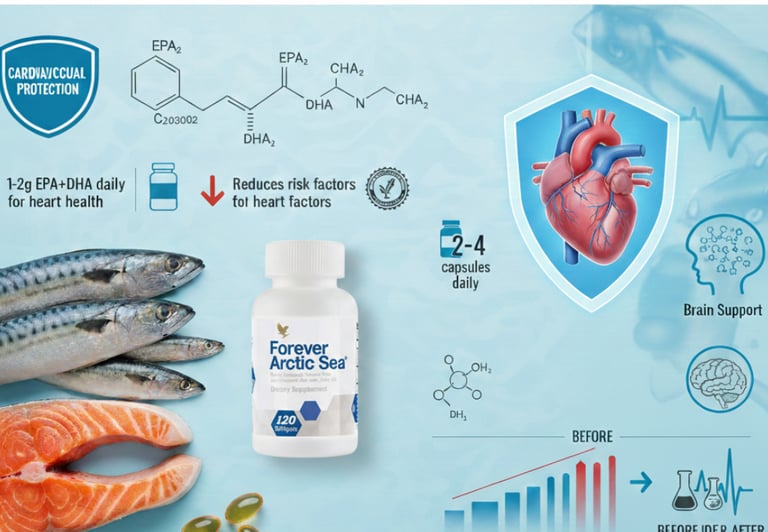
Forever Arctic Sea: 2 softgels daily provides this range
Cardiovascular health (moderate risk):
1,000mg EPA+DHA daily
Forever Arctic Sea: 2 softgels daily
High triglycerides (150-499 mg/dL):
2,000-4,000mg EPA+DHA daily
Forever Arctic Sea: 4-8 softgels daily
Work with healthcare provider
Very high triglycerides (≥500 mg/dL):
Prescription omega-3s typically recommended
Medical supervision required
Depression support:
1,000-2,000mg EPA daily (EPA-focused)
As adjunct to standard treatment
Discuss with mental health provider
Dry eye:
1,000-2,000mg EPA+DH A daily
Forever Arctic Sea: 2-4 softgels daily
Takes 8-12 weeks for effects
Pregnancy/nursing:
200-300mg DHA daily minimum
Forever Arctic Sea: 2 softgels daily
Discuss with OB-GYN
Children:
Consult pediatrician for age-appropriate dosing
Generally lower doses than adults
Timing and Absorption
Take with meals:
Best absorbed when taken with food containing fat
Reduces fishy aftertaste/burps
Enhances absorption
Time of day:
Flexible—whatever time you'll remember consistently
Some prefer with largest meal
Split doses:
For high doses (>2,000mg), can split AM/PM
May reduce any digestive side effects
Consistency:
Daily use essential
Benefits accumulate over weeks to months
Don't skip doses
What to Expect
Timeline for benefits:
Triglyceride reduction: 4-8 weeks (maximum by 8-12 weeks)
Cardiovascular benefits: Ongoing protection with consistent use
Dry eye improvement: 8-12 weeks
Depression support: 4-12 weeks
Anti-inflammatory effects: Several weeks to months
Individual variation: Some people respond more than others—genetics, diet, baseline omega-3 status all influence response
Safety and Side Effects
Evidence quality: VERY STRONG for safety profile
Common Side Effects (Generally Mild)
Fishy aftertaste/burps:
Most common complaint
Minimize by: Taking with meals, freezing capsules, taking before bed, choosing high-quality product (Forever Arctic Sea generally well-tolerated)
Digestive upset:
Nausea, diarrhea (uncommon at typical doses)
Reduce by: Taking with food, splitting doses, reducing dose temporarily
Mild blood thinning:
Omega-3s have antiplatelet effects (reduce blood clotting)
Generally not problematic at typical doses
Important for surgery, bleeding disorders (see cautions below)
Serious Cautions and Contraindications
Blood-thinning medications (CRITICAL):
Fish oil interacts with warfarin, aspirin, clopidogrel (Plavix), other blood thinners
May increase bleeding risk, especially at high doses (>3g daily)
INFORM doctor if taking both
May need INR monitoring (warfarin users)
NOT necessarily contraindicated but requires medical supervision
Surgery:
STOP fish oil 1-2 weeks before surgery (bleeding risk)
INFORM surgeon you take fish oil
Resume after surgery as directed
Bleeding disorders:
Use caution if bleeding disorder (hemophilia, etc.)
Discuss with hematologist
Fish/seafood allergy:
Avoid fish oil if fish-allergic
Consider algae-based omega-3s instead
Some fish-allergic individuals tolerate highly purified fish oil, but discuss with allergist
Very high doses (>3-4g daily):
Should be taken under medical supervision
May suppress immune function slightly
May increase bleeding risk
May raise LDL in some
Pregnancy:
Generally safe at appropriate doses
Choose purified fish oil (low mercury)
Discuss with OB-GYN
Drug Interactions
Blood pressure medications:
Fish oil may modestly lower blood pressure (additive effect)
Usually beneficial but monitor
Immunosuppressants:
Very high doses may affect immune function
Discuss with doctor if taking immunosuppressants
Quality and Contamination Concerns
Mercury, PCBs, dioxins:
Concerns with fish consumption
High-quality, purified fish oil supplements (like Forever Arctic Sea) have these contaminants removed
Third-party testing verifies purity
Choose certified products
Oxidation (rancidity):
Oxidized fish oil less effective, may be harmful
Choose fresh product, check expiration
Store properly (cool, dark)
Omega-3 Index: Measuring Your Omega-3 Status
Evidence quality: STRONG for omega-3 index as biomarker
What It Is
Omega-3 Index:
Measures EPA and DHA as percentage of total red blood cell fatty acids
Reflects long-term omega-3 status (2-3 months)
Better marker than dietary recall
Target Levels
Optimal: >8%
Intermediate: 4-8%
Low: <4%
Higher omega-3 index associated with:
Lower cardiovascular risk
Better cognitive function
Lower inflammation
Testing
Available as finger-stick blood test
Can order online or through healthcare provider
Consider testing if: Want to optimize omega-3 status, assess supplement effectiveness, have cardiovascular risk factors
Frequently Asked Questions
How long does it take to see benefits from fish oil?
Timeline varies by benefit. Triglyceride reduction: 4-8 weeks with maximum effects by 8-12 weeks (well-established timeline). Cardiovascular protection: Ongoing benefits with consistent use—studies showing reduced heart attack/sudden death risk require months to years of supplementation. Dry eye improvement: Typically 8-12 weeks of consistent use at adequate doses (1,000-2,000mg EPA+DHA daily). Depression support: 4-12 weeks as adjunct to standard treatment. Anti-inflammatory effects: Several weeks to months for measurable changes in inflammatory markers. The key is CONSISTENCY—omega-3s build up in cell membranes over time. Don't expect overnight results. Most people taking Forever Arctic Sea daily (2 softgels for general health, 4+ for specific conditions) notice benefits within 2-3 months, though cardiovascular protection is ongoing. If taking for specific condition and see no improvement after 3 months adequate dosing, discuss with healthcare provider—you may need higher dose, different approach, or it may not be effective for your particular situation.
Can fish oil replace my statin medication?
NO, absolutely NOT! While fish oil provides important cardiovascular benefits, it does NOT replace statin medications for most people who need them. Statins lower LDL cholesterol 25-55%—fish oil does NOT significantly lower LDL (may even raise it slightly in some people). Statins reduce heart attacks and deaths—well-established with decades of evidence. Fish oil powerfully reduces triglycerides (20-50%)—this is where it excels—but triglycerides are only ONE part of lipid profile. For people with high LDL cholesterol, existing cardiovascular disease, diabetes, or high cardiovascular risk, statins are often ESSENTIAL and CANNOT be replaced by fish oil. BEST approach: Combine fish oil WITH statin medication (if prescribed) for comprehensive protection—fish oil addresses triglycerides and inflammation that statins don't target, while statins address LDL that fish oil doesn't lower. NEVER stop prescribed medications without consulting your healthcare provider—this can be life-threatening. Discuss fish oil as COMPLEMENTARY to (not replacement for) medical treatment.
Is fish oil safe during pregnancy?
YES, fish oil is generally safe and BENEFICIAL during pregnancy at appropriate doses. DHA is CRITICAL for fetal brain and eye development—pregnant women need adequate DHA. Studies show pregnant women taking omega-3 supplements have: lower preterm birth risk, healthier birth weights, better child cognitive and visual outcomes. Recommended dose: 200-300mg DHA daily MINIMUM (many experts recommend 300-600mg). Forever Arctic Sea provides safe DHA for pregnancy—purified fish oil has mercury and contaminants REMOVED (safer than eating fish). IMPORTANT: Choose HIGH-QUALITY, PURIFIED fish oil supplements (like Forever Arctic Sea) to avoid mercury exposure that concerns pregnant women about eating fish. Discuss with OB-GYN before starting any supplement during pregnancy, but omega-3s are generally encouraged. Continue during breastfeeding—DHA passes to baby through breast milk supporting brain development. AVOID: Very high doses (stick to 1,000-2,000mg total EPA+DHA), cod liver oil (vitamin A toxicity risk).
Will fish oil make me gain weight?
NO, fish oil does NOT cause weight gain. Fish oil provides calories (about 10-15 calories per softgel), but this is MINIMAL and does NOT lead to weight gain in typical usage. Some studies even suggest omega-3s may HELP with weight management when combined with diet and exercise, though effects are MODEST and fish oil is NOT a weight loss supplement. The cardiovascular, anti-inflammatory, and other health benefits FAR OUTWEIGH any minimal caloric contribution. Reality check: 2-4 Forever Arctic Sea softgels daily adds approximately 20-60 calories—negligible in context of 1,500-2,500 daily calorie diet. If concerned about calories, simply account for fish oil in your daily intake, but don't avoid this beneficial supplement due to minimal calorie content. The BENEFITS (triglyceride reduction, cardiovascular protection, anti-inflammatory effects) are significant, while calorie contribution is trivial. Focus on overall dietary pattern, not fish oil calories.
Can I get enough omega-3s from eating fish instead of supplements?
YES, if you consistently eat 2-3 servings of fatty fish WEEKLY, you can obtain 1,000-2,000mg EPA+DHA without supplements—this provides general health benefits. 3 oz salmon: ~1,500-2,500mg EPA+DHA. 3 oz mackerel/sardines: ~1,000-2,000mg. HOWEVER, many people DON'T eat this much fish consistently due to cost, availability, taste preferences, preparation time, mercury concerns (especially pregnant women), or dietary restrictions. Advantages of supplements (Forever Arctic Sea): Convenience (daily capsule vs. cooking fish), consistent dosing (know exactly how much EPA+DHA you're getting), purified (mercury removed), no fishy taste for those who dislike fish, cost-effective for some, suitable for those avoiding animal products (algae oil option). Ideal approach: Combine BOTH—eat fatty fish 1-2 times weekly PLUS take Forever Arctic Sea daily for consistent, reliable omega-3 intake. For therapeutic doses (treating high triglycerides, dry eyes, etc.—requiring 2,000-4,000mg), supplements are MORE PRACTICAL than trying to eat enough fish. Bottom line: Fish is excellent food choice with benefits beyond omega-3s, but supplements ensure consistent, adequate intake.
What's the difference between omega-3, omega-6, and omega-9?
These are different types of fatty acids with different roles and health effects. Omega-3s (EPA, DHA, ALA): Anti-inflammatory, essential (body can't produce EPA/DHA), must obtain from diet/supplements. Benefits: Cardiovascular health, brain function, reduce inflammation. Sources: Fatty fish, fish oil supplements (EPA/DHA); flaxseeds, walnuts (ALA). Modern diet: Often TOO LOW. Omega-6s (linoleic acid, arachidonic acid): Essential (body can't produce), pro-inflammatory in excess. Benefits: Necessary for health in appropriate amounts. Sources: Vegetable oils (corn, soybean, sunflower), nuts, seeds, meat. Modern diet: Often TOO HIGH (processed foods heavy in vegetable oils). Omega-9s (oleic acid): Non-essential (body can produce), monounsaturated. Benefits: Heart-healthy when replacing saturated fats. Sources: Olive oil, avocados, nuts. The BALANCE matters: Modern Western diet typically has EXCESSIVE omega-6 (pro-inflammatory) relative to omega-3 (anti-inflammatory)—ratio often 15:1 or higher vs. optimal 4:1 or lower. This imbalance promotes inflammation. Solution: INCREASE omega-3s (Forever Arctic Sea, fatty fish) and REDUCE omega-6s (limit processed foods, vegetable oils high in omega-6). Omega-9s are beneficial—emphasize olive oil, avocados.
Does freezing fish oil capsules reduce fishy burps?
YES, freezing fish oil capsules is a popular and EFFECTIVE strategy many people use to reduce or eliminate fishy burps/aftertaste. How it works: Frozen capsule stays solid longer in stomach, releasing fish oil deeper in digestive tract rather than in upper stomach/esophagus where it can cause reflux-like fishy taste. How to do it: Simply store fish oil capsules in freezer instead of cupboard. Swallow frozen capsule as usual (don't let it thaw in mouth—swallow quickly). Other strategies to reduce fishy taste: Take fish oil with meals (especially meals containing fat), take before bed (sleep through any burps), choose high-quality product (Forever Arctic Sea generally well-tolerated with minimal fishy taste), try enteric-coated capsules (designed to pass through stomach before dissolving). IMPORTANT: Freezing does NOT affect potency or quality—omega-3s stable when frozen. This is purely for comfort/tolerability. If fishy burps persist despite these strategies, consider switching to algae-based omega-3 (no fish taste) or discussing with healthcare provider—some people simply don't tolerate fish oil well and need alternatives.
Can I take fish oil if I'm on blood thinners?
Fish oil has antiplatelet effects (reduces blood clotting), so combining with blood-thinning medications requires CAUTION and medical supervision. DO NOT start fish oil if you're on blood thinners without informing your doctor. Medications affected: Warfarin (Coumadin), aspirin, clopidogrel (Plavix), apixaban (Eliquis), rivaroxaban (Xarelto), other anticoagulants/antiplatelets. The concern: Additive blood-thinning effects may increase bleeding risk, especially at high fish oil doses (>3g daily). HOWEVER: Fish oil is NOT necessarily contraindicated—many people safely take BOTH under medical supervision. Typical approach: Inform doctor, start with lower fish oil dose, monitor for any signs of excessive bleeding (easy bruising, prolonged bleeding from cuts, blood in stool/urine), INR monitoring for warfarin users (may need warfarin dose adjustment), avoid very high fish oil doses. For surgery: STOP fish oil 1-2 weeks before surgery (inform surgeon!). Bottom line: Fish oil with blood thinners CAN be safe with proper medical oversight—DON'T avoid this beneficial supplement just because you're on blood thinners, but DON'T start without informing your healthcare team.
Conclusion
Omega-3 fatty acids from fish oil are among the most well-researched and scientifically supported supplements, with VERY STRONG evidence for cardiovascular health and triglyceride reduction, STRONG evidence for brain development and anti-inflammatory effects, and MODERATE evidence for various other health benefits. Fish oil powerfully reduces triglycerides 20-50%, reduces cardiovascular event risk (heart attacks, sudden death), supports brain function and development, provides anti-inflammatory benefits, improves dry eye symptoms, and supports overall health when used consistently at appropriate doses.
The quality of fish oil supplement matters significantly. Choose purified, third-party tested products free from mercury, PCBs, and contaminants. Check EPA and DHA content per serving (not just total oil amount), ensure freshness (check expiration, proper storage), and select sustainable sources. Forever Arctic Sea provides high-quality EPA and DHA from fish and calamari oil, purified and tested for purity, with optimal potency and minimal fishy taste.
Appropriate dosing varies by purpose: 500-1,000mg EPA+DHA daily for general health maintenance (Forever Arctic Sea 2 softgels), 1,000-2,000mg for cardiovascular support and dry eyes (2-4 softgels), 2,000-4,000mg for high triglycerides (4-8 softgels, under medical supervision). Take with meals containing fat for best absorption and to reduce fishy aftertaste. Consistency is key—benefits accumulate over weeks to months of daily use.
Fish oil is generally safe with mild side effects (fishy taste, occasional digestive upset). CRITICAL considerations: interacts with blood-thinning medications (medical supervision required), stop 1-2 weeks before surgery, avoid if fish-allergic (use algae-based omega-3s instead), use purified products during pregnancy for safety. High doses (>3-4g daily) should be taken under medical supervision.
Start omega-3 supplementation today for cardiovascular protection and overall health support. Begin Forever Arctic Sea (2 softgels daily for general health), increase to 4-6 softgels if you have high triglycerides or specific health goals, take consistently with meals for best absorption, combine with diet rich in fatty fish for optimal omega-3 intake, discuss with healthcare provider if you take medications or have medical conditions, consider omega-3 index testing to optimize your levels. Your heart, brain, and body will benefit from consistent omega-3 support.
Sources and References
American Heart Association. "Fish and Omega-3 Fatty Acids." https://www.heart.org/
Journal of the American College of Cardiology. "Omega-3 Fatty Acids and Cardiovascular Disease." https://www.jacc.org/
National Institutes of Health Office of Dietary Supplements. "Omega-3 Fatty Acids Fact Sheet." https://ods.od.nih.gov/
New England Journal of Medicine. "Omega-3 Fatty Acids and Clinical Outcomes." https://www.nejm.org/
Cochrane Database of Systematic Reviews. "Omega-3 Fatty Acid Supplementation." https://www.cochranelibrary.com/
American Journal of Clinical Nutrition. "EPA and DHA: Health Benefits and Bioavailability." https://academic.oup.com/ajcn
Prostaglandins, Leukotrienes and Essential Fatty Acids. "Omega-3 Research." https://www.journals.elsevier.com/prostaglandins-leukotrienes-and-essential-fatty-acids
About the Author
Naddy is a wellness enthusiast and content creator behind Wellness With Forever. She focuses on simple, practical tips to support a healthy lifestyle through nutrition, movement, and mindful habits.
Disclaimer
This information is for educational purposes only and does not replace professional medical care. Fish oil interacts with blood-thinning medications and may increase bleeding risk. NEVER take before surgery without informing surgeon. Avoid if fish-allergic. Very high doses require medical supervision. Fish oil does NOT replace medications for heart disease or other conditions. Always consult healthcare providers before starting supplements, especially if you have medical conditions or take medications.
About Us
Follow
© 2025. WellnessWithForever
SUBSCRIBE