Healthy Weight Gain: Building Muscle, Strength and Vitality the Right Way
Complete guide to healthy weight gain and muscle building. Learn calorie surplus strategies, protein requirements, resistance training & how Forever Lite Ultra with Aminotein supports lean muscle growth.
by WellnessWithForever
1/10/202611 min read
Healthy Weight Gain: Building Muscle, Strength and Vitality the Right Way
By WellnessWithForever 10 January 2026: This post might contain affiliate links.
Being underweight (BMI < 18.5) affects approximately 2-3% of the population and can pose health risks including weakened immunity, osteoporosis risk, fertility issues, and decreased muscle mass. While less discussed than weight loss, healthy weight gain—building lean muscle rather than just accumulating fat—requires strategic nutrition, resistance training, and consistency.
This guide examines healthy weight gain including causes of being underweight, nutritional strategies, training principles, and supportive products. Forever Living offers Forever Lite Ultra with Aminotein and other products some people use as part of weight gain strategies. Understanding evidence-based approaches to healthy weight gain provides context for evaluating any products appropriately.
Important Disclaimer: This article discusses weight gain and nutrition. Supplements are NOT medications and cannot diagnose, treat, or cure medical conditions. Being underweight may indicate underlying medical conditions requiring professional evaluation. Eating disorders (anorexia, bulimia, others) require specialized medical treatment—supplements cannot treat these conditions. Always consult healthcare providers, especially if underweight, have medical conditions, take medications, or have history of eating disorders. Consider working with registered dietitian for personalized nutrition planning.
Key Takeaways
Healthy weight gain means building muscle mass, not just adding fat
Requires caloric surplus + adequate protein + resistance training
Medical evaluation important if significantly underweight
Resistance training essential—provides stimulus for muscle building
Realistic timeline: 0.5-1 pound per week
Consistency and patience crucial
Quality nutrition and training matter more than supplements alone
Understanding Being Underweight
Being underweight is typically defined as having a Body Mass Index (BMI) below 18.5, though individual factors matter. While less discussed than overweight concerns, being significantly underweight can pose genuine health risks.
Health Risks of Being Underweight
Weakened immune system: Inadequate nutrition impairs immune function, making you more susceptible to infections, longer recovery times from illness, and increased complication risk from infections.
Osteoporosis and bone fractures: Low body weight, especially combined with inadequate calcium and vitamin D intake, significantly increases osteoporosis and fracture risk—even in young people. Building strong bones during youth is critical for lifelong bone health.
Fertility problems: Being underweight can disrupt hormone production in both men and women, causing:
Menstrual irregularities or absence in women
Reduced fertility in both sexes
Complications during pregnancy
Low birth weight in babies
Malnutrition and nutrient deficiencies: Insufficient calorie and nutrient intake leads to:
Vitamin and mineral deficiencies
Fatigue and persistent weakness
Anemia (particularly iron deficiency)
Poor wound healing
Hair loss and skin problems
Weakened immune response
Decreased muscle mass: When you don't consume adequate calories, your body breaks down muscle tissue for energy, leading to:
Physical weakness and reduced capabilities
Decreased metabolism (muscle burns more calories than fat)
Increased frailty, especially concerning as you age
Reduced physical performance in daily activities
Developmental issues in young people: For children and adolescents, being underweight can cause:
Impaired growth and development
Delayed puberty
Cognitive development concerns
Reduced bone density formation
Psychological and social impact:
Body image concerns
Low self-esteem and confidence
Social anxiety about appearance
Feeling weak or fragile
Frustration from insensitive comments
Common Causes of Difficulty Gaining Weight
High metabolism: Some people naturally burn calories very quickly (often called "fast metabolism"), making weight gain challenging despite eating substantial amounts. This metabolic rate often runs in families and can be influenced by genetics, thyroid function, and muscle mass.
Genetic factors:
Ectomorph body type (naturally thin frame, narrow shoulders and hips, longer limbs)
Family history of being thin
Genetic predisposition to lean build
Medical conditions requiring evaluation:
Hyperthyroidism (overactive thyroid): Increases metabolism significantly, causing rapid calorie burning and difficulty maintaining weight.
Diabetes: Especially uncontrolled Type 1 diabetes can cause weight loss and difficulty gaining weight.
Digestive disorders:
Crohn's disease
Ulcerative colitis
Celiac disease
Irritable bowel syndrome (IBS)
Malabsorption syndromes
These conditions impair nutrient absorption, causing inadequate nutrition even with adequate food intake.
Cancer and cancer treatments: Both cancer itself and treatments (chemotherapy, radiation) can cause weight loss, appetite suppression, and muscle wasting.
Chronic infections: Persistent infections increase metabolic demands and may suppress appetite.
Respiratory conditions: COPD and other lung diseases increase energy expenditure and may reduce appetite.
Mental health conditions:
Depression (can suppress appetite)
Anxiety
Eating disorders (anorexia, bulimia—require specialized treatment)
Medications: Some medications suppress appetite or increase metabolism:
Stimulant medications (ADHD treatments)
Certain antidepressants
Chemotherapy drugs
Thyroid medications (if dose too high)
Poor appetite: Can result from:
Chronic stress
Mental health issues
Aging (appetite often decreases with age)
Simply not feeling hungry despite inadequate intake
High activity level: Athletes and highly active individuals may burn significantly more calories than they consume, especially:
Endurance athletes (runners, cyclists, swimmers)
Athletes in multiple daily training sessions
Those with physically demanding jobs
Inadequate nutrition knowledge:
Not understanding caloric needs
Underestimating portion sizes
Focusing on low-calorie "healthy" foods
Skipping meals unintentionally
Not realizing how much they need to eat
The Psychology of Weight Gain
Frustration and misunderstanding: People struggling to gain weight often hear insensitive comments like:
"I wish I had your problem"
"Just eat more"
"You're so lucky to be naturally thin"
These minimize legitimate health concerns and struggles.
Eating can feel like a chore: When you're not naturally hungry or have a small appetite, eating enough to gain weight can feel like force-feeding yourself. Meals become work rather than enjoyment.
Fear of gaining the "wrong" weight: Some people worry about gaining only fat rather than muscle, leading to:
Inconsistent effort
Starting and stopping programs
Anxiety about eating more
Impatience with slow progress: Healthy weight gain is slow—typically 0.5-1 pound per week. Many people:
Get discouraged when results aren't immediate
Expect dramatic changes in weeks
Give up before seeing meaningful results
Social and cultural pressure: In Western culture, thinness is often celebrated, making it difficult to:
Express concerns about being underweight
Seek help without judgment
Find resources (most focus on weight loss)
Fundamentals of Healthy Weight Gain
Caloric Surplus (Essential)
Basic principle: Must consume more calories than you burn.
Calculating needs:
Step 1 - Basal Metabolic Rate (BMR):
Men: 10 × weight(kg) + 6.25 × height(cm) - 5 × age + 5
Women: 10 × weight(kg) + 6.25 × height(cm) - 5 × age - 161
Step 2 - Total Daily Energy Expenditure (TDEE): Multiply BMR by activity factor:
Sedentary: BMR × 1.2
Lightly active: BMR × 1.375
Moderately active: BMR × 1.55
Very active: BMR × 1.725
Step 3 - Add surplus:
Conservative: +300 calories (~0.5 lb/week)
Moderate: +400 calories (~0.5-0.75 lb/week)
Aggressive: +500 calories (~1 lb/week)
Macronutrient Balance
Protein (CRITICAL for muscle building):
Recommendation: 0.8-1g per pound body weight daily
Example: 135 lb person needs ~108-135g protein daily
Sources: Lean meats, fish, eggs, dairy, legumes, protein supplements
Timing: Distribute throughout day, 20-40g per meal
Carbohydrates (energy):
Recommendation: 3-5g per kg body weight, or 40-50% total calories
Sources: Whole grains, starchy vegetables, fruits, legumes
Timing: Important around workouts (before for energy, after for recovery)
Healthy fats (hormones, calories):
Recommendation: 0.3-0.5g per pound body weight, or 25-35% total calories
Sources: Nuts, nut butters, avocados, olive oil, fatty fish, eggs
Benefits: 9 cal/g (concentrated calories), hormone production, nutrient absorption
Meal Frequency
5-6 smaller meals often easier than 3 large meals
Don't skip breakfast
Pre-bed protein snack supports overnight recovery
Resistance Training (ESSENTIAL)
Reality: Cannot build significant muscle without resistance training.
Why training is non-negotiable:
Triggers muscle protein synthesis
Provides stimulus for muscle growth
Directs calories toward muscle building vs. fat storage
Increases testosterone and growth hormone
Effective Training Principles
Focus on compound movements:
Squats (lower body)
Deadlifts (posterior chain)
Bench press (chest, shoulders, triceps)
Overhead press (shoulders)
Rows (back)
Pull-ups/chin-ups (back, biceps)
Training parameters:
Frequency: 3-5 days/week
Rep ranges: 8-12 reps per set (primary), 6-8 and 12-15 (secondary)
Volume: 3-5 sets per exercise
Progressive overload: Gradually increase weight, reps, or sets
Sample beginner routine (3 days/week): Full-body workouts including squats, bench press, rows, overhead press, accessory movements.
Critical principles:
Form > weight
Progressive overload essential
Adequate rest between sessions
Track workouts
Recovery
Muscle builds during rest, not training
Sleep: 7-9 hours nightly essential
Avoid overtraining
Rest days non-optional
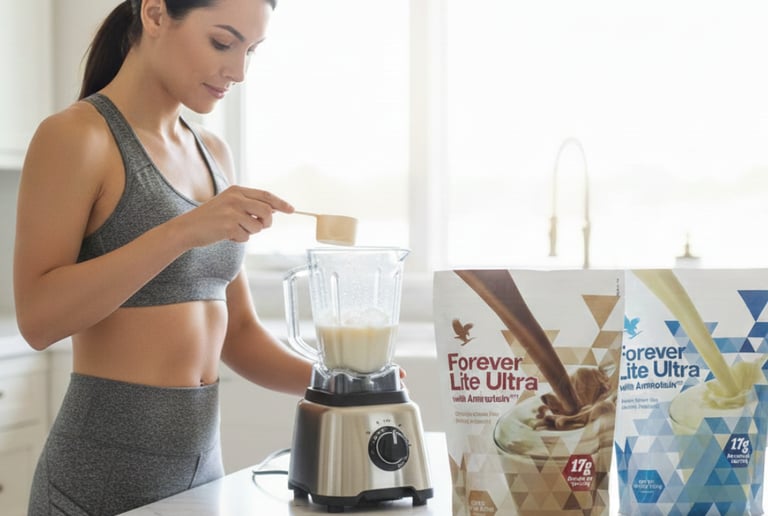
Forever Lite Ultra: Protein Supplement
What It Provides
24g protein per serving (soy and whey sources)
Fortified with 20+ vitamins and minerals
Available in vanilla and chocolate
Shake format for easy consumption
Realistic Assessment
Forever Lite Ultra CAN:
Provide convenient protein source
Add calories in easy-to-consume format
Help meet daily protein requirements
Support post-workout nutrition
Forever Lite Ultra CANNOT:
Build muscle without training
Guarantee muscle gain vs. fat gain
Replace need for balanced whole food diet
Work as "weight gainer" by itself
Reality: Protein supplement supporting nutrition when combined with:
Adequate total caloric intake
Resistance training
Overall balanced diet
Consistency and patience
Usage Strategies
As protein supplement:
Post-workout (within 30-60 minutes)
Between meals as snacks
Before bed for overnight protein
Convenient meal when whole foods impractical
Calorie-dense shake example:
2 scoops Forever Lite Ultra
2 cups whole milk (+300 cal)
2 tbsp peanut butter (+190 cal)
1 banana (+105 cal)
Optional: oats, honey for more calories
Daily recommendations:
1-2 shakes supporting whole food meals
Adjust based on total calorie/protein needs
Track total daily intake
Important: Combine with whole foods for optimal nutrition. Shakes convenient but shouldn't replace all meals.
Additional Forever Living Products
Forever Daily
What it provides: Comprehensive vitamins and minerals.
Relevance to muscle building:
B vitamins (energy metabolism)
Vitamin D (muscle function, testosterone)
Zinc (protein synthesis)
Magnesium (muscle function, recovery)
Antioxidants (reduce exercise oxidative stress)
Use: Ensures nutritional adequacy supporting training and recovery.
Forever Arctic Sea
What it provides: Omega-3 fatty acids (EPA and DHA).
Evidence for muscle building:
MODERATE evidence for reducing inflammation
Some research on protein synthesis support (particularly older adults)
Joint health support
General health benefits
Use: Anti-inflammatory and recovery support.
Forever Absorbent-C
Vitamin C relevance:
Collagen synthesis (connective tissue)
Tissue repair support
Immune function (intense training can temporarily suppress immunity)
Antioxidant
Forever Aloe Vera Gel
Digestive health relevance: Adequate digestion and absorption necessary to gain weight.
How it may help:
Supports digestive function
May improve nutrient absorption
General gut health support
Reality: Indirect support through digestive wellness. Won't cause weight gain by itself.
Practical Weight Gain Strategies
Nutrition Strategies
Calorie-dense foods:
Nuts and nut butters
Dried fruits
Avocados
Olive oil
Whole milk
Cheese
Granola
Eating strategies:
Drink calories (shakes, smoothies, milk)
Eat smaller, more frequent meals
Don't fill up on low-calorie, high-volume foods
Limit water intake with meals (drink between)
Keep high-calorie snacks accessible
Lifestyle Factors
Manage stress:
Chronic stress suppresses appetite
Increases cortisol (can promote muscle breakdown)
Impairs digestion
Disrupts sleep
Limit excessive cardio:
Burns calories you're trying to consume as surplus
Limit to 20-30 minutes, 2-3x weekly
Increase calories if doing more cardio
Prioritize resistance training
Track progress:
Weigh weekly (same day, time)
Take measurements monthly
Progress photos monthly
Track strength progression
Adjust calories if not gaining 0.5-1 lb/week
Sample Daily Meal Plan
Example (~3,500 calories, 150g protein):
Breakfast:
3 eggs, cheese, toast with butter
Oatmeal with nuts and berries
~700 cal
Mid-morning:
Protein shake with milk, peanut butter, banana
~600 cal
Lunch:
Chicken breast, brown rice, vegetables with oil
~800 cal
Afternoon:
Greek yogurt with granola
Apple with almond butter
~400 cal
Post-workout:
Protein shake
~400 cal
Dinner:
Salmon, sweet potato, vegetables
~800 cal
Evening (optional):
Cottage cheese, nuts
~300 cal
Realistic Timeline and Expectations
What to Expect
Healthy weight gain rate: 0.5-1 pound per week
12-week realistic goals:
Total gain: 6-12 pounds (mostly lean muscle)
Significant strength increases
Visible muscle development
Established sustainable habits
Important reality:
Faster gains likely include more fat
Building substantial muscle takes months to years
Progress not always linear
Plateaus normal
What Supplements CAN Provide
When combined with proper nutrition and training:
Convenient protein source
Help meet calorie/protein requirements
Nutritional insurance (multivitamin)
Recovery support (omega-3s)
What Supplements CANNOT Do
Build muscle without training
Guarantee muscle gain over fat gain
Replace need for whole food nutrition
Compensate for inadequate calories
Work instantly or create rapid transformation
Evidence Hierarchy for Weight Gain
STRONGEST evidence:
Caloric surplus
Adequate protein (0.8-1g/lb body weight)
Progressive resistance training
Adequate sleep (7-9 hours)
Consistency over time
MODERATE evidence: 6. Protein supplementation (convenient, not essential) 7. Creatine monohydrate (evidence for strength/muscle) 8. Omega-3s for recovery support 9. Comprehensive multivitamin for adequacy
LIMITED evidence: 10. Most "weight gainer" specific ingredients beyond calories/protein 11. Various supplements marketed for muscle building
Common Challenges
"I'm eating so much but not gaining!" → Track everything for one week. Likely eating less than you think. Forever Lite Ultra makes adding 600-1000 calories easier than more whole food.
"I don't have time for 5-6 meals." → Drink calories (shakes). Meal prep on weekends. Shakes take 2 minutes.
"I feel full all the time." → Focus on calorie-dense foods. Drink calories. Smaller, more frequent meals. Limit water with meals.
"Gaining weight but seems like fat." → Are you training with progressive overload? Is protein adequate? Slow gain to 0.5-1 lb/week. Focus on strength progression.
"No results after a month." → One month insufficient. Track everything to confirm surplus. Training progressive? Sleep adequate? Be patient—trust process for 12 weeks minimum.
Medical Considerations
When to Seek Professional Help
Medical evaluation needed for:
Significantly underweight (BMI < 17)
Unexplained weight loss
Suspected eating disorder
Underlying medical conditions
Fertility concerns related to low weight
Work with professionals:
Physician for medical evaluation
Registered dietitian for personalized nutrition
Personal trainer for proper training programming
Mental health professional if eating disorder suspected
Eating Disorders
Critical: Eating disorders (anorexia, bulimia, binge eating disorder, others) require specialized treatment from eating disorder professionals.
Supplements cannot treat eating disorders. If you suspect eating disorder, seek professional help immediately.
Conclusion
Healthy weight gain requires comprehensive approach: caloric surplus, adequate protein, progressive resistance training, consistency, and patience. Building lean muscle (not just fat) takes time but results in improved strength, physical capabilities, bone health, metabolism, and overall wellness.
Priority hierarchy:
Medical evaluation if significantly underweight or underlying conditions
Caloric surplus (300-500 calories above TDEE)
Adequate protein (0.8-1g per pound body weight)
Progressive resistance training (3-5 days/week)
Adequate sleep and recovery
Supplements as convenient protein sources and nutritional insurance
Consistency for 12+ weeks minimum
Forever Lite Ultra provides convenient protein and calories. Forever Daily ensures nutritional adequacy. Forever Arctic Sea supports recovery. However, these work ONLY when combined with proper training, adequate total nutrition, and consistency.
Realistic expectations essential:
0.5-1 lb/week healthy gain rate
Building significant muscle takes months to years
Training non-negotiable for muscle vs. fat gain
Supplements support but don't replace fundamentals
Individual results vary
Work with healthcare providers and nutrition professionals for personalized guidance based on your specific needs, medical history, and goals.
Frequently Asked Questions
How fast should I gain weight?
0.5-1 pound per week optimal for mostly lean muscle gain. Faster gains (2+ lbs/week) typically include substantial fat. Be patient—building muscle takes months to years. If not gaining after 2-3 weeks consistent effort, increase calories by 200-300 and reassess.
Can I gain weight without lifting?
Technically yes, but without resistance training virtually all weight gained will be fat, not muscle. For healthy weight gain with improved strength and physique, resistance training absolutely essential. Training provides stimulus for muscle building vs. fat storage.
How much protein do I need?
0.8-1g per pound body weight daily for muscle building. Example: 140 lb person needs 112-140g protein daily. Distribute throughout day (20-40g per meal). Forever Lite Ultra helps meet targets (24g per serving) but doesn't replace whole food protein sources.
Will Forever Lite Ultra make me gain muscle or fat?
Forever Lite Ultra provides calories and protein—raw materials. Whether you gain muscle or fat depends primarily on whether you're resistance training progressively. Combined with proper training, supports muscle building. Without training, surplus calories become fat. It's a tool making adequate intake easier, not muscle builder itself.
Should I do cardio while gaining weight?
Limit cardio since it burns calories you're trying to consume as surplus. Some cardio (20-30 min, 2-3x weekly) fine for cardiovascular health. If you enjoy cardio/sports, increase calorie intake to compensate. Prioritize resistance training over cardio for weight gain goals.
I'm over 40—too late to build muscle?
No! Can build muscle at any age. Becomes more challenging with age but still very possible and even more important (prevents age-related muscle loss, maintains independence, supports metabolic health). May need slightly higher protein (1g/lb), extra recovery emphasis, adequate sleep, attention to joint health.
How do I know if building muscle or just fat?
Track: strength progression (getting stronger = building muscle), body measurements (muscles grow—measure arms, chest, thighs monthly), progress photos, how clothes fit, rate of gain (0.5-1 lb/week with strength gains suggests quality). Some fat gain normal, but 2+ lbs weekly without strength gains suggests too much fat.
Can I use Forever Lite Ultra for all meals?
Best used supplementing whole food meals (2-3 shakes daily) rather than replacing all meals. Whole foods provide fiber, phytonutrients, variety that shakes don't fully replicate. Use shakes as snacks, post-workout, or occasional meal replacement when convenient, but eat 3-4 whole food meals daily for optimal nutrition.
I'm vegetarian/vegan—can I still build muscle?
Yes! Requires attention to protein sources and possibly supplementation. Focus on: legumes, tofu, tempeh, seitan, quinoa, nuts, seeds, protein powders. Ensure complete amino acids by varying sources. Forever Lite Ultra contains soy protein (suitable for vegetarians). Consider B12 supplementation (primarily in animal products). Same principles apply: caloric surplus, adequate protein, progressive training.
What if I gain some fat with muscle?
Some fat gain during muscle building normal and expected—virtually impossible to gain pure muscle with zero fat. Key is favorable ratio (more muscle than fat). Minimize fat by: gaining slowly (0.5-1 lb/week), adequate protein, training progressively, adequate sleep, reasonable surplus (not excessive). Can lose excess fat later while preserving muscle.
Sources and References
Academy of Nutrition and Dietetics: https://www.eatright.org
National Strength and Conditioning Association: https://www.nsca.com
PubMed/MEDLINE: https://pubmed.ncbi.nlm.nih.gov
International Society of Sports Nutrition: https://www.sportsnutritionsociety.org
About the Author
Naddy is a wellness enthusiast and content creator behind Wellness With Forever. She focuses on simple, practical tips to support a healthy lifestyle through nutrition, movement, and mindful habits.
Disclaimer
This information is for educational purposes only and does not replace professional medical advice. Supplements are NOT medications and cannot diagnose, treat, or cure conditions. Being underweight may indicate underlying medical conditions requiring professional evaluation. Eating disorders require specialized treatment—supplements cannot treat these conditions. Always consult healthcare providers before starting nutrition or training programs, especially if underweight, have medical conditions, or history of eating disorders. Individual results vary significantly.
About Us
Follow
© 2025. WellnessWithForever
SUBSCRIBE