Protein Supplements: Which Ones Are Right for You?
Protein supplements guide: Whey, casein, plant proteins compared. Forever Lite Ultra review, muscle building research, timing myths. Science-backed choices.
by WelnessWithForever
2/9/202622 min read
Protein Supplements: Which Ones Are Right for You?
By WellnessWithForever 9 February 2026: This post might contain affiliate links.
Protein is essential for countless physiological processes—from building and repairing tissues to producing enzymes and hormones. While whole food sources remain the gold standard for protein intake, supplements have become increasingly popular for convenience, specific dietary needs, and performance goals.
Understanding different protein supplement types, what research shows about their effectiveness, absorption characteristics, and appropriate use helps you make informed decisions about whether supplementation makes sense for your situation and which type might be most suitable.
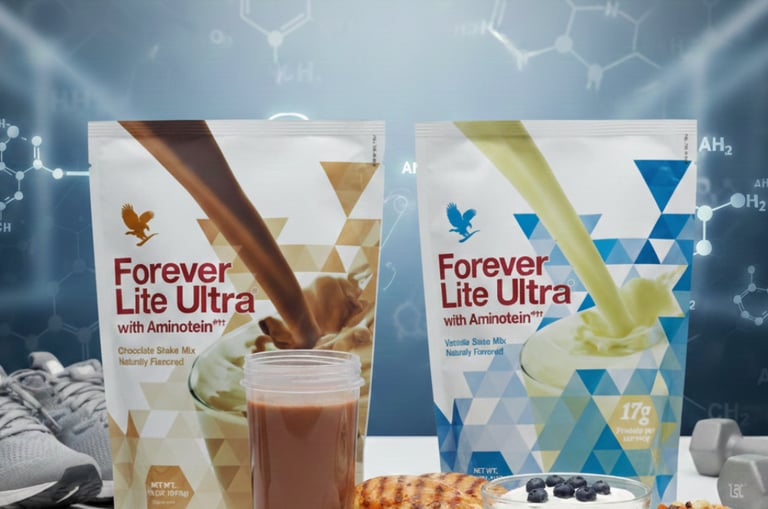
Forever Living offers Forever Lite Ultra with Aminotein, a meal replacement shake providing protein and comprehensive nutrition. Understanding protein supplements broadly—their benefits, limitations, and proper use—helps you evaluate this and other protein products appropriately.
Important Medical Note: This article discusses protein supplementation for general wellness and fitness. Protein supplements are not medications and cannot diagnose, treat, cure, or prevent diseases. Individual protein needs vary based on age, activity level, health status, and goals. Excessive protein intake can stress kidneys in susceptible individuals and may interact with certain medical conditions. People with kidney disease, liver disease, or certain metabolic disorders should consult healthcare providers before increasing protein intake. Pregnant and nursing women should discuss supplementation with their healthcare provider. This information is for educational purposes only and does not replace medical advice.
Key Takeaways
Protein needs vary widely based on activity level, age, body composition goals, and health status (0.8-2.2g per kg body weight daily)
Whole food protein sources are superior to supplements in most circumstances due to nutrient synergy and satiety
Different protein types (whey, casein, soy, pea, etc.) have distinct absorption rates, amino acid profiles, and appropriate use cases
Research shows supplementation benefits certain populations (athletes, elderly, weight loss, plant-based eaters) but is unnecessary for most people meeting needs through food
"More is better" doesn't apply—excessive protein provides no additional benefit and may create health risks
Quality matters significantly—amino acid completeness, digestibility, and absence of contaminants vary widely between products
Timing considerations (post-workout, before bed) show modest effects in research, less dramatic than marketing suggests
Individual tolerance varies—digestive issues, allergies, and personal preferences should guide protein type selection
Understanding Protein: Why It Matters
Before evaluating supplements, understanding protein's role in your body and actual requirements helps determine whether supplementation is necessary.
Protein's Essential Functions
Structural components:
Protein provides the building blocks for:
Muscle tissue (actin, myosin)
Connective tissue (collagen, elastin)
Skin, hair, nails (keratin)
Bones (collagen matrix for mineral deposition)
Cell membranes (membrane proteins, receptors)
Functional proteins:
Enzymes catalyzing thousands of biochemical reactions
Hormones regulating metabolism (insulin, growth hormone, thyroid hormones)
Antibodies supporting immune function
Transport proteins (hemoglobin carrying oxygen, albumin transporting nutrients)
Neurotransmitters affecting mood and cognition
Energy source:
While not the body's preferred fuel, protein can provide energy (4 calories per gram) when carbohydrates and fats are insufficient or during prolonged exercise.
Amino Acids: The Building Blocks
Proteins are chains of amino acids. Twenty amino acids combine in various sequences to create different proteins.
Essential amino acids (EAAs):
Nine amino acids your body cannot synthesize, requiring dietary intake:
Histidine, Isoleucine, Leucine, Lysine, Methionine, Phenylalanine, Threonine, Tryptophan, Valine
Branched-chain amino acids (BCAAs):
Three essential amino acids with branched molecular structures:
Leucine, Isoleucine, Valine
These are particularly important for muscle protein synthesis, with leucine being the primary trigger for the mTOR pathway that initiates muscle building.
Non-essential amino acids:
Eleven amino acids your body can synthesize from other compounds, though dietary intake still beneficial:
Alanine, Arginine, Asparagine, Aspartic acid, Cysteine, Glutamic acid, Glutamine, Glycine, Proline, Serine, Tyrosine
Conditional amino acids:
Some non-essential amino acids become essential under certain conditions (illness, stress, intense training).
Protein Quality: Complete vs. Incomplete
Complete proteins:
Contain all nine essential amino acids in adequate proportions for human needs.
Sources:
Animal products: Meat, poultry, fish, eggs, dairy
Some plant sources: Soy, quinoa, buckwheat, hemp seeds
Incomplete proteins:
Lack adequate amounts of one or more essential amino acids.
Sources:
Most plant proteins: Grains, legumes, nuts, seeds (though combinations can provide complete profiles)
Protein complementation:
Combining different plant proteins throughout the day provides all essential amino acids:
Rice + beans
Peanut butter + whole wheat bread
Hummus + pita
Previous beliefs that complementary proteins must be eaten simultaneously have been revised—adequate variety throughout the day is sufficient.
Protein Digestibility: PDCAAS and DIAAS
Protein Digestibility Corrected Amino Acid Score (PDCAAS):
Measures protein quality based on amino acid profile and digestibility. Scale of 0-1, with 1.0 being highest quality.
Examples:
Whey protein: 1.0
Casein: 1.0
Soy protein: 1.0
Beef: 0.92
Pea protein: 0.89
Wheat gluten: 0.25
Digestible Indispensable Amino Acid Score (DIAAS):
Newer, more accurate method measuring amino acid digestibility at the end of the small intestine rather than fecal measurement. Provides more precise quality assessment.
Generally shows animal proteins have higher scores than plant proteins, though high-quality plant proteins (soy, pea) score well.
How Much Protein Do You Actually Need?
Protein requirements vary dramatically based on individual factors. Understanding your actual needs prevents both inadequate intake and unnecessary over-supplementation.
General Population Recommendations
RDA (Recommended Dietary Allowance):
0.8g per kg body weight daily for sedentary adults.
For a 70kg (154lb) person: 56g protein daily For a 60kg (132lb) person: 48g protein daily
This prevents deficiency but may not be optimal for all individuals.
Optimal intake considerations:
Many nutrition scientists suggest higher intakes for overall health:
General adults: 1.0-1.2g/kg daily
Active individuals: 1.2-1.6g/kg daily
Elderly: 1.0-1.2g/kg daily (higher needs due to anabolic resistance)
Athletes and Active Individuals
Endurance athletes:
1.2-1.4g/kg daily
Protein needs are modestly elevated due to:
Muscle protein turnover from prolonged activity
Small amounts of protein oxidation during extended exercise
Recovery and adaptation demands
Strength/power athletes:
1.6-2.2g/kg daily
Higher needs due to:
Muscle protein synthesis demands from resistance training
Muscle damage repair
Lean mass gain goals
Research context:
Studies show benefits plateau around 1.6-2.2g/kg for muscle growth. Exceeding this provides no additional muscle-building benefit.
Weight Loss and Body Composition
During caloric restriction:
1.8-2.7g/kg daily (of goal or lean body weight)
Higher protein during weight loss:
Preserves lean muscle mass
Increases satiety (reduces hunger)
Slight thermic effect advantage (protein requires more energy to digest than carbs/fats)
Helps maintain metabolic rate
Research shows higher protein intake during weight loss results in better fat loss while preserving muscle compared to lower protein approaches.
Elderly Populations
Older adults (>65 years):
1.0-1.2g/kg daily, potentially higher
Rationale:
Anabolic resistance (muscles less responsive to protein stimulus)
Reduced appetite often leads to inadequate protein intake
Sarcopenia prevention (age-related muscle loss)
Recovery from illness or surgery
Studies show elderly individuals benefit from higher per-meal protein doses (25-40g) to overcome anabolic resistance.
Special Populations
Pregnancy and lactation:
Additional 25-30g daily beyond baseline needs
Vegetarians/vegans:
May need 10-20% higher intake due to lower digestibility of some plant proteins, though high-quality plant proteins (soy, pea) don't necessarily require this adjustment.
Recovery from illness/injury:
Protein needs increase during healing:
Wound healing
Post-surgical recovery
Burns
Infections
Medical supervision important for determining appropriate amounts.
Types of Protein Supplements: A Comprehensive Overview
Different protein sources have distinct characteristics affecting absorption, amino acid profiles, allergen potential, and appropriate uses.
Whey Protein: The Most Popular Choice
Whey is a byproduct of cheese production—the liquid remaining after milk curdles. It's processed into various forms with different protein concentrations.
Whey Protein Concentrate (WPC):
Protein content: 70-80%
Contains lactose, fats, some bioactive compounds
Less processed, retains more nutrients
Lower cost
May cause digestive issues in lactose-intolerant individuals
Whey Protein Isolate (WPI):
Protein content: 90%+
Lactose and fat largely removed
More processed, fewer bioactive compounds
Higher cost
Better tolerated by lactose-sensitive individuals
Lower in calories and carbs per serving
Whey Protein Hydrolysate:
Pre-digested (proteins partially broken down)
Fastest absorption
Reduced allergen potential
Bitter taste (hydrolysis creates bitter peptides)
Most expensive
Often used in infant formulas and medical nutrition
Research on whey protein:
Extensive research shows:
Complete amino acid profile (all EAAs)
High leucine content (triggers muscle protein synthesis effectively)
Fast digestion and absorption (peaks in bloodstream within 1-2 hours)
Supports muscle protein synthesis post-exercise
May help preserve muscle during weight loss
Some evidence for immune support (immunoglobulins, lactoferrin)
Realistic perspective:
Whey is effective and well-researched. However, benefits over other high-quality protein sources are modest. Food protein works just as well when total daily intake is adequate.
Who benefits most:
Athletes needing convenient post-workout protein
Individuals struggling to meet protein needs through food
Those wanting fast-digesting protein option
People building muscle or losing weight
Who should avoid:
Individuals with dairy allergy (different from lactose intolerance)
Vegans
Those with religious dietary restrictions (often not kosher/halal)
Casein Protein: The Slow-Release Option
Casein is the other protein in milk (about 80% of milk protein is casein, 20% whey). It forms a gel in the stomach, slowing digestion.
Characteristics:
Protein content: 80-90% (varies by type)
Complete amino acid profile
Slow digestion (sustained amino acid release over 7+ hours)
Thicker, creamier texture than whey
Contains calcium
Micellar casein vs. casein hydrolysate:
Micellar casein: Minimally processed, slowest digestion
Casein hydrolysate: Pre-digested, faster absorption (defeats the purpose of choosing casein)
Research findings:
Provides sustained amino acid elevation (anti-catabolic effect)
One study showed casein before bed may support overnight muscle protein synthesis in resistance-trained individuals
May enhance satiety more than whey (slower digestion)
In practical terms, differences from whey are modest when total daily protein is adequate
Realistic perspective:
The "slow-release" property has theoretical advantages (before bed, between meals), but research shows total daily protein intake matters far more than specific timing or protein speed.
Who benefits most:
Those wanting prolonged satiety
Individuals preferring thicker protein shake texture
People experimenting with pre-bed protein
Those who enjoy casein-based products (Greek yogurt, cottage cheese provide casein naturally)
Plant-Based Protein Powders
Multiple plant sources are processed into protein powders. Each has distinct characteristics.
Soy Protein:
Protein content: 90%+ (isolate)
Complete protein (all EAAs)
Good PDCAAS (1.0)
Contains isoflavones (phytoestrogens)
Research shows:
Effective for muscle building (comparable to whey in most studies)
Cardiovascular benefits (may lower LDL cholesterol)
Isoflavones have modest estrogenic activity (not sufficient to affect testosterone or muscle growth in men at normal intake levels, despite persistent myths)
Concerns:
Phytoestrogen fears (largely unfounded at typical consumption levels)
GMO concerns (choose organic/non-GMO if preferred)
Allergen potential (soy allergy exists, though less common than dairy)
Pea Protein:
Protein content: 80-85%
Good amino acid profile (slightly lower in methionine, adequate overall)
High in BCAAs, especially arginine
Hypoallergenic (good for those with common food allergies)
Earthy, slightly grainy taste
Research shows:
Supports muscle growth comparably to whey when leucine-matched
Well-tolerated digestively for most
Sustainable production (nitrogen-fixing crop)
Rice Protein:
Protein content: 80-90%
Lower in lysine (essential amino acid)
Often combined with pea protein for complete profile
Hypoallergenic
Slightly chalky texture
Hemp Protein:
Protein content: 50-70% (lower than others)
Contains fiber, omega-3 and omega-6 fats
Complete protein but lower in lysine
Earthy, nutty flavor
Less processed (retains more whole food components)
Blended plant proteins:
Many products combine multiple plant sources (pea + rice + hemp, for example) to create complete amino acid profiles and improve taste/texture.
Realistic perspective on plant proteins:
High-quality plant proteins (soy, pea, blends) support muscle building and recovery effectively when total daily protein and leucine are adequate. Slightly higher amounts may be needed to match animal proteins gram-for-gram due to digestibility differences, but this difference is modest with quality products.
Other Protein Sources
Egg White Protein:
Complete amino acid profile
Fat-free
Lactose-free
Slightly sulfurous taste
Good alternative for those avoiding dairy and soy
More expensive than whey generally
Beef Protein:
Isolated protein from beef
Complete amino acid profile
No dairy, no soy
Often contains collagen (lower quality protein)
Expensive
Limited research compared to whey/casein
Marketing often exaggerates benefits
Collagen Protein:
From connective tissue (bones, skin)
Incomplete protein (low/absent in some EAAs, especially tryptophan)
High in glycine, proline, hydroxyproline
Marketed for joint, skin, hair, nail benefits
Research shows:
Some evidence for skin elasticity improvement
Mixed evidence for joint pain reduction
NOT suitable as primary protein source (incomplete amino acid profile)
Better classified as a supplement than protein powder
Forever Lite Ultra with Aminotein
Forever Lite Ultra is a meal replacement shake providing protein along with vitamins, minerals, and other nutrients.
Formula overview:
Protein source: Aminotein (proprietary blend)
Complete nutrition profile (vitamins, minerals)
Designed as meal replacement, not just protein supplement
Available in multiple flavors
Understanding Aminotein:
Specific protein sources in Aminotein should be verified on product labeling. Proprietary blends make exact composition assessment difficult without transparency.
Realistic perspective:
Meal replacement shakes serve different purposes than pure protein powders:
Provide comprehensive nutrition, not just protein
Convenience for those skipping meals
Portion control for weight management
More expensive per gram of protein than standalone protein powders
Whether meal replacements are appropriate depends on:
Your specific goals
Ability to prepare whole food meals
Budget considerations
Need for convenience vs. whole food preference
Meal replacements work best as occasional convenience options, not daily meal substitutes. Whole foods provide satiety, chewing satisfaction, and comprehensive nutrients in forms supplements can't fully replicate.
Research on Protein Supplementation Effectiveness
Understanding what research actually shows—as opposed to marketing claims—helps set appropriate expectations.
Muscle Building and Strength
For resistance training individuals:
Meta-analyses show:
Protein supplementation during resistance training enhances muscle mass and strength gains modestly
Effects are most pronounced when dietary protein from food is inadequate (<1.6g/kg)
When total daily protein is adequate (1.6-2.2g/kg), supplements provide minimal additional benefit over whole food proteins
The source matters less than total amount and distribution throughout the day
Key insight:
Protein supplements don't build muscle—training does. Supplements simply help meet protein requirements conveniently.
Athletic Performance
Endurance performance:
Protein supplementation doesn't directly enhance endurance capacity
May support recovery, allowing better training consistency
Adequate protein helps prevent overtraining symptoms
Effects are indirect (recovery) rather than direct (performance)
Strength and power:
When combined with resistance training, protein supports strength gains
Effects plateau once adequate protein is consumed
Timing (immediate post-workout) shows modest benefits in some studies, negligible in others when total daily intake is controlled
Recovery:
Protein post-exercise supports muscle repair
Consuming protein within the "anabolic window" (immediate post-workout) may have slight advantages, but total daily intake is far more important
Combining protein with carbohydrates post-exercise may enhance glycogen replenishment
Weight Loss and Body Composition
During caloric restriction:
Research consistently shows:
Higher protein intake (1.8-2.7g/kg) preserves lean mass during weight loss
Increased satiety reduces overall calorie intake
Slight metabolic advantage (thermic effect of food)
Better long-term weight maintenance
Protein supplements can help:
Meet higher protein targets during weight loss
Provide low-calorie protein option
Increase satiety between meals
Important caveat:
Supplements help meet protein targets but don't cause weight loss. Caloric deficit is required. Whole food proteins often provide better satiety than liquid supplements.
Aging and Sarcopenia Prevention
In elderly populations:
Research shows:
Adequate protein intake (1.0-1.2g/kg minimum) helps preserve muscle mass
Higher per-meal doses (25-40g) may be more effective due to anabolic resistance
Resistance training combined with adequate protein is most effective for preventing sarcopenia
Supplements can help elderly individuals meet protein needs when appetite is poor
When Supplementation Shows Clear Benefits
Evidence supports protein supplementation for:
1. Athletes with high protein needs not met by food:
Convenience factor
Difficult to consume adequate protein from whole foods alone at very high intakes (>2.0g/kg)
2. Elderly individuals with poor appetite:
Difficulty consuming adequate protein from meals
Supplements easier to consume than solid food
Prevents malnutrition and muscle wasting
3. Weight loss at higher protein intakes:
Helps meet elevated protein targets (1.8-2.7g/kg)
Low-calorie protein option
Convenient for meal replacement (if used appropriately)
4. Vegetarians/vegans struggling to meet needs:
Plant protein powders provide concentrated protein source
Helpful when whole food plant proteins are insufficient
Convenience factor
5. Medical conditions increasing protein needs:
Recovery from surgery, illness, burns
Under medical supervision
When Supplementation Provides Minimal Benefit
Supplements unnecessary when:
1. Dietary protein already adequate:
Meeting 1.6-2.2g/kg from whole foods
Consuming protein throughout the day
Including high-quality protein sources
2. Sedentary individuals meeting RDA:
0.8g/kg sufficient for basic needs
Whole foods easily provide this amount
No muscle-building occurring without training stimulus
3. Using supplements to "boost" already optimal intake:
No additional benefit beyond adequate levels
Expensive way to add unnecessary protein
May displace other valuable nutrients
Protein Timing: Does It Matter?
Protein timing has received significant research attention. Understanding what evidence shows helps distinguish meaningful strategies from marketing hype.
The "Anabolic Window" Controversy
The claim:
Protein must be consumed within 30-60 minutes post-workout to maximize muscle protein synthesis, or you'll miss the "anabolic window."
What research actually shows:
Short-term studies:
Post-exercise protein consumption stimulates muscle protein synthesis
Timing within 1-2 hours post-workout may provide modest advantages in some studies
Effects often confounded by total daily protein intake
Long-term studies:
When total daily protein is adequate and distributed reasonably, precise timing matters minimally
The "window" is much wider than claimed (several hours)
Total daily intake is far more important than exact timing
Current scientific consensus:
Post-workout protein is beneficial but:
Not as critical as marketing suggests
The "window" is measured in hours, not minutes
Missing it won't sabotage gains if total daily protein is adequate
Pre-workout protein also provides amino acids during post-workout period
Practical recommendation:
Consuming protein within a few hours post-workout is sensible and may provide modest benefits. Obsessing over exact timing is unnecessary when total daily protein is adequate.
Protein Distribution Throughout the Day
Muscle protein synthesis considerations:
Research shows muscle protein synthesis is stimulated by:
Adequate leucine content (2-3g leucine per meal)
Approximately 20-40g protein per meal for most individuals
Distribution patterns:
Even distribution (4 meals x 25-40g):
May optimize muscle protein synthesis across the day
Provides regular amino acid availability
Supports satiety at each meal
Skewed distribution (small breakfast, large dinner):
Common eating pattern
May be suboptimal for muscle protein synthesis
Still effective if total daily protein adequate
Intermittent fasting (condensed eating window):
Compresses protein intake into shorter timeframe
May reduce number of muscle protein synthesis spikes
Still effective for muscle maintenance/growth when total protein adequate and training performed
Individual preference and adherence matter most
Current evidence:
While even distribution may theoretically optimize muscle protein synthesis, practical differences are modest. Total daily protein intake matters more than perfect distribution.
Protein Before Bed
The rationale:
Overnight fasting period (8+ hours) without protein intake. Consuming slow-digesting protein (casein) before bed may reduce muscle breakdown and support overnight recovery.
Research findings:
Some studies show casein before bed supports muscle protein synthesis overnight
May provide small advantages for muscle growth in resistance-trained individuals
Effects are modest and not all studies show benefits
Practical significance questionable when total daily protein is adequate
Realistic perspective:
Pre-bed protein is a reasonable strategy for those who enjoy it but not essential. If you naturally eat dinner late (within 2-3 hours of bed), you're already providing prolonged amino acid availability overnight.
Protein Supplement Quality and Safety
Not all protein supplements are created equal. Quality, purity, and safety vary dramatically between products.
Quality Markers
Third-party testing:
Look for certifications from:
NSF Certified for Sport
Informed-Choice/Informed-Sport
USP Verified
These verify:
Label accuracy (contains what it claims)
Absence of banned substances
Quality manufacturing practices
Contaminant testing
Amino acid spiking:
Unethical practice where manufacturers add cheap amino acids (glycine, taurine, creatine) or nitrogen-containing compounds to inflate apparent protein content without providing complete protein.
Tests measure nitrogen content to determine protein. Adding cheap amino acids increases nitrogen without providing quality protein.
How to avoid:
Choose products with third-party testing
Check amino acid profile (should show all EAAs in reasonable proportions)
Avoid products with long lists of individual amino acids beyond complete protein source
Choose reputable brands with transparency
Contaminant Concerns
Heavy metals:
Some protein powders have been found to contain concerning levels of:
Lead, cadmium, arsenic, mercury
Plant-based proteins sometimes show higher heavy metal content due to soil absorption (rice protein particularly prone to arsenic).
Choose products with:
Third-party heavy metal testing
Reputable manufacturers with quality control
Certifications verifying contaminant testing
Artificial ingredients:
Many protein powders contain:
Artificial sweeteners (sucralose, aspartame, acesulfame-K)
Artificial colors
Thickeners, gums
Preservatives
If avoiding these:
Choose unflavored versions
Look for naturally sweetened options (stevia, monk fruit)
Read ingredient lists carefully
Potential Side Effects
Digestive issues:
Common complaints:
Bloating, gas (especially with whey concentrate due to lactose)
Diarrhea (from artificial sweeteners, lactose, excessive intake)
Cramping
Solutions:
Try whey isolate instead of concentrate (less lactose)
Choose plant-based options if dairy-sensitive
Reduce serving size
Take with food rather than alone
Try different brands/types
Allergic reactions:
Protein allergies exist:
Dairy allergy (whey, casein)
Soy allergy
Egg allergy
Symptoms range from mild (rash, digestive upset) to severe (anaphylaxis).
If allergic, choose hypoallergenic options (pea, rice, hemp).
Kidney concerns:
For healthy individuals, high protein intake (up to 2.2g/kg) does not damage kidneys according to current research.
However, those with existing kidney disease should limit protein intake under medical supervision. High protein increases kidney workload, problematic for compromised kidneys.
Bone health:
Old hypothesis suggested high protein causes calcium loss and bone deterioration.
Current research shows:
Adequate protein actually supports bone health
Higher protein intake associated with better bone density
No evidence that protein damages bones in healthy individuals
Interaction with medications:
Protein supplements can affect:
Levodopa (Parkinson's medication) - competes for absorption
Some antibiotics - dairy calcium can reduce effectiveness
Inform healthcare providers about all supplements taken.
Choosing the Right Protein Supplement for Your Needs
Selection should be based on individual goals, dietary restrictions, preferences, and practical considerations.
Decision Framework
Step 1: Determine if supplementation is necessary
Ask:
Am I meeting protein needs (1.6-2.2g/kg for athletes, 0.8-1.2g/kg for general health) through whole foods?
Would whole food protein sources be more cost-effective and satisfying?
Do I have specific circumstances making supplementation beneficial (high protein needs, difficulty eating enough, elderly with poor appetite, specific dietary restrictions)?
If whole foods easily meet needs, supplementation may be unnecessary.
Step 2: Identify dietary restrictions/preferences
Consider:
Dairy allergy/intolerance → Avoid whey, casein
Vegan → Choose plant proteins
Soy allergy → Avoid soy protein
Multiple allergies → Choose pea, rice, or hypoallergenic options
Religious/ethical considerations → Verify sourcing
Step 3: Consider goals and timing preferences
For muscle building:
Whey, soy, pea (fast-absorbing, high leucine)
Total daily protein matters most
For satiety/weight loss:
Casein (slow-digesting, prolonged fullness)
Any protein increases satiety vs. carbs/fats
For pre-bed:
Casein (slow-release)
Though any protein works reasonably
For general meal replacement:
Complete formula like Forever Lite Ultra
Provides more than just protein
Step 4: Evaluate taste and texture preferences
Try small quantities before bulk purchases:
Whey: Generally neutral, mixes easily
Casein: Thicker, creamier
Pea: Earthy, slightly grainy
Soy: Mild, generally neutral
Blends: Vary widely
Flavor preferences are individual. What tastes good to one person may be unpalatable to another.
Step 5: Consider budget
Cost per serving of protein varies:
Whey concentrate: Generally cheapest
Whey isolate: More expensive
Plant proteins: Mid-range
Specialty proteins (hydrolysates, beef): Expensive
Meal replacements: Most expensive per gram of protein
Whole food proteins (eggs, canned tuna, chicken, Greek yogurt, beans) are often more cost-effective than supplements.
Step 6: Verify quality
Choose products with:
Third-party testing certification
Transparent labeling (clear amino acid profile)
Reputable manufacturer
Reasonable price (extremely cheap often indicates poor quality)
Specific Recommendations by Goal
Goal: Muscle Building (Resistance Training)
Best options:
Whey protein isolate or concentrate (fast, high leucine, well-researched)
Pea protein (good alternative, comparable effectiveness when leucine-matched)
Soy protein isolate (effective, complete profile)
Dosing:
20-40g post-workout or as needed to meet 1.6-2.2g/kg daily target
Distribute across day in 3-4 meals
Goal: Weight Loss
Best options:
Whey isolate (high protein, low calorie, satiating)
Casein (prolonged satiety)
Plant protein blends
Dosing:
Use to meet higher protein targets (1.8-2.7g/kg of goal weight)
Between meals for satiety
As low-calorie meal option occasionally
Goal: Convenience/General Health
Best options:
Whey concentrate (cost-effective, complete nutrition)
Plant protein blends (if avoiding dairy)
Meal replacement (Forever Lite Ultra) for comprehensive nutrition
Dosing:
As needed to meet daily protein targets (0.8-1.2g/kg for general health)
Occasional meal replacement when cooking not feasible
Goal: Vegan Protein Source
Best options:
Pea protein
Soy protein isolate
Blended plant proteins (pea + rice + hemp)
Dosing:
May need slightly higher total protein (10-20% more) depending on digestibility
Distribute across day
Goal: Pre-Bed Protein
Best options:
Micellar casein (slow-release)
Cottage cheese (whole food casein source, may be preferable)
Dosing:
20-40g before bed
Optional strategy, not essential
Forever Lite Ultra: When It Makes Sense
Forever Lite Ultra serves as meal replacement, not pure protein supplement.
Appropriate uses:
Occasional meal replacement when whole food meal not feasible
Convenient breakfast option for those who skip meals
Portion-controlled meal for weight management
Comprehensive nutrition when dietary quality is poor
Elderly individuals with poor appetite needing complete nutrition
Less appropriate:
Daily replacement of multiple whole food meals
As sole protein source
When whole food meals are accessible and preferable
For those on tight budgets (whole foods more cost-effective)
Realistic perspective:
Meal replacement shakes work best as occasional convenience tools within a primarily whole-food diet. They cannot fully replicate the satiety, chewing satisfaction, and comprehensive nutrition of well-prepared meals.
Realistic Expectations and Common Myths
Understanding what protein supplements can and cannot do prevents disappointment and inappropriate use.
What Protein Supplements CAN Do
When dietary protein is insufficient:
Help meet daily protein targets conveniently
Support muscle growth and recovery when combined with resistance training
Preserve lean mass during weight loss
Provide convenient post-workout protein
Support elderly individuals meeting protein needs
For specific situations:
Convenient nutrition for busy schedules
Portable protein source
Standardized protein dose
Allergen-free options for those with food sensitivities
What Protein Supplements CANNOT Do
They don't:
Build muscle without training stimulus (training builds muscle, protein supports the process)
Cause weight loss (caloric deficit required, protein just helps preserve muscle)
Replace whole foods nutritionally (missing fiber, phytonutrients, satiety factors)
Provide dramatic advantages over whole food proteins when total daily intake is adequate
"Tone" muscles (muscle definition requires fat loss + muscle development, not specific protein type)
Work instantly (muscle growth is gradual process over weeks/months)
Common Myths Debunked
Myth: "You need protein immediately post-workout or you'll lose gains"
Reality: The "anabolic window" is much wider than claimed (several hours). Total daily protein intake matters far more than precise timing. Consuming protein within a few hours post-workout is sensible but not critical to the minute.
Myth: "More protein = more muscle"
Reality: Muscle growth plateaus at approximately 1.6-2.2g/kg protein daily for most people. Exceeding this provides no additional muscle-building benefit. Training stimulus and progressive overload drive growth, not excessive protein.
Myth: "Whey protein is superior to all other proteins"
Reality: Whey is well-researched and effective, but other high-quality proteins (casein, soy, pea) work comparably when total daily protein and leucine are adequate. The "best" protein is the one you'll actually consume consistently.
Myth: "Plant proteins can't build muscle as effectively as animal proteins"
Reality: High-quality plant proteins (soy, pea, blends) support muscle growth effectively when total protein and leucine are adequate. Slightly higher amounts may be needed to match animal proteins gram-for-gram due to digestibility, but differences are modest.
Myth: "Protein supplements damage kidneys"
Reality: No evidence that protein supplementation harms kidneys in healthy individuals. Those with existing kidney disease should limit protein under medical supervision, but healthy kidneys handle typical supplement doses without issue.
Myth: "Soy protein lowers testosterone in men"
Reality: Research consistently shows soy protein does not reduce testosterone or increase estrogen in men at typical intake levels. Phytoestrogen concerns are largely unfounded.
Myth: "You can only absorb 30g of protein per meal"
Reality: This oversimplification misunderstands protein metabolism. Your body can digest and utilize much more than 30g per meal. While 20-40g may optimize muscle protein synthesis per feeding, larger amounts are still absorbed and used for other bodily functions.
Whole Foods vs. Supplements: The Bottom Line
Whole food protein sources remain superior to supplements in most circumstances.
Advantages of Whole Food Proteins
Nutrient density:
Complete nutrition packages (protein + vitamins + minerals + healthy fats)
Fiber (absent in most protein powders)
Phytonutrients and antioxidants
Naturally occurring nutrient combinations that enhance absorption and function
Satiety:
Solid foods more filling than liquid supplements
Chewing triggers satiety signals
Slower digestion provides prolonged fullness
Important for weight management
Food matrix benefits:
Nutrients in whole foods exist in complex matrices with synergistic effects
Supplements isolate single nutrients, missing beneficial interactions
Digestive enzymes, beneficial bacteria, fiber all support optimal nutrient utilization
Cost-effectiveness:
Whole food proteins often cheaper per gram than supplements
Eggs, canned tuna, Greek yogurt, beans, chicken thighs all economical
Supplements add expense without nutritional superiority
Sustainability:
Whole foods generally have lower environmental impact than highly processed supplements
Support local farmers, food systems
Less packaging waste
Examples of excellent whole food protein sources:
Animal-based:
Eggs: 6g protein per egg, complete amino acids, affordable
Greek yogurt: 15-20g protein per cup, probiotics, calcium
Chicken breast: 30g protein per 3.5oz, lean, versatile
Canned tuna/salmon: 20-25g protein per can, omega-3s (fish), convenient
Cottage cheese: 14g protein per 1/2 cup, casein, calcium
Plant-based:
Lentils: 18g protein per cup cooked, fiber, iron, cheap
Chickpeas: 15g protein per cup, fiber, versatile
Tofu: 10g protein per 1/2 cup, complete protein, calcium (if set with calcium)
Tempeh: 20g protein per cup, fermented (easier to digest), probiotics
Edamame: 17g protein per cup, complete protein, fiber
When Supplements Make Sense
Despite whole food superiority, supplements have legitimate uses:
Convenience:
Travel, busy schedules, no access to kitchen
Post-workout when whole food meal not immediately available
Quick breakfast when time-limited
Specific dietary needs:
Very high protein requirements difficult to meet with food alone (athletes consuming >2.0g/kg)
Elderly with poor appetite unable to consume adequate solid food
Medical conditions increasing protein needs
Strict dietary restrictions limiting protein-rich food options
Preference and tolerance:
Digestive issues with certain whole food proteins
Allergies limiting protein source options
Genuine dislike of protein-rich foods (though addressing this through variety is preferable)
Cost in specific situations:
In some regions/circumstances, protein powder may be cheaper than equivalent whole food protein
Shelf-stable option reducing food waste
Standardization:
Research settings requiring precise protein doses
Athletes tracking macronutrients precisely
Medical nutrition requiring specific amounts
The Balanced Approach
Optimal strategy:
Prioritize whole food proteins at most meals
Use supplements strategically when convenient or necessary
Don't rely on supplements as primary protein source
Choose quality when supplementing
Reassess regularly whether supplementation is still beneficial
Example balanced day:
Breakfast: Greek yogurt with berries and nuts (whole food) Post-workout: Protein shake (supplement - convenience) Lunch: Chicken salad with chickpeas (whole food) Snack: Hard-boiled eggs (whole food) Dinner: Salmon with quinoa (whole food)
This approach uses supplements as tools, not replacements.
Conclusion
Protein is essential for countless physiological processes, and adequate intake supports health, fitness, body composition, and recovery. While protein supplements offer convenience and can help meet elevated protein needs, they are not superior to whole food protein sources in most circumstances.
Different protein types—whey, casein, soy, pea, and others—have distinct characteristics affecting digestion speed, amino acid profiles, and appropriate uses. Research shows that when total daily protein intake is adequate (0.8-2.2g/kg depending on goals and activity), the specific protein source and timing matter less than marketing suggests.
Forever Lite Ultra with Aminotein provides meal replacement nutrition including protein. Like all protein supplements, it serves best as an occasional convenience tool within a primarily whole-food diet rather than a daily meal substitute.
Choosing the right protein supplement—if supplementation is necessary—depends on individual dietary restrictions, goals, budget, and preferences. Quality varies significantly; third-party testing, transparent labeling, and reputable manufacturers indicate better products.
Realistic expectations are essential: protein supplements support your nutrition and training efforts but don't cause muscle growth, fat loss, or health improvements on their own. They work best as convenient tools helping you meet protein targets within comprehensive nutrition and training programs.
For most people, whole food proteins remain the optimal choice. Use supplements strategically when beneficial, but don't replace the superior nutrition, satiety, and value of well-prepared whole foods.
Frequently Asked Questions
How much protein powder should I take daily?
Depends entirely on your total daily protein target and food intake. Calculate your needs (0.8-2.2g/kg based on goals), track whole food protein intake, and supplement only the difference if needed. Many people need zero protein powder if whole food intake is adequate. Athletes with very high needs (>2.0g/kg) may benefit from 1-2 servings (20-40g) daily to meet targets conveniently.
Is protein powder necessary for muscle growth?
No. Protein powder is simply a convenient protein source. Muscle growth requires adequate total daily protein (1.6-2.2g/kg), progressive resistance training, and recovery. You can absolutely build muscle consuming only whole food proteins. Supplements help some people meet protein targets more conveniently but aren't essential for muscle growth.
When is the best time to take protein powder?
Total daily protein intake matters far more than precise timing. Post-workout protein (within 1-3 hours) is sensible and may provide modest benefits. Before bed protein (casein) may support overnight recovery. Between meals for satiety during weight loss. But obsessing over exact timing is unnecessary when total daily protein is adequate and distributed reasonably across 3-4 meals.
Can I use protein shakes as meal replacements?
Occasionally, yes. Complete formulas like Forever Lite Ultra provide more comprehensive nutrition than pure protein powders. However, relying on shakes as regular meal replacements long-term is suboptimal—whole foods provide superior satiety, require chewing, and offer nutrient complexity supplements can't fully replicate. Use as occasional convenience, not daily habit.
Which protein is best for weight loss?
Any protein increases satiety more than carbs/fats, supporting weight loss through reduced hunger. Whey isolate (high protein, low calorie), casein (prolonged satiety), or plant proteins all work. The "best" protein for weight loss is whichever you'll consume consistently within a caloric deficit. Weight loss requires fewer calories consumed than burned—protein type is far less important than total intake and caloric balance.
Do plant proteins work as well as whey for muscle building?
Yes, when total protein and leucine are adequate. High-quality plant proteins (soy, pea, blends) support muscle growth comparably to whey in research studies. Slightly higher amounts may be needed gram-for-gram due to digestibility differences, but practical differences are modest. Many successful athletes and bodybuilders use exclusively plant proteins.
Is it safe to consume protein powder every day?
For healthy individuals, yes. Protein powders are concentrated food sources, not medications. Daily consumption at reasonable amounts (1-2 servings providing 20-50g protein) poses no safety concerns for those with healthy kidneys. Those with kidney disease should limit protein under medical supervision. Very high intakes (>2.5g/kg long-term) are unnecessary and may create imbalances, but typical supplement use is safe.
Can protein powder cause kidney damage?
No evidence shows protein supplementation harms healthy kidneys. Research on athletes consuming high protein diets (including supplements) shows no kidney damage. However, those with existing kidney disease must limit protein intake—supplements could exacerbate compromised kidney function. If you have kidney issues, consult your doctor before increasing protein. For healthy individuals, typical protein powder use is safe.
How do I choose between whey concentrate and isolate?
Whey concentrate (70-80% protein) contains more lactose and fats, costs less, retains more bioactive compounds. Whey isolate (90%+ protein) has lactose/fat removed, costs more, better for lactose-sensitive individuals. If you tolerate dairy well and want better value, choose concentrate. If lactose bothers you or you want minimal calories/carbs per serving, choose isolate. Both work equally well for muscle building.
What's the difference between protein powder and BCAAs?
Protein powder provides complete protein (all 20 amino acids including the 9 essential ones). BCAAs provide only three amino acids (leucine, isoleucine, valine). Protein powder is more comprehensive and better value—it contains BCAAs plus all other essential amino acids needed for muscle protein synthesis. Standalone BCAA supplements are largely unnecessary when protein intake is adequate; protein powder makes them redundant.
Sources and References
For evidence-based information about protein requirements, supplementation, and athletic nutrition:
International Society of Sports Nutrition (ISSN): https://www.sportsnutritionsociety.org - Position stands on protein intake, supplementation, and athletic performance
National Institutes of Health (NIH) Office of Dietary Supplements: https://ods.od.nih.gov - Fact sheets on protein and amino acid supplements
American College of Sports Medicine (ACSM): https://www.acsm.org - Guidelines on nutrition for athletic performance
Journal of the International Society of Sports Nutrition: Research on protein supplementation, muscle building, performance
American Journal of Clinical Nutrition: Studies on protein requirements across populations
British Journal of Sports Medicine: Research on athletic nutrition and supplementation effectiveness
Nutrients: Open-access journal with extensive protein and supplement research
About the Author
Naddy is a wellness enthusiast and content creator behind Wellness With Forever. She focuses on simple, practical tips to support a healthy lifestyle through nutrition, movement, and mindful habits. Drawing on personal experience and ongoing research into health and wellness, she aims to break down complex topics into clear, easy-to-follow guidance.
Disclaimer
The information in this article is for educational purposes only and does not replace professional medical advice. These statements have not been evaluated by the Food and Drug Administration. Forever Living products are not intended to diagnose, treat, cure, or prevent any disease. Always consult your doctor or qualified health professional before starting any new supplements, making significant dietary changes, or beginning exercise programs, especially if you are pregnant, nursing, have medical conditions, or take medications. Protein needs vary based on individual factors. Excessive protein intake can be harmful for individuals with kidney disease, liver disease, or certain metabolic disorders. The author and publisher assume no responsibility for adverse effects from the use or misuse of information contained herein.
About Us
Follow
© 2025. WellnessWithForever
SUBSCRIBE