The Impact of Antioxidant Supplements on Aging
Antioxidant supplements and aging: What research shows. Vitamin C, E, beta-carotene, resveratrol truth. Forever products reviewed. Evidence-based reality.
by WellnessWithForever
2/11/202621 min read
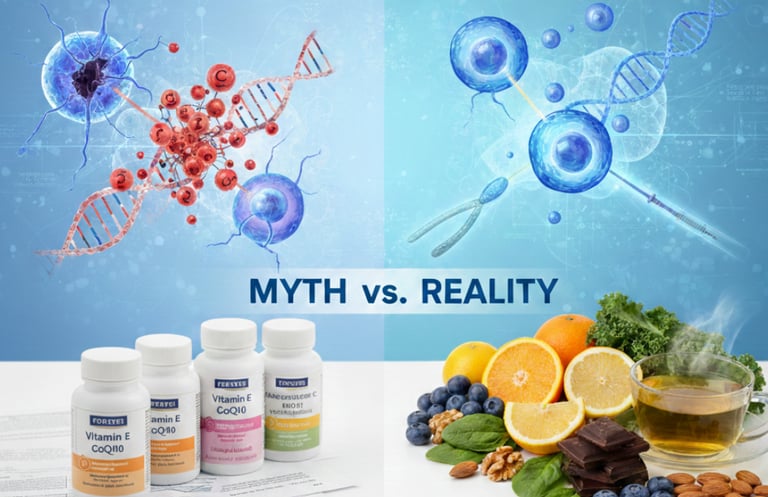
The Impact of Antioxidant Supplements on Aging
By WellnessWithForever 11 February 2026: This post might contain affiliate links.
Aging is an inevitable biological process characterized by progressive cellular damage, declining physiological function, and increased vulnerability to disease. Oxidative stress—an imbalance between free radical production and antioxidant defenses—has long been implicated as a key contributor to aging and age-related diseases.
This has led to widespread use of antioxidant supplements with promises of slowing aging, preventing disease, and extending lifespan. Understanding what research actually shows about antioxidant supplements and aging—beyond marketing claims—helps you make informed decisions about whether supplementation makes sense for your health goals.
Forever Living offers several antioxidant-containing products including Forever Absorbent-C (vitamin C), ARGI+ (with antioxidants), and Forever Active HA (hyaluronic acid with antioxidants). Understanding antioxidants broadly—their role in aging, what research shows about supplementation effectiveness, and realistic expectations—helps evaluate these and other antioxidant products appropriately.
Important Medical Note: This article discusses antioxidant supplementation for general wellness and healthy aging. Antioxidant supplements are not medications and cannot diagnose, treat, cure, or prevent diseases. Research on antioxidant supplements for disease prevention has shown mixed results, with some studies suggesting potential risks at high doses. Individual antioxidant needs vary based on diet quality, health status, and other factors. People taking medications (blood thinners, chemotherapy, immunosuppressants) should consult healthcare providers before taking antioxidant supplements as interactions can occur. Pregnant and nursing women should discuss supplementation with their healthcare provider. This information is for educational purposes only and does not replace medical advice.
Key Takeaways
Oxidative stress contributes to aging but is not the sole or even primary cause—aging is multifactorial and complex
Antioxidants from whole foods consistently show health benefits in research; isolated antioxidant supplements show mixed and often disappointing results
Large clinical trials have failed to show that antioxidant supplements prevent major diseases or extend lifespan in well-nourished populations
Some antioxidant supplements at high doses may actually increase disease risk or mortality in certain populations (smokers, specific genetic profiles)
The "antioxidant paradox"—isolated supplements don't replicate benefits of antioxidant-rich whole foods due to missing synergistic compounds
Low-dose antioxidants from multivitamins may provide modest benefits; megadoses generally don't and may harm
Lifestyle factors (exercise, sleep, stress management, not smoking) impact aging far more than antioxidant supplements
Individual antioxidant status varies—testing can identify deficiencies worth addressing, but blanket high-dose supplementation is not supported by evidence
Understanding Oxidative Stress and Aging
Before evaluating antioxidant supplements, understanding oxidative stress and its role in aging provides essential context.
What Are Free Radicals?
Free radicals are molecules with unpaired electrons, making them highly reactive and unstable.
Common free radicals in the body:
Reactive Oxygen Species (ROS):
Superoxide radical (O₂•⁻)
Hydroxyl radical (•OH)
Hydrogen peroxide (H₂O₂)
Singlet oxygen (¹O₂)
Reactive Nitrogen Species (RNS):
Nitric oxide (NO•)
Peroxynitrite (ONOO⁻)
These molecules are produced continuously during normal cellular metabolism, particularly in mitochondria during energy production.
Sources of Free Radicals
Endogenous (internal) sources:
Mitochondrial respiration (main source—energy production naturally generates ROS)
Immune system activity (white blood cells produce ROS to kill pathogens)
Enzyme reactions (various metabolic processes)
Inflammation (immune responses generate oxidative stress)
Exogenous (external) sources:
UV radiation and sunlight
Air pollution and environmental toxins
Cigarette smoke
Excessive alcohol consumption
Certain medications
Industrial chemicals and pesticides
Radiation exposure
Intense exercise (temporarily increases ROS)
What Are Antioxidants?
Antioxidants are molecules that neutralize free radicals by donating electrons without becoming unstable themselves.
Endogenous antioxidant systems:
Your body produces its own antioxidant defenses:
Enzymatic antioxidants:
Superoxide dismutase (SOD) - converts superoxide to hydrogen peroxide
Catalase - breaks down hydrogen peroxide to water and oxygen
Glutathione peroxidase - reduces hydrogen peroxide and lipid peroxides
Glutathione reductase - regenerates reduced glutathione
Non-enzymatic antioxidants:
Glutathione (master antioxidant, most abundant)
Uric acid
Bilirubin
Coenzyme Q10
Alpha-lipoic acid
Melatonin
Dietary antioxidants:
From food and supplements:
Vitamins:
Vitamin C (ascorbic acid) - water-soluble, regenerates vitamin E
Vitamin E (tocopherols, tocotrienols) - fat-soluble, protects cell membranes
Vitamin A (retinoids) and beta-carotene (provitamin A)
Minerals (cofactors for antioxidant enzymes):
Selenium - required for glutathione peroxidase
Zinc - component of superoxide dismutase
Copper - component of superoxide dismutase
Manganese - component of superoxide dismutase
Phytochemicals:
Polyphenols (flavonoids, anthocyanins, resveratrol)
Carotenoids (beta-carotene, lycopene, lutein, zeaxanthin)
Glucosinolates (in cruciferous vegetables)
Organosulfur compounds (in garlic, onions)
The Oxidative Stress Theory of Aging
Proposed in 1956 by Denham Harman:
The free radical theory of aging (later expanded to oxidative stress theory) proposed that:
Aging results from accumulated damage by free radicals
Free radicals damage cellular components (DNA, proteins, lipids)
This damage accumulates over time, causing aging and age-related diseases
Antioxidants neutralize free radicals, potentially slowing aging
Appealing logic:
This theory made intuitive sense:
Free radicals cause damage ✓
Damage accumulates with age ✓
Antioxidants neutralize free radicals ✓
Therefore, more antioxidants = less damage = slower aging?
The problem:
While this logic seems sound, research over the past 70 years has revealed a far more complex reality.
What Research Actually Shows About Oxidative Stress and Aging
Oxidative stress IS involved in aging:
Evidence confirms:
Oxidative damage to DNA, proteins, and lipids increases with age
Age-related diseases (cardiovascular disease, cancer, neurodegeneration, diabetes) show elevated oxidative stress markers
Cellular antioxidant defenses decline with age
Mitochondrial function deteriorates with age, potentially increasing ROS production
BUT oxidative stress is not the whole story:
Modern gerontology research shows:
Aging is multifactorial—genetics, telomere shortening, epigenetic changes, cellular senescence, stem cell exhaustion, mitochondrial dysfunction, inflammation, and yes, oxidative stress
Low-level ROS actually serve important signaling functions (hormesis)
Some organisms with higher oxidative stress live longer (paradox)
Increasing antioxidants doesn't necessarily extend lifespan in experimental models
The "ROS paradox":
Moderate ROS levels are essential for:
Cell signaling pathways
Immune function (killing pathogens)
Exercise adaptations (exercise-induced ROS triggers beneficial adaptations)
Autophagy (cellular cleanup processes)
Mitochondrial biogenesis (creating new mitochondria)
Completely eliminating ROS would be harmful, not beneficial!
Current scientific consensus:
Oxidative stress contributes to aging but is:
One factor among many
Not necessarily the primary driver
Sometimes beneficial at moderate levels (hormetic effects)
Poorly addressed by simply adding exogenous antioxidants
Major Antioxidant Supplements: What Research Shows
Understanding evidence for individual antioxidants helps evaluate specific supplement choices and realistic expectations.
Vitamin C (Ascorbic Acid)
Vitamin C is a water-soluble antioxidant and essential nutrient (humans cannot synthesize it).
Functions:
Collagen synthesis (skin, blood vessels, bones, tendons)
Antioxidant (scavenges free radicals, regenerates vitamin E)
Immune function support
Neurotransmitter synthesis
Iron absorption enhancement
Food sources:
Citrus fruits, strawberries, kiwi
Bell peppers, broccoli, Brussels sprouts
Tomatoes, potatoes
Leafy greens
RDA:
90mg/day (men)
75mg/day (women)
Smokers: +35mg/day
Research on vitamin C supplementation and aging:
Observational studies:
Higher dietary vitamin C intake associated with lower mortality, better health outcomes
Protective against cardiovascular disease, certain cancers in population studies
Randomized controlled trials:
Vitamin C supplementation does NOT reduce cardiovascular disease risk in well-nourished populations
Does NOT prevent cancer when given as isolated supplement
Does NOT extend lifespan
May reduce cold duration modestly (8% in adults, 14% in children) but does NOT prevent colds in general population
The disconnect:
Vitamin C from food shows benefits. Vitamin C supplements show minimal benefits when dietary intake is adequate.
Realistic perspective on vitamin C:
Benefits supplementation when:
Dietary intake inadequate (<75-90mg daily)
Deficiency present (scurvy risk in extreme cases)
Smokers (increased needs)
Possibly during illness (immune support)
Minimal benefit when:
Diet already contains adequate vitamin C (fruits, vegetables)
Megadosing (>1000mg daily) provides no additional benefit over adequate intake
Used for disease prevention in well-nourished individuals
Forever Absorbent-C:
Contains vitamin C with bran for delayed release.
Appropriate for:
Those with inadequate dietary vitamin C intake
Smokers needing higher amounts
Convenience when fresh fruits/vegetables unavailable
Not a fountain of youth or disease preventer beyond addressing deficiency.
Vitamin E (Tocopherols and Tocotrienols)
Vitamin E is a fat-soluble antioxidant protecting cell membranes from oxidative damage.
Functions:
Protects polyunsaturated fatty acids in cell membranes
Immune function support
Cell signaling
Gene expression regulation
Food sources:
Nuts (almonds, hazelnuts, sunflower seeds)
Vegetable oils (sunflower, safflower, wheat germ)
Green leafy vegetables
Avocados
RDA:
15mg (22.4 IU) alpha-tocopherol daily
Research on vitamin E supplementation and aging:
Initial promise:
Observational studies in 1980s-90s suggested vitamin E reduced cardiovascular disease risk, leading to widespread supplementation.
Large randomized controlled trials shattered expectations:
HOPE trial (2000):
9,541 participants at high cardiovascular risk
400 IU vitamin E daily vs. placebo
Result: NO reduction in cardiovascular events, NO mortality benefit
GISSI trial (1999):
11,324 heart attack survivors
300mg vitamin E daily
Result: NO cardiovascular benefit
SELECT trial (2011):
35,533 men, testing vitamin E and selenium for prostate cancer prevention
Result: Vitamin E INCREASED prostate cancer risk by 17% (statistically significant)
Meta-analyses:
Large meta-analyses show:
High-dose vitamin E (≥400 IU daily) may INCREASE all-cause mortality
No cardiovascular disease prevention benefit
No cancer prevention benefit
Possible increased bleeding risk (especially with anticoagulants)
The shocking reversal:
What looked promising in observational studies completely failed in rigorous trials. Some studies even showed harm!
Realistic perspective on vitamin E:
Benefits supplementation when:
True deficiency (rare in developed countries)
Specific malabsorption conditions
Avoid:
Megadoses (≥400 IU daily) linked to increased mortality
As disease prevention strategy (doesn't work)
With blood thinners without medical supervision (increases bleeding risk)
Better approach:
Get vitamin E from whole food sources (nuts, seeds, oils)
Low-dose vitamin E in multivitamins (15-30mg/22-45 IU) likely safe
Beta-Carotene and Vitamin A
Beta-carotene is a provitamin A carotenoid that converts to vitamin A in the body. It also functions as an antioxidant.
Functions:
Converts to vitamin A (vision, immune function, skin health)
Antioxidant properties
Immune modulation
Food sources:
Orange/yellow vegetables (carrots, sweet potatoes, squash)
Dark leafy greens (spinach, kale)
Cantaloupe, apricots
Research on beta-carotene supplementation:
ATBC trial (1994):
29,133 male smokers in Finland
Beta-carotene supplementation (20mg daily)
Result: 18% INCREASE in lung cancer, 8% increase in mortality
CARET trial (1996):
18,314 smokers and asbestos workers
Beta-carotene (30mg) + vitamin A (25,000 IU)
Result: 28% INCREASE in lung cancer, 17% increase in mortality
Trial stopped early due to harm!
Mechanism of harm:
In high doses, beta-carotene may act as pro-oxidant (increases oxidative stress) rather than antioxidant, especially in smokers and high oxidative stress environments.
Realistic perspective on beta-carotene:
Avoid supplementation:
Especially if you smoke or have smoked
High-dose isolated beta-carotene linked to increased cancer and mortality risk in at-risk populations
Safe approaches:
Eat carotenoid-rich foods (never shown to cause harm)
Mixed carotenoids in food provide multiple types (alpha-carotene, lycopene, lutein, zeaxanthin) with synergistic benefits
Low-dose mixed carotenoids in multivitamins likely safer than high-dose isolated beta-carotene
Selenium
Selenium is a trace mineral and cofactor for antioxidant enzymes, particularly glutathione peroxidase.
Functions:
Essential component of selenoproteins (antioxidant enzymes)
Thyroid hormone metabolism
DNA synthesis
Immune function
Food sources:
Brazil nuts (1-2 nuts = full daily requirement!)
Seafood, meat
Whole grains (depending on soil selenium content)
RDA:
55mcg daily
Research on selenium supplementation and aging:
SELECT trial (2011):
35,533 men testing selenium (200mcg) and vitamin E for prostate cancer prevention
Result: NO prostate cancer reduction, possible INCREASE in diabetes risk with selenium
Cochrane review (2018):
Selenium supplementation does NOT reduce cancer risk
May increase risk of type 2 diabetes at higher intakes
The nuance:
Selenium relationship with health is U-shaped:
Too little: Increased disease risk (deficiency impairs antioxidant defenses)
Optimal: Lowest disease risk
Too much: Increased disease risk (selenosis, potential pro-oxidant effects)
Realistic perspective on selenium:
Benefits supplementation when:
Deficiency confirmed (rare in U.S., more common in regions with selenium-poor soil)
Specific medical conditions affecting selenium status
Avoid:
High-dose supplementation (>200mcg daily) for disease prevention (doesn't work, may increase diabetes risk)
Megadosing (>400mcg daily = toxicity risk)
Better approach:
Eat 1-2 Brazil nuts daily (provides adequate selenium naturally)
Include selenium-containing foods (seafood, meat, grains)
Low-dose selenium in multivitamins (55-70mcg) likely safe
Coenzyme Q10 (CoQ10)
CoQ10 is a fat-soluble antioxidant produced by the body, present in mitochondria where it's essential for energy production.
Functions:
Electron transport chain (energy production)
Antioxidant protecting mitochondria and cell membranes
Gene expression regulation
Endogenous production:
Body synthesizes CoQ10
Production declines with age
Statin medications reduce CoQ10 levels
Food sources:
Organ meats (heart, liver, kidney)
Fatty fish
Whole grains, spinach
Research on CoQ10 supplementation and aging:
Heart failure:
Some studies show modest benefits for heart failure patients
Q-SYMBIO trial showed reduced mortality in severe heart failure
Evidence quality mixed, more research needed
Statin-induced myopathy:
CoQ10 may help some people with statin-related muscle pain
Evidence inconsistent—works for some, not others
General anti-aging:
No evidence that CoQ10 supplementation extends lifespan
Does NOT prevent cardiovascular disease in healthy individuals
Does NOT improve exercise performance in healthy people
Does NOT slow aging measurably
Realistic perspective on CoQ10:
May benefit:
Heart failure patients (under medical supervision)
Some individuals with statin-related muscle pain
Certain mitochondrial disorders
Minimal benefit for:
Healthy individuals seeking anti-aging effects
Disease prevention in general population
Athletic performance enhancement
Better approach:
Address heart health through diet, exercise, not smoking
If on statins with muscle pain, discuss CoQ10 with doctor (may help, not guaranteed)
Expensive supplement with limited evidence for general population
Resveratrol
Resveratrol is a polyphenolic compound found in red wine, grapes, and berries, heavily marketed for anti-aging.
The hype:
Research in yeast, worms, flies, and rodents showed resveratrol activated sirtuins (longevity genes) and extended lifespan, sparking massive commercial interest.
Research in humans:
Disappointing reality:
No evidence resveratrol extends human lifespan
Does NOT prevent cardiovascular disease
Does NOT improve metabolic health in humans at achievable doses
Rodent studies used doses equivalent to hundreds of bottles of red wine daily for humans
Bioavailability problems:
Rapidly metabolized in humans
Very low blood concentrations achieved
Doses needed for effects seen in animal studies are impractical for humans
Realistic perspective on resveratrol:
No evidence for:
Anti-aging effects in humans
Disease prevention
Lifespan extension
Meaningful health benefits at supplement doses
The red wine paradox:
Moderate red wine consumption associated with health benefits in some studies
Benefits likely from alcohol's effects (HDL elevation, relaxation), overall Mediterranean diet pattern, NOT resveratrol specifically
Can't extract resveratrol benefits from whole food/beverage context
Better approach:
Eat whole foods containing resveratrol (grapes, berries)
Don't expect anti-aging miracles
Save money—expensive supplement with minimal human evidence
Alpha-Lipoic Acid
Alpha-lipoic acid (ALA) is an antioxidant produced by the body and found in foods.
Functions:
Antioxidant (both water and fat-soluble—unique!)
Regenerates other antioxidants (vitamins C and E, glutathione)
Mitochondrial function
Glucose metabolism
Research on ALA supplementation:
Diabetic neuropathy:
Some evidence for symptom reduction in diabetic nerve pain
Used in Europe for this indication
Evidence quality mixed
General anti-aging:
No evidence for lifespan extension
Does NOT prevent age-related diseases in healthy populations
Limited human research overall
Realistic perspective on ALA:
May benefit:
Diabetic neuropathy (under medical supervision)
Insufficient evidence for:
General anti-aging
Disease prevention in healthy individuals
Cognitive enhancement
Antioxidant Combinations and Multivitamins
Physicians' Health Study II (2012):
14,641 male physicians
Multivitamin daily vs. placebo
Duration: 11 years
Result: Modest reduction in cancer incidence (8%), no effect on cardiovascular disease or mortality
SU.VI.MAX trial (France, 2004):
13,017 adults
Antioxidant combination (vitamins C, E, beta-carotene, selenium, zinc) at nutritional doses
Result: Modest cancer reduction in men (31%), no effect in women; no cardiovascular benefit
The pattern:
Low-dose antioxidants in multivitamins may provide modest benefits (small cancer reduction in some studies). High-dose isolated antioxidants generally don't help and sometimes harm.
The Antioxidant Paradox: Why Supplements Fail When Food Succeeds
One of the most puzzling findings in nutrition research: antioxidant-rich foods consistently show health benefits, but isolated antioxidant supplements often fail or cause harm.
Evidence for Whole Foods
Observational research consistently shows:
Higher fruit and vegetable intake → reduced mortality, less cardiovascular disease, lower cancer risk
Mediterranean diet (rich in antioxidants from produce, olive oil, nuts) → reduced disease, longer lifespan
DASH diet (emphasizing produce) → lower blood pressure, cardiovascular protection
Populations consuming antioxidant-rich traditional diets → better health outcomes
Interventional studies:
Increasing fruit and vegetable consumption improves cardiovascular risk markers
Mediterranean diet intervention trials show reduced cardiovascular events
Whole food antioxidant sources consistently beneficial
Why Supplements Fail to Replicate Food Benefits
Theory 1: Nutrient synergy
Whole foods contain thousands of compounds working together:
Multiple antioxidants (not just one)
Fiber supporting gut health and nutrient absorption
Phytochemicals with complementary actions
Vitamins and minerals in natural ratios
Unknown beneficial compounds not yet identified
Isolating single antioxidants removes synergistic effects.
Example: Tomatoes contain lycopene (antioxidant) PLUS vitamins C and E, fiber, potassium, and hundreds of other compounds. Lycopene supplements don't replicate tomato benefits.
Theory 2: Dose and delivery
Food provides antioxidants in:
Moderate, safe amounts (hard to overdose on food)
Gradual absorption (not massive boluses)
Bioavailable forms (food matrix enhances absorption)
Supplements provide:
Megadoses (often 10-100X food amounts)
Rapid absorption (large spikes in blood levels)
Isolated forms (may be poorly absorbed or even harmful at high doses)
Theory 3: Pro-oxidant effects at high doses
Antioxidants can become pro-oxidants at high concentrations:
Beta-carotene at high doses increases cancer risk in smokers
Vitamin E at high doses may increase mortality
High-dose vitamin C can increase oxidative stress in some contexts
The dose makes the poison!
Theory 4: Disruption of beneficial oxidative signaling
Some ROS are beneficial for:
Exercise adaptations (ROS trigger muscle strengthening)
Immune function (ROS kill pathogens)
Cellular signaling (moderate ROS needed for hormesis)
Excessive antioxidants may block beneficial processes!
Research example:
Studies giving antioxidant supplements to athletes found they:
Blunted exercise adaptations
Reduced training benefits
Didn't improve performance
Blocking all ROS = blocking beneficial stress responses!
Theory 5: Confounding in observational studies
People eating antioxidant-rich foods also:
Exercise more
Don't smoke
Maintain healthy weight
Have better overall diet quality
Higher socioeconomic status (access to fresh produce)
The antioxidants may not be the causative factor—overall healthy lifestyle is!
Current scientific understanding:
The benefits of antioxidant-rich foods come from:
Complex combinations of nutrients
Fiber and phytochemicals beyond antioxidants
Overall diet pattern (Mediterranean, plant-based)
Lifestyle factors associated with healthy eating
Isolated antioxidant supplements cannot replicate this complexity.
Realistic Expectations: What Antioxidant Supplements Can and Cannot Do
Understanding evidence helps set appropriate expectations and avoid wasting money on ineffective interventions.
What Antioxidant Supplements CAN Do
When deficient:
Correct specific deficiencies (vitamin C deficiency/scurvy, vitamin E deficiency in malabsorption)
Restore normal antioxidant status
Address deficiency-related symptoms
In specific medical conditions (under medical supervision):
CoQ10 may help some heart failure patients
Alpha-lipoic acid may reduce diabetic neuropathy symptoms
Vitamin E may benefit specific rare genetic conditions
Low-dose in multivitamins:
May provide modest cancer reduction (8% in some studies)
Serves as nutritional insurance for suboptimal diets
Generally safe at nutritional doses
What Antioxidant Supplements CANNOT Do
They do NOT:
Extend lifespan in humans (no evidence despite decades of research)
Prevent cardiovascular disease in well-nourished populations (large trials negative)
Prevent cancer when given as isolated supplements (trials disappointing or harmful)
Slow aging measurably (no clinical endpoints improved)
Replace healthy lifestyle (diet, exercise, not smoking far more important)
Reverse existing chronic diseases
Provide "anti-aging miracles"
High-dose isolated antioxidants may:
Increase disease risk in certain populations (beta-carotene in smokers, vitamin E and prostate cancer, selenium and diabetes)
Interfere with beneficial oxidative signaling (blunt exercise adaptations)
Create imbalances (high-dose single antioxidants may increase need for others)
The Disappointing Timeline of Antioxidant Research
1950s-1970s: Initial promise—oxidative stress theory of aging proposed, observational studies suggest benefits
1980s-1990s: Enthusiasm peaks—antioxidant supplements widely recommended, massive sales growth
1990s-2000s: Large trials begin—rigorous randomized controlled trials launched
2000s-2010s: Disappointment—trial after trial shows no benefit or harm:
HOPE, GISSI (vitamin E fails)
ATBC, CARET (beta-carotene increases cancer/death)
SELECT (vitamin E increases prostate cancer)
Multiple trials showing no cardiovascular or cancer benefits
2010s-present: Scientific consensus—isolated high-dose antioxidant supplements don't work for disease prevention/anti-aging; whole foods remain beneficial
The lesson:
What seemed obvious (more antioxidants = less oxidative damage = better health) turned out to be oversimplified. Biology is more complex than the initial theory suggested.
Forever Living Antioxidant Products: Realistic Assessment
Understanding Forever Living products containing antioxidants helps evaluate appropriate use and expectations.
Forever Absorbent-C
Vitamin C supplement with oat bran for gradual release.
Appropriate use:
Correcting vitamin C deficiency
Smokers needing higher vitamin C (RDA +35mg)
Those with inadequate dietary vitamin C (<75-90mg daily)
Immune support during illness (modest cold duration reduction)
Realistic expectations:
Will not prevent aging or chronic diseases
Benefits mainly when dietary intake inadequate
Megadosing (>1000mg daily) provides no additional benefit
Whole food vitamin C sources preferable when accessible (oranges, peppers, broccoli)
Not a replacement for:
Fruits and vegetables (provide vitamin C PLUS fiber, phytochemicals, other nutrients)
Healthy lifestyle (exercise, not smoking, stress management)
ARGI+ (L-Arginine with Antioxidants)
Contains L-arginine plus vitamins C, D, K, B6, B12, and folate.
Realistic assessment:
L-arginine:
Precursor to nitric oxide (vasodilation)
Some evidence for improved exercise tolerance in specific populations
Mixed evidence for cardiovascular benefits
Antioxidant vitamins:
Provided at moderate doses (likely safe)
Benefits from vitamins mainly when deficient
Not disease prevention in well-nourished individuals
Appropriate use:
Supporting nitric oxide production (circulation)
Addressing multiple mild vitamin insufficiencies
Convenience for comprehensive supplementation
Realistic expectations:
Not an anti-aging miracle
Benefits modest, primarily if dietary intake of included nutrients is inadequate
Whole foods (leafy greens for nitrates → nitric oxide, fruits for vitamins) preferable
Forever Active HA (Hyaluronic Acid with Antioxidants)
Combines hyaluronic acid with ginger, turmeric, and other compounds.
Realistic assessment:
Hyaluronic acid:
Important for skin hydration, joint lubrication
Oral absorption and effectiveness debated (molecular weight affects absorption)
Some evidence for skin hydration when consumed orally
Joint benefits less clear from oral supplementation
Ginger and turmeric:
Contain antioxidant and anti-inflammatory compounds
Whole food forms (cooking with ginger/turmeric) provide benefits
Supplement forms bioavailability varies (curcumin in turmeric poorly absorbed without enhancers)
Appropriate use:
Skin hydration support (modest evidence)
Anti-inflammatory support (from ginger, turmeric)
Those unable to consume these foods regularly
Realistic expectations:
Will not reverse aging
Skin benefits modest at best
Whole foods (bone broth for HA precursors, cooking with ginger/turmeric) may be as effective or more so
Expensive for uncertain benefits
Lifestyle Factors That Actually Impact Aging
Research consistently shows lifestyle factors affect aging far more than antioxidant supplements.
Exercise: The Most Powerful Anti-Aging Intervention
Evidence:
Regular physical activity:
Extends lifespan (reduces all-cause mortality 30-50%)
Reduces cardiovascular disease, cancer, diabetes, dementia
Preserves muscle mass, bone density, balance (prevents falls and fractures)
Improves mitochondrial function
Enhances antioxidant defenses ENDOGENOUSLY (body produces more of its own antioxidants)
Reduces inflammation
Improves mood, cognition, sleep
Types of exercise:
Aerobic (cardio):
Walking, jogging, cycling, swimming
Improves cardiovascular health, endurance
150+ minutes moderate intensity weekly
Resistance training:
Weightlifting, bodyweight exercises
Preserves muscle mass (critical for healthy aging)
Maintains bone density
2-3 sessions weekly
Flexibility and balance:
Yoga, tai chi, stretching
Prevents falls (major cause of disability in elderly)
Maintains functional mobility
The exercise paradox:
Exercise temporarily INCREASES oxidative stress (ROS production goes up during exercise).
But this actually IMPROVES antioxidant defenses long-term through hormesis (beneficial stress adaptation).
Taking high-dose antioxidant supplements may actually BLUNT these adaptations!
Bottom line:
Exercise is the single most powerful anti-aging intervention—far more effective than any antioxidant supplement.
Diet Quality: Whole Foods Over Supplements
Mediterranean diet:
Extensively researched, consistently shows:
Reduced mortality
Lower cardiovascular disease
Reduced cancer risk
Better cognitive function with aging
Reduced dementia risk
Components:
Abundant fruits, vegetables (natural antioxidants)
Olive oil (polyphenols, healthy fats)
Nuts and seeds
Whole grains
Fish (omega-3s)
Moderate wine (optional)
Limited red meat, processed foods
Plant-based diets:
Research shows:
Reduced chronic disease risk
Lower mortality
Better weight management
Rich in natural antioxidants from produce
The key pattern:
Whole, minimally processed foods rich in antioxidants PLUS fiber, healthy fats, phytochemicals work synergistically.
Isolated antioxidant supplements cannot replicate this!
Sleep: Critical for Cellular Repair
Evidence:
Adequate sleep (7-9 hours):
Allows cellular repair processes
Reduces oxidative stress
Improves antioxidant defenses
Reduces inflammation
Supports immune function
Critical for cognitive health
Sleep deprivation:
Increases oxidative stress
Impairs antioxidant defenses
Accelerates aging markers
Increases chronic disease risk
No antioxidant supplement compensates for chronic sleep deprivation!
Stress Management: Reducing Oxidative Burden
Chronic psychological stress:
Increases cortisol
Elevates inflammation
Increases oxidative stress
Accelerates cellular aging (telomere shortening)
Impairs immune function
Stress reduction practices:
Evidence-based approaches:
Meditation, mindfulness (reduces inflammation, oxidative stress)
Yoga (combines movement, breathing, meditation)
Deep breathing exercises
Social connection (strong relationships linked to longevity)
Time in nature
Adequate leisure and recovery
Impact on aging:
Chronic stress accelerates aging more than most people realize.
Managing stress effectively provides anti-aging benefits no supplement can match!
Not Smoking: Single Biggest Modifiable Factor
Smoking:
Massively increases oxidative stress
Damages DNA, proteins, lipids
Accelerates aging
Major cause of preventable death (cardiovascular disease, cancer, lung disease)
Quitting smoking:
Reduces oxidative stress
Allows repair processes
Dramatically reduces disease risk
One of the most impactful health decisions possible
Important note:
High-dose beta-carotene supplements INCREASE cancer risk in smokers!
Antioxidant supplements don't protect smokers—quitting does!
Alcohol Moderation
Excessive alcohol:
Increases oxidative stress
Damages liver, brain, cardiovascular system
Accelerates aging
Moderate consumption (if any):
Definitions vary; generally ≤1 drink/day women, ≤2 drinks/day men
Some evidence for cardiovascular benefits at moderate levels
No evidence that non-drinkers should start drinking for health
Bottom line:
If you drink, moderation matters. Alcohol excess accelerates aging; antioxidant supplements won't counteract this!
Sun Protection: Preventing Photoaging
UV radiation:
Generates free radicals in skin
Causes photoaging (wrinkles, age spots, loss of elasticity)
Major skin cancer risk factor
Protection:
Sunscreen (SPF 30+, broad spectrum)
Protective clothing, hats
Avoiding excessive sun exposure
Topical antioxidants:
Some evidence for:
Vitamin C serums (skin benefits)
Vitamin E (topical)
Green tea polyphenols
Resveratrol (topical)
Work better topically than orally for skin!
But sun protection (physical barriers, sunscreen) more important than antioxidants alone.
When Antioxidant Supplementation May Make Sense
Despite limited evidence for general anti-aging benefits, specific circumstances may warrant antioxidant supplementation.
True Deficiencies
Vitamin C deficiency:
Rare in developed countries but occurs in:
Severely restricted diets
Elderly with poor nutrition
Alcoholism
Certain medical conditions
Symptoms: Fatigue, bleeding gums, poor wound healing, scurvy (severe)
Supplementation absolutely appropriate and effective!
Vitamin E deficiency:
Very rare
Occurs in fat malabsorption conditions (cystic fibrosis, Crohn's disease, celiac, biliary obstruction)
Supplementation necessary under medical supervision.
Selenium deficiency:
Rare in U.S. (adequate soil selenium)
More common in certain regions (parts of China)
Can occur in severe malabsorption
Supplementation appropriate when confirmed.
Suboptimal Diets
Realistic assessment:
If dietary intake of fruits, vegetables, nuts, and seeds is very poor:
Low-dose multivitamin with antioxidants may provide nutritional insurance
Not a replacement for improving diet!
Temporary bridge while working on dietary changes
Better long-term solution:
Gradually increase whole food antioxidant sources:
Add one serving of fruit daily
Include vegetables at lunch and dinner
Snack on nuts instead of processed foods
Use herbs and spices (rich in antioxidants)
Specific Medical Conditions (Under Supervision)
Heart failure:
CoQ10 may benefit some patients
Discuss with cardiologist
Diabetic neuropathy:
Alpha-lipoic acid may reduce symptoms
Discuss with endocrinologist
Statin-induced myopathy:
CoQ10 may help some individuals
Discuss with prescribing physician
Malabsorption conditions:
Fat-soluble vitamin deficiencies (A, D, E, K) common
Supplementation necessary under medical supervision
Age-Related Increased Needs
Elderly populations:
Changes with aging:
Reduced appetite (lower nutrient intake)
Decreased absorption efficiency
Medications affecting nutrient status
Chronic conditions increasing nutrient needs
Reasonable approach for elderly:
Low-dose multivitamin with antioxidants may provide:
Nutritional insurance
Modest benefit (some studies show reduced infection rates in elderly with multivitamins)
Safety profile generally good at low doses
Still prioritize:
Nutrient-dense whole foods
Adequate protein (muscle preservation)
Vitamin D and calcium (bone health)
Social eating (improves intake, enjoyment)
Testing to Identify Deficiencies
Rather than blanket supplementation, testing allows targeted intervention:
Available tests:
Vitamin C (plasma ascorbic acid)
Vitamin E (serum alpha-tocopherol)
Selenium (serum or whole blood)
CoQ10 (plasma)
Antioxidant status markers:
Glutathione (reduced/oxidized ratio)
Total antioxidant capacity (TAC)
Oxidative stress markers (8-OHdG, F2-isoprostanes)
Practical approach:
If concerned about antioxidant status:
Assess dietary intake honestly
Consider testing if intake clearly inadequate
Address identified deficiencies specifically
Retest after 3-6 months
Focus on dietary improvement long-term
Blanket high-dose supplementation without testing rarely justified!
Safety Considerations and Potential Risks
While "natural" antioxidants seem harmless, research reveals real risks at high doses.
Documented Harms from High-Dose Antioxidants
Beta-carotene:
18-28% increased lung cancer risk in smokers
8-17% increased mortality in smokers
ATBC and CARET trials stopped early due to harm!
Vitamin E:
High doses (≥400 IU daily) linked to increased all-cause mortality
17% increased prostate cancer risk (SELECT trial)
Increased bleeding risk (especially with anticoagulants)
Selenium:
Increased type 2 diabetes risk at higher intakes
No cancer prevention benefit
Toxicity (selenosis) above 400mcg daily
The pattern:
What seems like it should help (more antioxidants!) can actually harm at high doses!
Mechanisms of Potential Harm
Pro-oxidant effects:
At high concentrations, antioxidants can become pro-oxidants:
Generate free radicals instead of neutralizing them
Increase oxidative stress instead of reducing it
Dose matters critically!
Interference with beneficial signaling:
ROS serve important functions:
Exercise adaptations
Immune responses
Cellular stress responses (hormesis)
Excessive antioxidants may block these beneficial processes!
Nutrient imbalances:
High doses of single antioxidants can:
Increase requirements for other antioxidants (antioxidants work together, recycling each other)
Create imbalances
Interfere with absorption of other nutrients
Cancer treatment interference:
Some antioxidants may:
Protect cancer cells from chemotherapy/radiation (which work partly through oxidative damage)
Reduce treatment effectiveness
Worsen outcomes
Patients undergoing cancer treatment should discuss all supplements with oncologist!
Medication Interactions
Anticoagulants (warfarin, aspirin, clopidogrel):
Vitamin E increases bleeding risk
Vitamin C at high doses may affect anticoagulation
CoQ10 may reduce warfarin effectiveness
Chemotherapy:
Antioxidants may reduce effectiveness
Contraindicated during treatment for many regimens
Statins:
Reduce CoQ10 levels (supplementation may help some individuals)
Immunosuppressants:
Antioxidants may interfere with immunosuppression
Always inform healthcare providers about ALL supplements taken!
Upper Tolerable Intake Levels
Established ULs (avoid exceeding):
Vitamin C: 2,000mg daily
Vitamin E: 1,000mg (1,500 IU) daily
Selenium: 400mcg daily
Beta-carotene: No UL established (but avoid high-dose supplements based on harm evidence)
Who Should Be Especially Cautious
Smokers:
Avoid beta-carotene supplements (increased cancer risk)
Avoid high-dose vitamin E (some evidence of harm)
Cancer patients:
Discuss ALL supplements with oncologist
May need to avoid antioxidants during treatment
Those on anticoagulants:
Avoid high-dose vitamin E
Monitor vitamin K intake (affects anticoagulation)
Pregnant/nursing women:
Avoid megadoses
Consult healthcare provider
Prenatal vitamins provide appropriate amounts
Conclusion
The promise of antioxidant supplements for slowing aging and preventing disease has not been fulfilled by rigorous research. While oxidative stress contributes to aging, the relationship is far more complex than the simple "more antioxidants = less aging" equation suggests.
Large randomized controlled trials have consistently shown that isolated high-dose antioxidant supplements do not prevent cardiovascular disease, cancer, or other age-related diseases in well-nourished populations. Some high-dose supplements have even increased disease risk and mortality in certain populations.
The disconnect between beneficial effects of antioxidant-rich whole foods and the failure (or harm) of isolated supplements illustrates the "antioxidant paradox"—nutrients work synergistically in food matrices that supplements cannot replicate. Fiber, phytochemicals, and thousands of compounds in fruits, vegetables, nuts, and whole grains work together in ways isolated antioxidants cannot.
Forever Living products containing antioxidants—Forever Absorbent-C, ARGI+, Forever Active HA—may serve appropriate roles for addressing specific deficiencies or providing nutritional insurance for suboptimal diets. However, realistic expectations are essential. These products will not reverse aging, prevent chronic diseases, or extend lifespan.
The most powerful anti-aging interventions remain lifestyle-based: regular exercise, high-quality whole food diet, adequate sleep, stress management, not smoking, and sun protection. These impact aging far more profoundly than any antioxidant supplement.
For those considering antioxidant supplementation, low-dose antioxidants in multivitamins appear relatively safe and may provide modest benefits. High-dose isolated antioxidants are not supported by evidence and carry potential risks. Testing for deficiencies allows targeted supplementation rather than blanket high-dose approaches.
The evidence is clear: eat your antioxidants in whole foods, live a healthy lifestyle, and be skeptical of anti-aging supplement claims that sound too good to be true—they usually are.
Frequently Asked Questions
Do antioxidant supplements slow aging?
No convincing evidence shows antioxidant supplements slow aging in humans. While oxidative stress contributes to aging, large clinical trials have failed to show that antioxidant supplements extend lifespan, prevent age-related diseases, or measurably slow aging processes. Lifestyle factors (exercise, diet quality, sleep, stress management, not smoking) impact aging far more than supplements. Antioxidant-rich whole foods show health benefits, but isolated supplements don't replicate these effects.
Are high doses of antioxidants better than low doses?
No—in fact, high doses may be harmful! Research shows high-dose beta-carotene increased cancer risk in smokers, high-dose vitamin E increased mortality and prostate cancer risk, and high-dose selenium may increase diabetes risk. The dose makes the difference—moderate amounts from food are beneficial, but megadoses from supplements can act as pro-oxidants and cause harm. Low-dose antioxidants in multivitamins appear safer than high-dose isolated supplements.
Can I take antioxidant supplements instead of eating fruits and vegetables?
No! This is one of the most important findings from antioxidant research. Fruits and vegetables consistently show health benefits (reduced disease, longer lifespan), but isolated antioxidant supplements don't replicate these benefits and sometimes cause harm. Whole foods provide fiber, thousands of phytochemicals, and nutrients working synergistically—supplements can't match this complexity. Prioritize whole food antioxidant sources; supplements should only fill specific gaps, not replace healthy eating.
Should I take antioxidants while exercising?
Exercise temporarily increases oxidative stress, but this actually improves your body's antioxidant defenses long-term through beneficial stress adaptation (hormesis). Some research suggests high-dose antioxidant supplements may actually blunt exercise adaptations and training benefits. Unless you have documented deficiency, taking high-dose antioxidants around exercise may be counterproductive. Get adequate antioxidants from whole food diet; let your body adapt naturally to exercise stress.
Do antioxidants prevent cancer?
Large randomized controlled trials have consistently shown isolated antioxidant supplements do NOT prevent cancer in general populations. Some high-dose supplements (beta-carotene in smokers, vitamin E) actually increased cancer risk. However, diets rich in antioxidant-containing whole foods (fruits, vegetables, nuts) are associated with lower cancer risk. The benefits come from overall dietary patterns and nutrient combinations, not isolated antioxidants in supplement form.
Can antioxidants reverse wrinkles and skin aging?
No evidence shows oral antioxidant supplements reverse existing skin aging. Some topical antioxidants (vitamin C serums, vitamin E creams) may provide modest skin benefits when applied directly. However, sun protection (sunscreen, protective clothing) is far more important for preventing photoaging than any antioxidant supplement or cream. Lifestyle factors (not smoking, adequate sleep, hydration, healthy diet) impact skin health more than supplements.
Are Forever Living antioxidant products effective for anti-aging?
Forever Absorbent-C, ARGI+, and Forever Active HA contain antioxidants but won't reverse aging or prevent chronic diseases based on current research evidence. They may serve appropriate roles for correcting specific deficiencies or providing nutritional insurance when dietary intake is inadequate. However, realistic expectations are critical—these are not anti-aging miracles. Whole food antioxidant sources (fruits, vegetables, nuts, herbs, spices) remain preferable. Use Forever products as convenient supplements to healthy lifestyle, not replacements for it.
Should elderly people take antioxidant supplements?
Elderly individuals with poor dietary intake may benefit from low-dose multivitamins containing antioxidants. Age-related appetite decline, reduced absorption, and medication effects can create nutritional gaps. Some studies show modest benefits (reduced infection rates) in elderly taking multivitamins. However, high-dose isolated antioxidants don't show clear benefits and carry potential risks. Better approach: prioritize nutrient-dense whole foods, adequate protein for muscle preservation, and low-dose multivitamin as insurance—not megadoses of isolated antioxidants.
Can I take antioxidants if I smoke?
Smokers should AVOID high-dose beta-carotene supplements—research shows 18-28% increased lung cancer risk and increased mortality in smokers taking beta-carotene. Vitamin E also showed concerning signals in some studies of smokers. Low-dose antioxidants in multivitamins appear safer. However, the most important action for smokers is quitting—no antioxidant supplement compensates for smoking's massive oxidative damage. Quitting smoking provides exponentially more health benefit than any supplement.
Do antioxidants interact with medications?
Yes! Vitamin E increases bleeding risk with anticoagulants (warfarin, aspirin). Antioxidants may reduce chemotherapy/radiation effectiveness in cancer treatment. CoQ10 may affect warfarin efficacy. High-dose vitamin C can interfere with some medications. Always inform healthcare providers about ALL supplements taken, especially before surgeries or medical procedures. This is critical for safety—"natural" doesn't mean risk-free or free of interactions.
Sources and References
For evidence-based information about antioxidants, oxidative stress, and aging:
National Institute on Aging (NIA): https://www.nia.nih.gov - Research on aging, including oxidative stress and antioxidant studies
National Institutes of Health (NIH) Office of Dietary Supplements: https://ods.od.nih.gov - Fact sheets on antioxidant vitamins and minerals
Cochrane Database of Systematic Reviews: Evidence synthesis on antioxidant supplementation effectiveness
PubMed/MEDLINE: https://pubmed.ncbi.nlm.nih.gov - Scientific literature on antioxidant research, clinical trials
Journal of the American Medical Association (JAMA): Major antioxidant trial publications
New England Journal of Medicine: Landmark studies on antioxidant supplementation (SELECT, HOPE, ATBC, CARET trials)
Free Radical Biology and Medicine: Specialized journal on oxidative stress and antioxidants
Aging Cell: Research on cellular aging mechanisms including oxidative stress
About the Author
Naddy is a wellness enthusiast and content creator behind Wellness With Forever. She focuses on simple, practical tips to support a healthy lifestyle through nutrition, movement, and mindful habits. Drawing on personal experience and ongoing research into health and wellness, she aims to break down complex topics into clear, easy-to-follow guidance.
Disclaimer
The information in this article is for educational purposes only and does not replace professional medical advice. These statements have not been evaluated by the Food and Drug Administration. Forever Living products are not intended to diagnose, treat, cure, or prevent any disease. Always consult your doctor or qualified health professional before starting any new supplements, making significant dietary changes, or altering your wellness routine, especially if you are pregnant, nursing, have medical conditions, or take medications. Antioxidant supplements can interact with medications including anticoagulants, chemotherapy, and immunosuppressants. High-dose antioxidant supplements have shown harmful effects in some populations (smokers, specific genetic profiles). Individual needs vary based on age, health status, diet quality, and other factors. The author and publisher assume no responsibility for adverse effects from the use or misuse of information contained herein.
About Us
Follow
© 2025. WellnessWithForever
SUBSCRIBE